
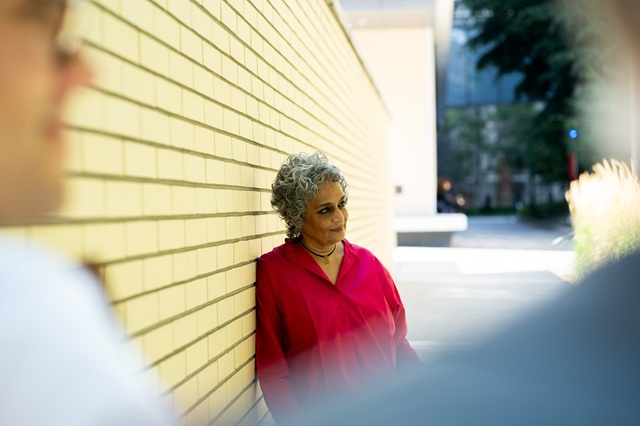
When her mother passed away, I immediately sent Arundhati Roy my condolences, recalling our brief meeting in Sweden with another remarkable figure, Daniel Ellsberg, the man behind the Pentagon Papers. I wrote, “I am deeply sorry to hear about the passing of your loved one. I know she meant the world to you and to so many others. Her wonderful memories will forever live on.” To my surprise, she responded promptly and simply: “Oh Nilantha, Thank you. Yes, she meant the world to me. But she passed peacefully. Love, Arundhati.” Three years after her mother’s passing, Roy produced one of the most tender and rare portrayals of a child’s relationship with her mother, a work that resonates with profound humanity. Her writing, deeply shaped by her mother’s influence, functions as a portal through which readers can understand not only an individual life but also the social paradigms and cultural shifts that define our times. Intimate yet radical, it challenges the myth of the solitary writer and transforms personal grief into a lens for examining broader societal truths.
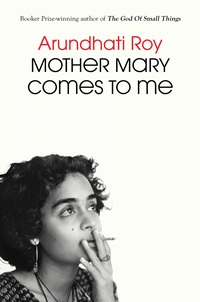
Arundhati Roy’s Mother Mary Comes to Me is not merely a memoir—it is an act of literary resurrection. Through it, Roy transforms personal loss into a meditation on the intricate entanglements between love, power, and history. The book begins with the death of her mother, Mary Roy, but it soon unfurls into a broader inquiry into the making of a woman, a writer, and a political consciousness. It is, in Roy’s words, both a “betrayal of my younger self” and a “declaration of love” (p. 3). In tone, scope, and rhythm, Mother Mary Comes to Me refuses the boundaries of genre; it reads like an elegy, a confession, a political document, and an inquiry into the origins of rebellion. What Roy achieves here is not a conventional memoir of grief but an anatomy of inheritance—the psychological and political inheritance that shaped both her life and her art.
Roy begins with a sentence that carries the emotional charge of her entire book: “She chose September, that most excellent month, to make her move” (p. 1). From its opening, the narrative oscillates between irony and ache, between a journalist’s precision and a novelist’s lyricism. Her description of Kerala—“gleaming like an emerald strip between the mountains and the sea” (p. 1)—is not simply geographic but metaphysical. It is the landscape of belonging and exile, of return and refusal. The very air, Roy writes, carries “palpable, physical pain” (p. 1). Through such images, the reader senses how the author’s mother, and by extension her childhood, are inseparable from the land itself. “She was woven through it all,” Roy writes of her mother, “taller in my mind than any billboard, more perilous than any river in spate” (p. 1).
The narrative’s first act—its reckoning with the funeral—is also its first act of rebellion. “The church didn’t want her. She didn’t want the church” (p. 1). That terse antithesis encapsulates the lifelong defiance that defined Mary Roy, the woman who won equal inheritance rights for Christian women in Kerala. Arundhati Roy records how the local papers “reported her passing on their front pages,” while national newspapers “mentioned it too” (p. 2). Yet even this public adulation, she suggests, could not capture the contradictions of her mother: a woman who “unleashed all of herself—her genius, her eccentricity, her radical kindness, her militant courage, her ruthlessness, her cruelty” (p. 5). What emerges here is an intimate portrait of a person who could not be contained by either social convention or familial expectation.
Roy’s prose continually treads the line between admiration and disquiet. She calls her mother “a gangster” (p. 5), a metaphor that captures both Mary Roy’s defiance and her lawlessness, her power and her capacity to wound. The tone is neither hagiographic nor vindictive; it is analytic, almost anthropological, as Roy examines the strange chemistry of love and violence that shaped their bond. She admits that she “left home not because I didn’t love her, but in order to be able to continue to love her” (p. 4). That paradox—leaving in order to preserve love—forms the emotional logic of the entire book. It is through such paradoxes that Roy interrogates the boundaries of motherhood, the limits of forgiveness, and the possibility of reconciliation.
In recounting her departure from Kerala to study architecture in Delhi, Roy situates her personal escape within a larger geography of migration and gendered constraint. “Delhi was a different country altogether,” she recalls, “different language, different food, different climate, different everything” (p. 3). Her tone—half ironic, half bewildered—mirrors that of many of her protagonists, from Ammu in The God of Small Things to Tilo in The Ministry of Utmost Happiness. The journey north becomes both a physical exodus and a psychological self-birth. When she writes, “I left my mother not because I didn’t love her, but in order to be able to continue to love her” (p. 4), she articulates the feminist tension that underlies much of her fiction: that the act of love may require separation, that devotion may demand distance.
Throughout Mother Mary Comes to Me, Roy collapses the border between fiction and memory. “I wrote versions of her in my books,” she confesses, “but I never wrote her” (p. 5). In this confession lies the aesthetic manifesto of the book. For Roy, writing is not a medium of truth but a terrain of transfiguration. She recounts how her mother embraced the fictionalized version of herself—Ammu in The God of Small Things—with ironic pride, saying “Aren’t I sexy enough?” (p. 6). This moment captures the tension between representation and reality that animates the memoir. It also reveals Roy’s ethical anxiety as a writer: the fear that fiction, while offering catharsis, may distort or betray the very lives it seeks to honour. “Most of us,” she observes, “are a living, breathing soup of memory and imagination” (p. 7). This insight—simultaneously philosophical and tender—becomes the memoir’s epistemological core.
The book’s early chapters—“Gangster,” “Fugitives,” “The Cosmopolitans”—trace Mary Roy’s journey from a young teacher escaping an alcoholic husband to a formidable educator and activist. The tone alternates between documentary precision and lyrical reflection. The scenes from Ooty, where the family lived “like fugitives amid huge wooden trunks packed full of the dead Imperial Entomologist’s clothes” (p. 10), read like social reportage on postcolonial displacement. Roy’s description of the English tenant, Mrs Patmore, who “wore her hair in a high, puffy style” (p. 10) and screamed in her sleep, transforms memory into social satire. Yet beneath the irony lies an undercurrent of vulnerability—the slow formation of class consciousness in a child who would one day become one of India’s fiercest critics of empire.
The moment when Mary Roy is evicted from her father’s cottage—told that under the Travancore Christian Succession Act “daughters had no right to their father’s property” (p. 11)—is recounted not only as personal humiliation but as political genesis. Roy sees this episode as “the ground for his own downfall” (p. 12), foreshadowing the later legal challenge that Mary Roy would mount to overturn that very law. The daughter’s memoir thus becomes the site where private trauma and public revolution intersect. The political awakening of the mother becomes the moral inheritance of the daughter. In this sense, Mother Mary Comes to Me performs what it describes: the transformation of pain into political imagination.
In chapter, The Cosmopolitans, Roy depicts the eccentric household of her extended family—“a constellation of extraordinary, eccentric, cosmopolitan people, defeated by life” (p. 19). The scene is as comic as it is tragic: an ensemble of minor failures, whose conversations swing between Marxism and property disputes. It is here that Roy’s characteristic hybridity of tone—the mix of satire and sorrow—shines brightest. She observes her uncle, G. Isaac, “one of India’s first Rhodes Scholars,” who was “a Marxist” yet “notwithstanding his keen interest in inheritance and private property” (p. 18). The irony is sharp but affectionate. Roy’s ability to render her family as both archetype and caricature gives the memoir its distinctive narrative vitality.
The tenderness of the book is most acute in the chapter “I Love You Double,” where Roy recounts a moment of humiliation on a plane. Her mother mimics her speech and tells her, “By the time you are my age you’ll be three times my size” (p. 24). What follows is not a melodramatic lament but an essay in the psychology of shame. “It felt as though she had cut me out of a picture book with a sharp pair of scissors and then torn me up” (p. 22). Roy’s metaphors are domestic and violent in equal measure; the child’s wound becomes the writer’s method. Even here, she resists the sentimental. “I wanted the plane to crash,” she writes, before her mother, contrite or perhaps manipulative, tells her, “I’m your mother and your father and I love you double” (p. 25). That sentence, with its childlike arithmetic of affection, becomes one of the book’s most haunting refrains. Love here is a wound that speaks.
Roy’s account of her mother’s school—the “sliding-folding school” that began in a Rotary Club hall—is told with the keen eye of a documentarian. “Every morning,” she writes, “we would take a bus into town to be in time for school… we would sweep up the cigarette butts and clear away the dirty cups and glasses left by the members” (p. 28). In this modest labour lies the seed of a larger metaphor: education as an act of reclamation, of turning discarded spaces into sanctuaries. When Roy notes that “the grease and grime from the workshop below made its way up the staircase and embedded itself in the dusty floor” (p. 29), the detail resonates beyond the literal; it evokes the permeability between social hierarchies, the moral smudge of modern India.
The episodes of Mary Roy’s defiance—the hiring of Bharatanatyam teachers, the confrontation with the missionary Mrs Mathews, the insistence that boys and girls study together—are narrated with both admiration and ambiguity. When Mrs Mathews objects to the dancers, calling them “the Devil Incarnate,” Roy remarks that her mother “did not stand a chance against those two exquisite human beings” (p. 30). The line, both mischievous and triumphant, captures Roy’s lifelong resistance to dogma. The school, like the book, becomes a laboratory of dissent. Her mother’s lessons—both moral and pedagogical—blur the line between rebellion and discipline. When Mary Roy humiliates her male students by brandishing her own bra, telling them, “This is a bra. All women wear them. Your mothers wear them” (p. 38), she enacts a pedagogy of shock, a feminist theatre of instruction. Roy’s commentary—“She turned them into considerate, respectful men… she liberated them, too” (p. 39)—transforms the anecdote into social commentary. The personal becomes structural, the domestic revolutionary.
Yet, as Roy admits, every revolution has its “collateral” (p. 40). Her brother, LKC, bears the brunt of their mother’s rage: “She called him a male chauvinist pig” (p. 40). In such passages, Roy refuses to romanticize female power. Instead, she exposes its mutations and misuses. Mary Roy’s feminism, though radical, is not immune to cruelty. In this recognition lies the memoir’s ethical complexity. It does not sanctify rebellion; it studies it. The daughter’s critique of her mother’s tyranny becomes an extension of her mother’s critique of patriarchal tyranny—a mirror turned inward.
The memoir’s emotional climax arrives in the story of Roy’s encounters with the “Kottayam Santa,” the man who sexually assaulted her when she was a child. The episode, rendered with measured restraint, is one of the most devastating in contemporary Indian writing about childhood trauma. “He was a lumbering, ungainly man,” she writes, “and I always managed to get away. But still, it was a hunt, and I was his prey” (p. 35). Roy’s prose here is stripped of ornament; its power lies in its refusal of spectacle. The young girl’s silence—her inability to tell her mother—becomes the emblem of a larger silence: the silence around sexual violence in Indian families. The scene echoes Roy’s political essays on state brutality, where she often writes about the unspeakable with the same economy of language.
Mother Mary Comes to Me is filled with such echoes between the private and the public, between the home and the nation. The mother’s asthma attacks—“her heaving chest struck terror into me” (p. 33)—become metaphors for the suffocation of women within patriarchal enclosures. The daughter’s act of “breathing for her” (p. 34) becomes a form of political empathy, a rehearsal for the writer who would later speak for “the voiceless” in her essays on Kashmir, capitalism, and caste. The intimacy of the memoir thus anticipates the solidarity of the activist. Roy’s childhood vigilance—the sense of always being “on the ledge” (p. 19)—prefigures the moral vigilance of her later political writing.
Stylistically, Mother Mary Comes to Me is unmistakably Roy: a mosaic of lyric prose, social observation, and biting irony. Her sentences move with the rhythm of memory—nonlinear, recursive, illuminated by sudden flashes of insight. The voice is simultaneously elegiac and defiant. “Perhaps even more than a daughter mourning the passing of her mother,” she writes, “I mourn her as a writer who has lost her most enthralling subject” (p. 8). The reflexivity of that sentence—the writer watching herself write—defines Roy’s late style. The memoir becomes both an origin story and a meta-commentary on the act of storytelling itself.
What distinguishes Mother Mary Comes to Me from most memoirs of loss is its refusal to indulge in closure. Roy does not seek reconciliation; she seeks understanding. She writes “to bridge the chasm between the legacy of love she left for those whose lives she touched, and the thorns she set down for me” (p. 8). The metaphor of “thorns” captures the book’s texture—beautiful, dangerous, alive. It is this refusal to resolve contradictions that gives the memoir its truth. In doing so, Roy extends her lifelong critique of simplification—of the political kind in Azadi, and of the literary kind in The God of Small Things.

In the final chapters, Roy reflects on her mother’s death not as an ending but as a re-entry into narrative. “In these pages,” she writes, “my mother, my gangster, shall live. She was my shelter and my storm” (p. 8). The rhythm of that line—its duality, its musical symmetry—encapsulates the book’s achievement. Mary Roy becomes both figure and force, both absence and omnipresence. Through writing, Arundhati Roy performs the resurrection she invokes in the title: Mother Mary Comes to Me. The phrase, borrowed from The Beatles, becomes literal—the mother comes to her through memory, language, and imagination.
The memoir’s place within Roy’s broader oeuvre is both central and revelatory. It clarifies the emotional and ethical foundations of her fiction and nonfiction alike. The fierce empathy that animates The God of Small Things—its attention to the forbidden love of Ammu and Velutha—finds its origin in the young girl’s observation of class and caste in Ayemenem. The architectural precision of The Ministry of Utmost Happiness—its mosaic of marginalized lives—echoes the fragmented household of “The Cosmopolitans.” Even her political essays, collected in My Seditious Heart and Azadi, derive their rhetorical force from the same moral imagination that was forged in the crucible of her childhood.
In Mother Mary Comes to Me, Roy makes explicit what has always been implicit in her work: that art and politics, intimacy and ideology, are inseparable. The book demonstrates that the first revolution begins at home, and that the most enduring acts of resistance are often the most personal. When she writes, “Perhaps what I am about to write is a betrayal of my younger self by the person I have become” (p. 3), she articulates not only the ethical tension of memoir but the central paradox of all political writing—the impossibility of purity.
Mother Mary Comes to Me stands as Arundhati Roy’s most intimate and most radical work. It dismantles the myth of the solitary writer and replaces it with the image of a daughter breathing for her mother, a writer breathing for her world. The book is, in her own words, “as hard to write as it is not to” (p. 8). Through its interweaving of memory and critique, it transforms grief into grammar and pain into prose. If The God of Small Things was Roy’s elegy for a lost childhood, Mother Mary Comes to Me is her dialogue with that loss. It reminds us that behind every act of beauty lies an act of survival, and that behind every sentence she writes, her mother still breathes.