


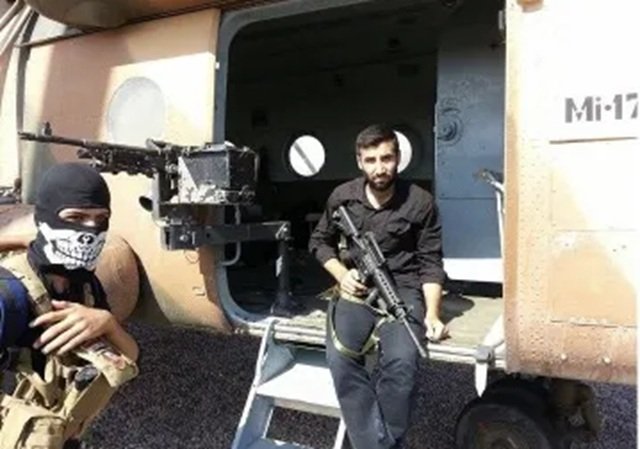
The arrest and extradition of Iraqi national Mohammad Baqer al-Saadi to the United States has thrust a little-known militia figure into the center of one of the most significant terrorism investigations of recent years. According to U.S. authorities, al-Saadi occupied a rare and trusted position within a network connecting Iraq’s Kata’ib Hezbollah, Iran’s Islamic Revolutionary Guard Corps Quds Force (IRGC-QF), and a wider constellation of Iranian-aligned militant organizations operating across the Middle East.
The allegations against him, detailed in U.S. Department of Justice filings and examined in a recent study published in CTC Sentinel, a flagship publication of the Combating Terrorism Center, suggest that al-Saadi’s activities extended well beyond Iraq’s borders. Prosecutors claim he played a central role in coordinating attacks across Europe and Canada while helping to build the external operational capabilities of Iran-backed militant networks. His arrest in Turkey in early May 2026 and subsequent extradition to the United States on May 15 have transformed him from an obscure operative into a key figure in an international legal and counterterrorism case that could have far-reaching consequences.
Al-Saadi was first charged with six terrorism-related offenses before being indicted by a federal grand jury in New York on eight counts. U.S. officials allege that he served as a senior member of Kata’ib Hezbollah while maintaining close ties with the IRGC-QF and Lebanon’s Hezbollah. More significantly, investigators claim he helped plan, coordinate, and promote at least 18 attacks across Europe and two additional attacks in Canada under the banner of a group known as Harakat Ashab al-Yamin al-Islamiya, or HAYI.
The FBI has characterized HAYI as a front organization linked to Kata’ib Hezbollah, part of a broader pattern in which Iranian-aligned groups use new brands and online identities to obscure responsibility for attacks. According to court filings, al-Saadi had advance knowledge of HAYI operations, received attack footage before it appeared publicly, communicated with attackers, and worked with propaganda networks to amplify the impact of the incidents.
Authorities further allege that al-Saadi admitted, after waiving his right to remain silent, that he occupied a leadership role within what he described as the “muqawama,” or resistance movement, encompassing the IRGC, Hezbollah, the Houthis, and Iraqi militias. Investigators say evidence recovered from his phone revealed efforts to conduct what he described as “psychological warfare” against Western societies by spreading fear among civilian populations.
The case comes against the backdrop of a dramatic escalation in regional tensions during the 2026 conflict involving Iran, Israel, and the United States. For years, Iraqi militias such as Kata’ib Hezbollah had often appeared secondary to more prominent Iranian partners such as Hezbollah in Lebanon and the Houthis in Yemen. However, analysts observed a major shift during the latest conflict, when Iraqi groups launched hundreds of drones, rockets, and missiles against targets across the region.
According to the CTC Sentinel study, al-Saadi’s alleged activities represented an even more significant evolution. Rather than limiting operations to the Middle East, investigators believe Iraqi militias sought to demonstrate an ability to strike targets on distant continents. Beginning in March 2026, HAYI claimed responsibility for attacks in Belgium, France, the Netherlands, Greece, North Macedonia, and the United Kingdom. The incidents included arson attacks, crude bombings, and a reported stabbing. Many of the targets were linked to Jewish communities or Israeli interests.
Although the attacks caused limited physical damage and no mass casualties, prosecutors argue they represented a deliberate effort to create fear and demonstrate the global reach of Iranian-aligned militant networks. According to the Justice Department, al-Saadi played a key role in coordinating and directing aspects of the campaign.
The allegations are particularly striking because of al-Saadi’s reported history within Iraq’s militant landscape. Born in 1993, possibly in Iran to Iraqi Shiite parents living in exile, he appears to have emerged from a generation shaped by decades of conflict and close ties between Iraqi Shiite movements and the Iranian state. Researchers suggest his family may have been connected to the Badr movement, a powerful organization formed under Iranian sponsorship during Saddam Hussein’s rule.
After returning to Iraq following the fall of Saddam’s government, al-Saadi reportedly fought in Syria in support of President Bashar al-Assad before joining campaigns against the Islamic State in Iraq. Yet unlike many militia members, he rarely appeared in uniform or publicly identified with a single armed faction.
Instead, photographs and social media records show him repeatedly alongside some of the most influential figures in Iran’s regional network. Images place him with former IRGC-QF commander Qassem Soleimani, Kata’ib Hezbollah founder Abu Mahdi al-Muhandis, Badr Organization leader Hadi al-Ameri, and later Soleimani’s successor, Esmail Qaani.
For researchers, these images are among the strongest indicators of al-Saadi’s unusual status. While thousands of militia fighters participated in Iraq’s wars against the Islamic State, few enjoyed direct access to such senior commanders. Interviews cited in the study suggest he was entrusted with sensitive responsibilities, including facilitating weapons distribution among militia formations during the anti-Islamic State campaign.
His prominence appears to have grown over time. Open-source evidence reviewed by researchers shows al-Saadi adopting the alias “Mohammad Baqir Soleimani,” reflecting his close association with the late Iranian commander. At one point in 2016, reports falsely claimed he had been killed in Syria. Militia groups publicly mourned him before he later reappeared alive, further fueling speculation about his importance within militant circles.
More controversial are allegations regarding his role during Iraq’s 2019 anti-government protests. Interviews cited by researchers claim al-Saadi participated in operations targeting demonstrators and activists who opposed Iranian influence in Iraq. Some sources accused him of involvement in assassination networks and intimidation campaigns. While these claims remain unproven, social media posts attributed to al-Saadi reveal a pattern of threats against political opponents, journalists, and government officials.
In the years that followed, investigators believe he shifted increasingly toward covert activities. According to interviews and intelligence assessments cited in the study, al-Saadi became involved in weapons procurement and drone acquisition programs for Iraqi militias. This work reportedly required extensive travel and closer cooperation with Lebanese Hezbollah and Iranian officials.
Evidence reviewed by researchers indicates he traveled frequently to Europe and held visas permitting entry into multiple countries. A government-issued Iraqi service passport identified him as a government official, raising questions about how he obtained official travel privileges and whether elements within Iraqi institutions facilitated his movements.
Perhaps most concerning are allegations that al-Saadi helped cultivate sources within Iraq’s security and intelligence services. Interviews with Iraqi sources suggest he participated in efforts to recruit officials willing to share sensitive information with Iranian intelligence and allied militias. If accurate, such activities would illustrate the depth of penetration achieved by Iran-aligned networks inside parts of the Iraqi state.
For counterterrorism officials, however, the most significant aspect of the case may be what it reveals about the future direction of Iranian-backed militant organizations. Researchers argue that al-Saadi represents a newer generation of operatives whose loyalties appear tied less to individual Iraqi factions and more directly to the IRGC-QF itself. These figures operate across organizational boundaries, maintain international contacts, and combine intelligence, procurement, propaganda, and operational functions.
The alleged HAYI campaign also highlights a strategy long associated with Iranian security services: recruiting local criminals and intermediaries to conduct attacks abroad. Prosecutors contend that al-Saadi helped identify targets, provide funding, direct operatives, and manage propaganda surrounding attacks while remaining physically distant from the scenes of violence.
Yet despite the ambition of the effort, analysts suggest the operation may have backfired. The attacks generated limited strategic impact while attracting intense international scrutiny. More importantly, the arrest of a figure allegedly positioned at the intersection of Iraqi militias, Hezbollah, and the IRGC-QF could expose sensitive networks and operational methods.
The consequences may extend well beyond one individual. If prosecutors successfully prove their case, governments in Europe and elsewhere could face renewed pressure to take stronger action against organizations linked to Iran’s regional network. Calls to designate additional groups as terrorist entities may intensify, while international travel and financial activities connected to militia figures could come under greater scrutiny.
For Iran-backed militias, the detention of al-Saadi represents a rare setback. Iraqi factions have often succeeded in protecting key members from accountability at home. In this instance, however, an operative allegedly connected to some of the most influential figures in the region now faces prosecution in a U.S. federal court.
Whether the charges are ultimately proven remains a matter for the legal process. But the portrait emerging from court documents, open-source evidence, and years of accumulated intelligence paints a picture of an individual who allegedly moved with remarkable ease between battlefields, intelligence networks, political circles, and clandestine operations. His case has become more than the story of a single man. It has evolved into a test of how governments confront increasingly sophisticated transnational networks that blend militancy, intelligence work, propaganda, and covert action across multiple continents.
As the proceedings continue in New York, the outcome is likely to be watched closely not only by prosecutors and security agencies, but also by policymakers assessing the future threat posed by Iran-backed organizations seeking to extend their reach far beyond the Middle East.









