
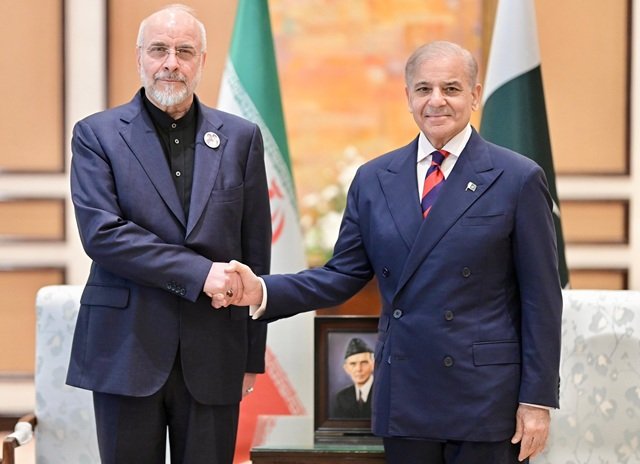
The ambitious and promising-looking talks between the US and Iran, especially those in Pakistan, were billed as the “Islamabad talks” or an “accord” that had not even lasted for twenty-four hours, leading to a near breakdown amid the drama and spotlight in some global and Pakistani media outlets. The crisis diplomacy that China and Pakistan saw as a complex yet achievable diplomatic exercise has been seriously misread. It has become spotlight diplomacy, carrying propaganda and mistrust rather than persuasion.
While Pakistan was merely a facilitator, it engaged in propaganda to portray itself as a key player mediating the US-Iran conflict. China and Turkey, behind the scenes, conducted the real persuasive and strategic communication to bring the US and Iran to the negotiating table. This time, the primary mediators in the Gulf, Qatar and Oman, were more engaged in the security domain than in regional diplomacy.
The idea that entered the global political landscape in the last 24–48 hours was that middle powers can easily punch above their weight and occupy an influential position that goes beyond that of an intermediary. This belief has miserably failed. Not even the middle powers, let alone the negotiating parties, handled crisis diplomacy properly; instead, they treated it as spotlight diplomacy, with the intent to gain attention for a likely strategic pause rather than substantive engagement.
The strategic environment was not conducive to pushing for talks, as both parties were in a deadlock, with no willingness to readjust or accept concessions. The basics of the art of negotiation were completely misplaced from the beginning, as negotiations occur when there is a possibility of a middle ground or a realisation of strategic reality.
In the US-Iran case, the middle ground was absent, and the need to de-escalate was not recognised. Yet, despite knowing the non-supportive strategic environment for negotiations, both parties went ahead, which can appropriately be called a show-off or spotlight diplomatic exercise that could provide an easy cover and excuse for escalation between the parties.
The reasons for the failure of the talks were quite clear: the nuclear factor, and the Iranian side seeking concessions on the economic and strategic fronts, which served as major irritants. A closer look suggests three key reasons for the failure, both before and during the negotiations.
First, the ten-point demands Iran presented to the US appear, on the surface, to be a surrender proposal. These demands nearly undermined the US’s strategic goals and the main reason for engaging in this prolonged conflict, especially after the February 28 strikes failed to achieve certain implicit objectives. These objectives were said to have included regime change and causing systemic destabilisation in Iran to improve the Iranian people’s position in power calculations.
Second, Israel’s strategic impatience with the ten-point demands is also evident. Israelis were highly anxious because fulfilling the demands could strengthen Iran and significantly weaken Israel’s efforts to counter Iran and derail its stated objectives in the war. Israel’s impatience may be obvious, as it conducted strikes on Iran and Lebanon after a ceasefire. On the other hand, the Israeli PM is under pressure from the opposition over the ceasefire. These incidents led to pre-negotiation conditions that also served as major irritants during the negotiations, and therefore Israel can be said to have acted as a background actor that facilitated the derailment of this ceasefire.
Third, the US-Iran trust deficit is significant, as both sides hold core objectives that take precedence over negotiations—specifically, maintaining their positions of strength and influence, which this two-week negotiation window threatens. In fact, Trump, just hours after receiving the proposal, clarified that there would be “no uranium enrichment,” the first sign of tension in the negotiations. Iran’s ten-point demands clearly mention nuclear rights recognition, which calls for the formal acceptance of Iran’s right to domestic uranium enrichment. Iran’s ten-point demands are not seeking concessions but rather aiming to establish permanence for demands that were difficult for the US, and especially Israel, to accept.
This demand, this permanence factor, created a serious trust deficit during negotiations and, unsurprisingly, brought them to an earlier-than-anticipated end. For negotiations, both parties need to keep implicit and strategic objectives outside the room of contention, which they did not do.
In short, both parties lacked the strategic environment and the right leverage to negotiate, creating friction and deadlock. This turned crisis diplomacy into a spotlight diplomatic event. However, this is not the first time; even during the Cold War, serious-looking crisis diplomacy turned into a spotlight diplomatic event. More importantly, Cold War crisis diplomacy and modern-day crisis diplomacy teach us important lessons on crisis management and handling, adding substantive value to diplomacy rather than to spotlight and propaganda.
Crisis diplomacy involves high stakes and intense negotiations that can progress only when there is a conducive strategic environment and strategic flexibility. The environment serves as the foundation for crisis diplomacy, where one party needs a comprehensive edge over the other, or both parties have suffered maximum damage and are on the brink of a stalemate. When these two conditions arise among conflicting parties, the stage for crisis diplomacy is set. Another crucial factor is flexibility, where both parties must have a certain degree of strategic flexibility to find a middle ground or realise the necessity to de-escalate and establish a negotiating framework. Two cases from history give us a real picture of crisis diplomacy.
First, during the Cuban Missile Crisis in 1962, intense negotiations went on for almost two weeks between the US and the USSR through backdoor channels to de-escalate a crisis that was on the brink of nuclear conflict between the two nations. In this case, the strategic environment pushed the parties to the table, as both were aware of the nuclear threat and the immense destruction, thereby creating a situation in which both realised there was no winning in this conflict. The flexibility phase began when negotiators gained some traction—Attorney General Robert Kennedy held private, secret meetings with Soviet Ambassador Anatoly Dobrynin to negotiate the final, face-saving terms. Perhaps the most crucial role was played by the USSR leadership, as Khrushchev sent long, emotional letters directly to Kennedy, reflecting a desire to resolve the situation, alongside a formal, harsher proposal. Amid these leadership negotiations, Pope John XXIII sent messages to both leaders to encourage dialogue, acting as a third-party mediator to ensure effective negotiations.
As a result, the almost two-week-long negotiations were successful, culminating in a deal: the USSR removed missiles from Cuba, while the US promised not to invade Cuba and secretly agreed to remove missiles from Turkey. The success of the 1962 negotiations was clearly a case of effective crisis diplomacy, involving a mixture of flexibility, an environment in which both parties realised the risks, and multiple channels of communication, especially the initiative taken by the USSR leadership, which helped create space for strategic understanding and the necessity for immediate de-escalation.
The second case occurred at the peak of the rivalry between two superpowers in October 1986, when Iceland hosted an ambitious summit between US President Ronald Reagan and USSR leader Mikhail Gorbachev to negotiate escalating tensions that could threaten the global security landscape amid the arms and space race between the two. The talks collapsed at the last minute, with both parties failing to agree on the proposals. Reagan did not agree to a complete halt, or even a restriction, on the US’s Strategic Defense Initiative, which proposed a rapid and advanced ballistic missile buildup with a space-based missile defence system. Gorbachev was concerned about the escalation of this arms race, especially its potential to extend into space, and therefore made the US’s SDI a key demand.
However, Reagan saw SDI as non-negotiable and did not agree to Gorbachev’s demand. In this case, the strategic environment necessary for talks was present, but flexibility was absent, as Reagan made the key issue of the talks a non-negotiable demand. In fact, the US’s proposed middle ground was also dismissed when Reagan suggested sharing SDI technology with the USSR.
In response, if some reports are to be believed, Gorbachev argued that the United States would not even share basic, peaceful technology, such as “milking machines” or advanced oil-drilling technology, let alone top-tier military secrets. This response itself indicates distrust between the parties, a major factor in restricting flexibility in negotiations. In modern-day crises, diplomacy neither considers the environment nor the flexibility, which are hallmarks of crisis diplomacy, but instead turns these high-stakes negotiations into propaganda and spotlight diplomacy, which could further escalate the risk of protracted wars and distrust in the world order.