


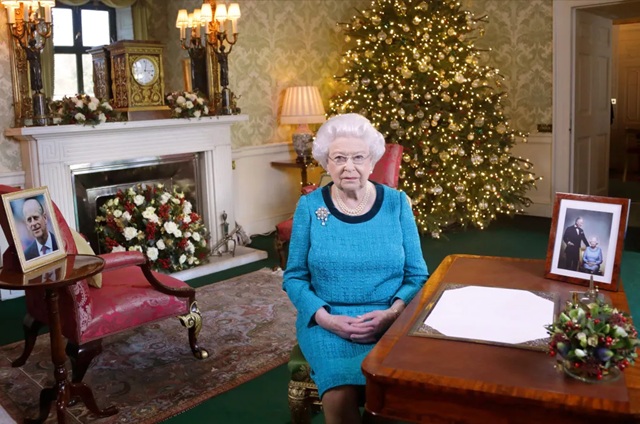
For decades, Queen Elizabeth II cultivated an image of quiet impartiality, her public silence on political matters one of the cornerstones of Britain’s constitutional monarchy. But according to revelations published by The Times UK, the late Queen harboured strong private views on Brexit — and, contrary to tabloid headlines at the time, she was firmly on the side of remaining in the European Union.
The claims appear in Power and the Palace, a new book by Valentine Low, the former royal correspondent of The Times UK. Through candid testimony from ministers, palace insiders and civil servants, Low paints a picture of a monarch who was far from the detached figure the public assumed — a sovereign who, behind the closed doors of Buckingham Palace, could be startlingly blunt about politics, personalities, and the state of the nation.
A secret stance on Brexit
The most striking revelation is that Queen Elizabeth II opposed Britain leaving the EU. A senior minister recalls a private audience in the spring of 2016, just months before the referendum, in which the Queen told him: “We shouldn’t leave the EU. It’s better to stick with the devil you know.”
This statement, coming from a monarch constitutionally barred from voting, would have been explosive had it been made public. Instead, it was kept secret — even as a rival narrative was splashed across The Sun’s infamous front page in March 2016 under the headline “Queen Backs Brexit.” That report, which alleged the Queen had attacked the EU during a 2011 lunch at Windsor Castle, was later disputed by Nick Clegg and drew a complaint from Buckingham Palace. But the Palace stopped short of issuing a categorical denial — because, as Low’s sources now confirm, an explicit denial would have revealed the Queen’s true leanings: she was, in fact, a Remainer.
Former Prime Minister David Cameron also sensed her quiet support for European cooperation, describing her as someone who valued the EU as part of the post-war settlement. Although she could be critical of Brussels’ excesses — muttering “This is ridiculous” at stories of EU bureaucracy — she believed the principle of unity in Europe was vital.
Forthright in private
The Queen’s reticence in public masked a surprisingly candid private voice. George Osborne, the former chancellor, said he was “constantly astonished” by her candour in private audiences, where she spoke openly about politicians, family members, and global leaders.
On one occasion, over drinks before a meeting with Pakistan’s General Pervez Musharraf, she remarked: “Isn’t he just a crook? Isn’t he just completely corrupt?” Her blunt assessment reportedly left those present lost for words.
She could be equally cutting in lighter contexts. Discussing Channel 4’s horse racing coverage, she confessed she could not bear to watch The Morning Line because of commentator John McCririck. “I can’t stand that man,” she said.
Beyond Brexit: power struggles and private dramas
Low’s book, serialised in The Times UK, goes beyond Brexit to reveal the many unseen ways Elizabeth II engaged with politics and diplomacy.
- Royal finances: The Queen took a keen interest in the sovereign grant, pressing chancellors over the details of palace funding. When officials tried to scale back what George Osborne admitted was an overly generous deal, her aides pushed back, insisting that “Her Majesty has agreed to it.” The Treasury folded.
- World leaders in awe: During Saudi Crown Prince Mohammed bin Salman’s 2018 visit, ministers scrambled to arrange a palace lunch after learning he was “disappointed” not to see the Queen. Meeting her reportedly left the future king of Saudi Arabia “visibly trembling.”
- Boris Johnson and Covid: In March 2020, Johnson — coughing heavily and suspected of carrying coronavirus — insisted on visiting the Queen for their weekly audience. Only fierce intervention from aides stopped him, with Dominic Cummings reportedly warning: “You will fing kill the Queen. Are you fing mad?” The audience was instead conducted by phone.
A monarch above politics — but not without opinions
Perhaps the most revealing takeaway from Low’s reporting is the Queen’s disciplined awareness of where her influence began and ended. Unlike her son Charles, whose interventions on political issues have often attracted criticism, Elizabeth II knew the danger of appearing partisan. Palace aides routinely stripped overtly political language — including the Brexit slogan “take back control” — from her speeches to protect her neutrality.
Still, her private conversations show that she was not devoid of political judgment. On Europe, her instincts were clear. On leaders, she could be devastatingly incisive. And on her family, she was candid about their flaws.
For all her determination to remain above politics, the truth is now out: Queen Elizabeth II did have a side in the Brexit debate. And had she been allowed to cast her vote in 2016, Britain’s longest-serving monarch would have quietly placed her cross in the Remain box.









