


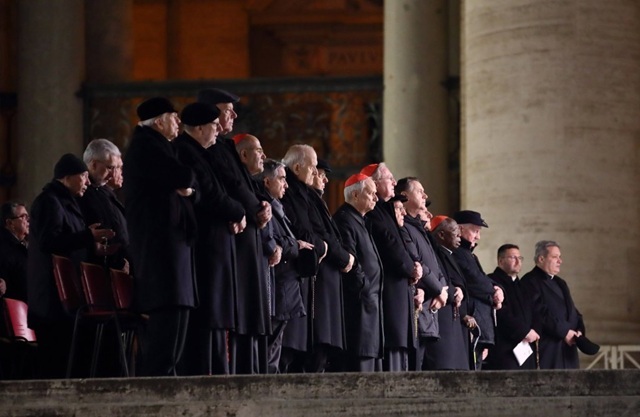
As Pope Francis remains hospitalized amid worsening health concerns, the College of Cardinals is bracing for a potential papal succession that could shape the future of the Catholic Church. With 138 cardinals eligible to vote, Vatican insiders suggest that political and theological factions are already maneuvering behind the scenes to influence the election of the next pope.
On Monday, a sense of urgency gripped the Vatican when senior church figures received a message via email and WhatsApp, calling them to an evening gathering to pray for the ailing pope. The meeting, led by Cardinal Secretary of State Pietro Parolin, was a stark reminder of the looming uncertainty surrounding the Holy See’s leadership.
Francis, now 88, has spent more than two weeks in the hospital battling bronchitis and pneumonia. After showing initial signs of improvement, his condition took a turn for the worse last Friday when a bronchial spasm led to severe breathing difficulties. Additional tests revealed anemia and kidney issues, raising concerns that he may be too frail to continue leading the Church.
A College of Cardinals in Anticipation
With speculation mounting about whether Pope Francis will resign if he recovers, the focus has shifted to the cardinals who will decide his successor. According to the Times UK, these pious powerbrokers are deeply divided along ideological lines, with five broad factions emerging: liberals, soft liberals, moderates, soft conservatives, and conservatives.
The key issues at stake include doctrinal matters such as the blessing of same-sex couples, the ordination of female priests, and the traditional Latin Mass. While Francis, considered a liberal pope, has implemented progressive reforms, a significant conservative bloc seeks to roll back these changes and restore traditionalist values.
The conclave will bring together 138 cardinals under the age of 80 who are eligible to vote. Notably, 110 of them were appointed by Francis himself, suggesting a strong liberal leaning. However, there is no clear majority faction, which could prolong deliberations. Historical precedent suggests that papal elections can extend beyond four days when ideological divides run deep.
Potential Successors: The Papabili
Among those considered frontrunners for the papacy, several names have emerged as key contenders. Cardinal Pietro Parolin, the Vatican’s chief diplomat and a close ally of Francis, has taken center stage in recent prayer meetings. At 70, Parolin is seen as a steady and experienced leader, though some question whether he has the charisma to galvanize the Church in a time of crisis.
Another prominent name is Cardinal Luis Tagle of the Philippines, a progressive figure who heads the Church’s evangelization department. Tagle’s popularity in Asia, his deep theological knowledge, and his alignment with Francis’ vision make him a strong candidate.
On the conservative end, Cardinal Gerhard Ludwig Müller of Germany is widely respected among traditionalists. His firm opposition to progressive changes in Church doctrine makes him a rallying figure for those who seek to restore more conservative principles.
Meanwhile, African and Latin American cardinals are expected to play a significant role in the election. European cardinals are reportedly anxious about Christianity’s decline in the West and tend to lean liberal, while cardinals from Africa and Asia view liberalism as a factor in Christianity’s weakening influence. This geographic divide may further complicate the conclave’s decision-making process.
A Defining Moment for the Catholic Church
Pope Francis’ tenure has been marked by sweeping reforms, including greater inclusivity and a focus on social justice. However, his progressive stance has also sparked backlash from conservative factions within the Church. If he steps down, the selection of the next pope will determine whether his legacy endures or is curtailed by a shift toward conservatism.
Edward Pentin, a senior contributor for the National Catholic Register and author of The Next Pope, points out that while Francis has “stacked the deck” by appointing a majority of voting cardinals, history has shown that conclaves can be unpredictable. “Each cardinal will consider three key factors when voting: whether the candidate aligns with their vision for the Church, personal compatibility, and how the election will be received in their home country,” Pentin notes.
As the Catholic world awaits further updates on Pope Francis’ health, all eyes are on the Vatican, where political maneuvering and prayerful deliberations are already shaping the Church’s next chapter. Whether the next pope will continue Francis’ progressive vision or pivot towards a more traditional approach remains to be seen, but one thing is certain—the decision will have profound implications for the future of Catholicism worldwide.









