The presence of the United States in Latin America’s political arena has re-emerged as a central and contentious issue, with governments and political movements across the region increasingly alleging foreign interference at a moment of overlapping electoral cycles. Reporting by El País describes a widening confrontation in which accusations of U.S. involvement are now shaping campaign rhetoric in Mexico, Brazil, and Colombia.
The latest flashpoint emerged in Colombia, where Donald Trump publicly expressed “full support” for presidential candidate Abelardo de la Espriella, a figure aligned with the country’s political right. The endorsement, issued via social media, was immediately criticized by left-wing rival Iván Cepeda, who described it as foreign interference in an election scheduled for June 21. The episode intensified an already polarized campaign in which external influence has become a recurring theme.
According to El País, Trump’s intervention in Colombia is part of a broader pattern in which his administration has more openly aligned itself with right-wing candidates across Latin America. Similar gestures of political support have been noted in other countries in the region, including Argentina, Chile, Honduras, and Costa Rica, marking a departure from the more restrained diplomatic posture traditionally observed by Washington in electoral matters.
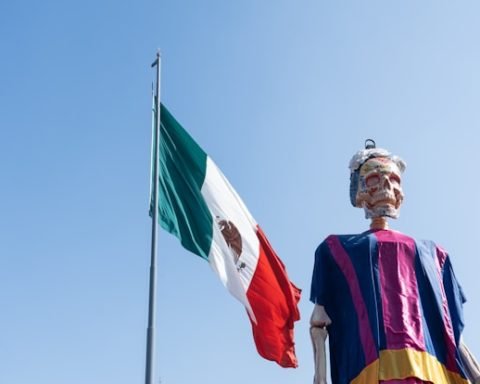
In Mexico, tensions with the United States have escalated around security cooperation and anti-narcotics policy, with the government of President Claudia Sheinbaum repeatedly asserting the principle of national sovereignty. The classification of several Mexican criminal organizations as terrorist groups by Washington has deepened concerns in Mexico City about the potential expansion of U.S. operational reach, particularly after reports of joint intelligence activity involving American agents in northern Mexico.
The situation intensified following legal and political developments that linked regional officials to organized crime investigations, prompting diplomatic friction and renewed scrutiny of cross-border security operations. In response, Mexican authorities have sought to reinforce legal frameworks addressing foreign interference, while political leaders across the spectrum have used the issue to frame debates over sovereignty and governance.
Brazil has also become a focal point of escalating tensions, particularly after Washington moved to designate two of the country’s most powerful criminal organizations as terrorist groups, placing them in the same category as transnational militant networks. The decision, reported by El País, was received in Brasília as a unilateral escalation with potential implications for domestic security policy and national jurisdiction.
President Luiz Inácio Lula da Silva’s administration has expressed concern over the measure, arguing that it risks legitimizing external intervention in domestic security affairs. The decision comes amid a broader political struggle in Brazil over how to address organized crime, with opposition figures aligned with former president Jair Bolsonaro advocating a more militarized approach that aligns more closely with Washington’s framing of the issue.
Beyond security policy, economic pressure has also entered the diplomatic equation, with discussions in Washington over potential new tariffs adding another layer of tension to an already strained relationship. Brazilian officials have warned that linking trade measures to security classifications could further politicize bilateral relations at a sensitive moment ahead of upcoming elections.
Across the region, these developments are converging into a broader narrative of renewed geopolitical competition and contested sovereignty. The concept of U.S. influence—long present in Latin American political discourse—has re-emerged in a more explicit and immediate form, now closely tied to electoral contests and security policy debates.