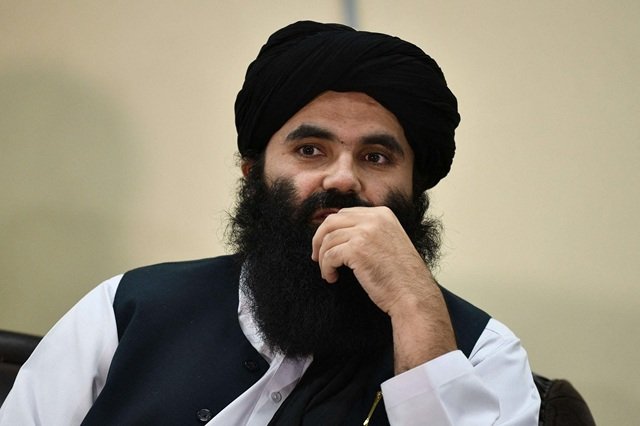
The Taliban has tried to show itself as united and in control. However, recent comments from Interior Minister Sirajuddin Haqqani have revealed rising tensions within the group and a growing gap between its leaders and the Afghan people. By openly acknowledging public dissatisfaction and governance problems, Haqqani offers a rare look at a regime struggling with legitimacy and leadership.
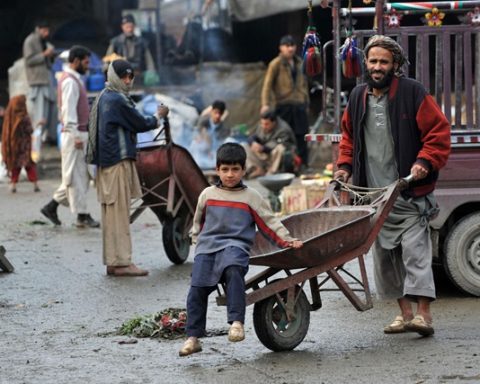
Addressing a gathering in Kabul organized to voice support for Taliban supreme leader Sheikh Haibatullah Akhundzada, Haqqani admit many Afghans disagree with the regime’s direction. This is important because Taliban officials often claim to have broad public support. Haqqani’s comments challenge that idea. When a top leader openly admits to public resentment that’s mounting, it is a clear sign that the usual cocktail of official statements, shrinking political space, and the absence of any real, inclusive governance can no longer paper over concerns about the erosion of public trust. The frustration of the average Afghan citizen is growing all the time as a result of the economic situation, unemployment and the continuing humanitarian crisis. The regime is, of course, very much dependent on coercion to keep things under control, and that, in itself, is not going to generate public legitimacy.
Haqqani’s warning that the regime’s policies and governance are becoming more restrictive and coercive is especially noteworthy because it highlights a growing divide between the regime and society. In his comments, he seems to be reflecting the public’s growing discontent with a host of policies since the Taliban’s return to power in 2021, such as the ongoing prohibition on girls’ secondary and higher education, the wide range of restrictions on women’s work, and the virtual absence of women from the political sphere, public administration and most of the media. These measures, along with the ongoing economic challenges, shrinking employment prospects and increasing unemployment, have led to social and economic discontent at large. Instead of expanding participation in governance, the regime has increasingly resorted to centralized decision-making and curtailed civic space, raising doubts about its capacity to address the needs of the diverse population.
The warning to centralize authority in one man was another important point Haqqani made. He emphasized institutions rather than personalities, implicitly pointing to the issue of increased centralization of power under Sheikh Haibatullah Akhundzada. In the past, the supreme leader had a strong influence over major political, religious and social policies, which have been emanating largely from Kandahar since the fall of Kabul to the Taliban. Excessive centralization is seen as a disadvantage by critics because it negatively impacts consultative decision-making, institutional development, and accountability. Haqqani’s comments thus suggest wider discussions going on within the Taliban regarding governance, leadership and the viability of a system that relies on a singular point of control.
Haqqani’s emphasis on institutional power over personal power is indicative of broader concerns about the Taliban’s structure. Any system that relies totally on a single individual is fragile. It stifles discussion, weakens responsibility, and fosters partisanship. Factionalism.
His warning that personal loyalties, regional affiliations, and internal divisions could make Haqqani’s criticism of too much power in one person’s hands is even more telling. By warning against making the entire government depend on a single leader, he indirectly questioned Sheikh Haibatullah Akhundzada’s leadership. Since taking charge, Akhundzada has become the main authority on all major issues, with decisions centered in Kandahar. This has frustrated many in the Taliban who want a more consultative and structured way of governing. Leader’s continued distance from public engagement has contributed to perceptions of an increasingly insulated leadership disconnected from the daily realities confronting ordinary Afghans.
It is important to note that Haqqani’s comments are not just a personal criticism of Akhundzada. Instead, they reflect a deeper dynamic within the movement known as the Taliban. The struggle over governance, international relations, economic management and social policies has come to a head amid growing acrimony. These conflicts have been domestic, but not anymore – Haqqani’s outcry has created an internal frustration that is becoming hard to suppress.
The overarching message is that the biggest threat to the Taliban may no longer be external pressure but internal strains. An administration that cannot keep the people’s faith and continues to have internal splits has a lot to answer for. It is crucial to understand Haqqani’s comments not simply as a personal disagreement with Akhundzada, but as a reflection of broader public sentiment, which is crucial to the legitimacy of political systems. They reveal further issues within the Taliban’s structure. Disagreements about how to govern, deal with other countries, manage the economy, and set social policies are becoming clearer. While these issues were usually kept private, Haqqani’s public comments suggest that internal frustrations are now harder to hide.