
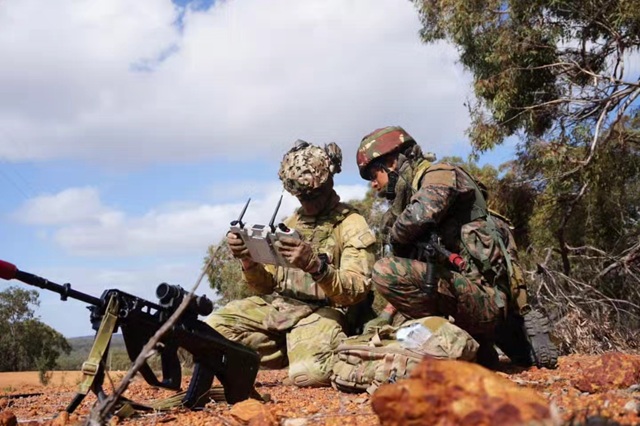
Operation Sindoor last year drew a new strategic picture between India and Pakistan. The most important aspect of this redrawn strategic picture was setting a new normal and attempting to achieve a certain level of credible deterrence against Pakistan by demonstrating the ability to impose maximum deterrence. While this subtle departure from earlier responses, where deterrence was limited and less credible, is notable, India must remember that Pakistan has recalibrated and refused to roll over through its deceptive peace strategy and by redeveloping its terror strategies.
The Deceptive Strategy
Pakistan recognises that its battlefield endurance is limited. It lacks the conventional strength to deter India’s offensive or to hold territory. Therefore, Pakistan uses a strategic pause to shift from conventional to sub-conventional warfare. This pause allows Pakistan to avoid further battlefield losses while appearing to pursue diplomacy. Pakistan’s deceptive peace strategy has four elements:
1-Gather diplomatic support on the global stage
2-Repair damages by securing financial and defense aid
3-Prevent regional isolation through diplomatic engagement with India.
4- Shift to sub-conventional methods — terror strikes — to retaliate against India.
Pakistan also uses Afghanistan to build strategic depth. The deceptive strategy resembles what former Indian Air Force Chief Anil Chaudhary described as the “Triple R” strategy: rearticulate, reorganize and relocate.
Pakistan retaliates through sub-conventional means while projecting diplomacy. It uses peace talks to buy time and freeze the conflict. In the background, Pakistan aims to bleed India through terrorism and keep fundamentalist ideology alive. Its attempts at détente often fail. Either terror groups sabotage peace or the Pakistan Army blocks progress.
Pakistan cannot match India’s military strength. Nonetheless, it risks limited conflicts to provoke India’s response. When tensions reach a certain point, Pakistan retaliates and then briefly pauses diplomatic efforts. After the 2001 Agra Summit, efforts to normalize relations between India and Pakistan began but failed. Six months later, terrorist attacks targeted the Indian Parliament. In response, India launched Operation Parakram, leading to a standoff and a ceasefire in November 2003. Just two months after the ceasefire, terrorists attacked Jammu Railway Station, killing four soldiers and six civilians and injuring others.
In April 2005, India and Pakistan agreed to open the frontier dividing Kashmir. The same year, they launched a bus service across Kashmir. Two months later, five Lashkar-e-Taiba terrorists attempted to attack Ram Janmabhoomi. Three months after that, Delhi experienced serial blasts. All of this occurred within five months of opening a major land route.
Pakistan’s Shift To Covert Strikes
Pakistan’s deceptive strategy to counter India’s anti-terror measures appears to be shifting. Initially, responses were straightforward and overt, but after Operation Sindoor, Pakistan adopted a more covert, layered approach. For example, no group claimed responsibility for the recent Red Fort attack, indicating a move toward more clandestine tactics. This evolving form of subversive terrorism combines direct and indirect actions, including sabotage, infiltration, front organisations, kidnappings, and assassination attempts, particularly through the redesign of its Karachi Project and a shift towards more focused subversion targeting white-collar groups.
Such strategies are carefully designed to respond without provoking a full-scale retaliatory response from India. This shift in counter-response is followed by Asim Munir’s madman approach, where he and Pakistan Army officers often engage in warmongering, launching propaganda and issuing threats without pursuing a clear path to peace, as it did earlier, though deceptive, but at least some ground-level diplomatic work still takes place.
Pakistan has lowered the temperature of counterstrike but has also shown it will maintain its resolve to strike back, and this thinking must be countered. As M.J. Akbhar famously described Pakistan as a “toxic jelly state,” a term he used in his 2012 book Tinderbox, in which he referred to Pakistan as a jelly state that is always unstable, unlike butter, which melts or solidifies; it just wobbles and stays in place. Similarly, from a short-term perspective, Operation Sindoor can have a shock-and-awe effect on Pakistan, but it recalibrates and resurfaces. Therefore, India must not only demonstrate its credible deterrence and overwhelming consequences, but also continuously work to break Pakistan’s will to recalibrate by developing a credible, impactful maximum-pressure strategy against Pakistan.
The Maximum Pressure
India must pursue a maximum-pressure strategy that is sustained not only during conflict or wartime but also in peacetime. While keeping the Indus Water Treaty in abeyance and intensifying sanctions scrutiny are among the measures to apply pressure, they have shown limited results and have not disrupted Pakistan’s internal or external stability, especially its will to recalibrate. India must adopt a two-fold strategy, working across the overt and covert spectrum, from diplomatic to military, even at the covert level. First is a pre-emptive strategy, where India must engage through overt or covert means to eliminate and disrupt any imminent threat to carrying out strikes on imminent threats, such as covert border strikes through drones. Second is the preventive strategy, where India prevents a non-imminent threat from developing into a greater threat in the future. This differs from the pre-emptive strike notion, where the threat is imminent. In this case, India can target any strategic behaviour that could put Pakistan in an advantageous position or help it to strategic recalibrate and readjust, from short-circuiting its economic and political stability to diplomatic manoeuvring through multiple diplomatic outreaches and preventive and clandestine diplomacy, especially in regions that are the centre of attention of Pakistan’s influence, like Bangladesh. Further, some overt preventive strikes through military options could be exercised by targeting more high-value targets in Pakistan rather than only those that pose immediate threats.
The core idea of disrupting or breaking Pakistan’s will to recalibrate works only when India can sustain a multi-domain destabilisation of Pakistan through pre-emptive and preventive strategies. Only then will Pakistan’s will to reorganise and recalibrate begin to erode. The US strategy of building maximum pressure against Iran was primarily focused on targeting Iran’s will to recalibrate its strategic rise and its nuclear programme, which was heavily disrupted by the US’s targeted efforts that went beyond diplomacy. Perhaps those efforts now give the US a small window to trigger massive destabilisation in Iran by short-circuiting its brewing internal socio-economic faultlines- The 2026 Iran protests. Similarly, India can pursue its own maximum pressure strategy to disrupt and destabilise Pakistan’s resolve, giving India the right window to push Pakistan to the margins of the region and, if possible, open the door to achieving complete deterrence against Pakistan.