Domestic legal systems differ, yet lawyers often assume that international law is universal…but my experiences as an international lawyer…have made me conscious of national differences in approaches to international law ~ Anthea Roberts, Is International Law International? (Oxford University Press: 2017)
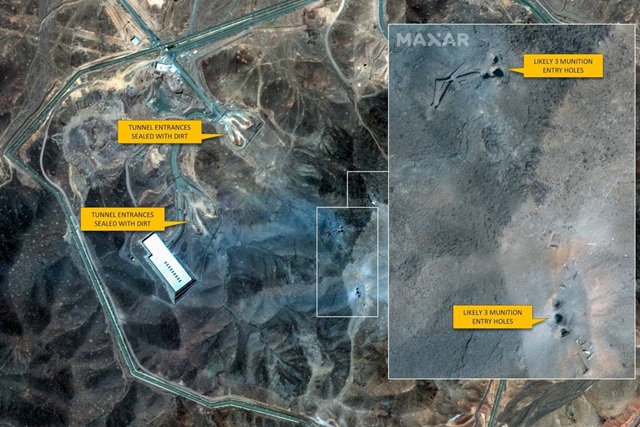
In the theatre of international affairs, perhaps no concept is more venerated and simultaneously more contested than that of sovereignty. The recent unilateral military assault by the United States on Iran’s nuclear facilities, employing bunker-busting ordnance in a targeted attack, casts an unforgiving spotlight on what can only be described as the “sovereignty paradox.” This paradox was eloquently examined by Anthea Roberts in her seminal work, Is International Law International? where she posits that the interpretation and application of international law—including sovereignty—is refracted through the prism of cultural, ideological, and geopolitical lenses specific to each State. The claim by Iran’s Foreign Minister that the United States has violated the United Nations Charter, juxtaposed with the concerned pronouncements of the UN Secretary-General on the escalatory dangers posed by such aggression, brings to the fore the need for a critical and nuanced analysis of the epistemic and teleological underpinnings of sovereignty as a juridical construct.
The very idea of sovereignty, as enshrined in Article 2(4) of the UN Charter, proscribes the threat or use of force against the territorial integrity or political independence of any State. Yet, in practice, the conduct of States demonstrates a fluid and often inconsistent application of this norm. The United States, in its articulation of self-defense or pre-emptive defense, invokes Article 51 of the Charter, thereby asserting a narrative of legitimacy under international law. Iran, on the other hand, seemingly insists on a literal and absolutist interpretation of Article 2(4), bereft of exceptions save for Security Council authorization or manifest self-defense against an armed attack. Herein lies the essence of the paradox: both States operate under the same Charter but draw antithetical conclusions from it.
The Bush Doctrine
The Bush Doctrine, as articulated in the aftermath of the cataclysmic events of September 11, 2001, heralded a decisive departure from the traditional pillars of collective security and multilateral diplomacy that had hitherto defined the post-Charter world order. In its essence, the Doctrine advanced the contentious notion of anticipatory self-defense, wherein the United States asserted its prerogative to unilaterally employ pre-emptive force against perceived threats, even in the absence of an imminent armed attack. This redefinition of imminence—unmoored from classical legal thresholds—posed a profound challenge to the normative integrity of Article 2(4) of the United Nations Charter.
Invoking the lexicon of moral absolutism, the Bush Doctrine divided the world into binary categories—those “with us” and those “against us”—leaving little room for neutral legality or sovereign autonomy. It endorsed regime change as a strategic and ethical imperative, and blurred the line between lawful self-defense and unlawful aggression. From a juridical standpoint, the Doctrine strained the fabric of customary international law and undermined the multilateral mechanisms designed to temper the unilateral use of force. In the final analysis, the Bush Doctrine stands as a paradigmatic manifestation of power eclipsing principle, where perceived security eclipsed legality, and moral certitude silenced normative restraint.
The Paradox
Roberts, in her intellectual excavation of the universality of international law, identifies a fault line in the assumption that legal norms are interpreted identically across jurisdictions. She asserts that while the law may be international in form, its application is distinctly national in substance. Cultural predispositions, historical grievances, and hegemonic aspirations shape how States perceive and deploy international legal principles. In this regard, the sovereignty paradox is not an aberration but an epistemic inevitability.
The Cuban Missile Crisis of 1962 and the lesser known, yet equally perilous, incident of 1983 involving Soviet Lieutenant Colonel Stanislav Petrov underscore the fragility of peace in a world governed by subjective interpretations of law. In both instances, the preservation of humanity hinged not on legal norms but on the prudence and moral agency of individuals within the machinery of States. John Simpson, in his reflections on Unspun World, rightly points out that while the present moment is fraught with peril, it is not without precedent. However, what makes the current situation uniquely precarious is the diminished role of multilateralism and the increasing marginalization of institutions like the UN, whose moral authority is waning even as its legal mandates remain intact.
The recourse to force by the United States, under the aegis of pre-emptive necessity, raises critical questions about the elasticity of sovereignty in the face of perceived existential threats. Is sovereignty an inviolable shield, or can it be penetrated by claims of imminent danger? The US justification finds its roots in the post-9/11 doctrine of anticipatory self-defense, a doctrine that is neither universally accepted nor codified in international law. Iran’s rejection of this premise is equally rooted in a historical narrative of victimhood and imperialist subjugation, leading to an absolutist defense of its sovereign prerogatives.
Roberts does not merely expose these divergent epistemologies; she provides a framework to understand them. Her thesis is not that one interpretation is more legitimate than another, but that international law is a site of contestation, where multiple voices seek to assert normative authority. This is particularly salient in the context of the Global South, where legal traditions and experiences often diverge from those of Western liberal democracies. The Iranian perspective on sovereignty, shaped by its revolutionary history and geopolitical isolation, cannot be meaningfully assessed without reference to its unique legal culture and historical consciousness.
The United Nations, as the custodian of the Charter system, finds itself in a precarious position. The Secretary-General’s pronouncements, though solemn, carry little coercive power. The Security Council, paralyzed by veto politics, is unable to assert a collective response. This institutional impotence further accentuates the sovereignty paradox, for what is the utility of a sovereign norm if its violation elicits no tangible consequence? The international legal system, in this respect, is reminiscent of a Greek tragedy—replete with lofty ideals, but impotent in execution.
The implications of this paradox are far-reaching. For one, it undermines the predictability and coherence of international legal norms. When States interpret sovereignty through self-referential frameworks, the capacity of international law to serve as a universal arbiter is diminished. Secondly, it exacerbates geopolitical tensions, as unilateral actions justified under contested legal doctrines provoke counterclaims and reciprocal violations. Finally, it erodes the legitimacy of multilateral institutions, whose authority is predicated on the uniform application of legal norms.
My Take
The attack on Iran by the United States is not merely a geopolitical event; it is a juridical moment of reckoning. It compels the international community to confront the sovereignty paradox head-on. Anthea Roberts has provided the intellectual scaffolding for such an inquiry, reminding us that international law, though global in aspiration, is local in interpretation. As the world teeters on the precipice of renewed conflict, it must ask itself whether it is content with a system where sovereignty is a function of power rather than a principle of order. For if sovereignty is everything, and nothing at the same time, then the promise of international law is but a mirage in the desert of realpolitik.
The sovereignty paradox, as expounded above, is one that the international legal order has lived with—sometimes ignored, oftentimes rationalised—since the dawn of the Westphalian model in 1648. The recent military strike by the United States on Iran’s nuclear facilities and the immediate invocation by both States of opposing interpretations of the same Charter underscores a chronic pathology that afflicts international law: its indeterminacy when power enters the equation. Anthea Roberts has skillfully unveiled this paradox through the lens of her pivotal work, Is International Law International?, where the concept of legal relativism—particularly in the field of sovereignty—is no longer an academic curiosity but a living, breathing principle in world affairs.
The relevance of this conundrum lies not in deconstructing sovereignty as a legal abstraction but in situating it within an epistemic framework, where cultural mores, historical anxieties, and political path dependencies shape State behavior and legal posturing. This, indeed, is Roberts’ enduring contribution—highlighting that international law is not merely applied, but refracted through national experiences. It is this very refraction that lies at the heart of the sovereignty paradox. The United States invokes Article 51 of the UN Charter in asserting pre-emptive self-defense, while Iran clings to Article 2(4), claiming a categorical proscription of force. Both are correct, and yet both are fundamentally at odds—a juridical paradox, but also a political impasse.
From a legal standpoint, the doctrine of anticipatory self-defense—invoked by the United States—remains unsettled in customary international law. It is not a doctrine accepted with any consistency by the international community, and certainly not codified within the Charter regime. Its roots in the Caroline incident of 1837 have been stretched, sometimes to breaking point, particularly after the events of 9/11, when pre-emption was transmuted into a full-blown strategic doctrine. Yet, it would be a mistake to dismiss the United States’ position as mere adventurism. It is grounded in an understanding—albeit subjective—of security in an age of weapons proliferation and transnational threats. The dilemma arises not because there is no legal norm, but because the norm itself lacks a center of gravity.
The above discussion juxtaposes this doctrinal ambiguity with the impotence of multilateral institutions. The United Nations, perhaps the last bastion of the collective security paradigm, is revealed to be normatively robust but institutionally anemic. The Secretary-General’s statements amount to moral hand-wringing; the Security Council remains paralyzed by the veto—a mechanism originally conceived to ensure unity among the victors of the Second World War, but now the Achilles’ heel of global governance. This disjunction between legal norms and institutional enforcement is what renders the sovereignty paradox not merely theoretical, but existential.
The use of historical parallels—the Cuban Missile Crisis and the 1983 Petrov incident—is not only apt but cautionary. It reminds us that law, in moments of crisis, often gives way to prudence and human restraint. This, perhaps, is the unspoken reality of the international order: that in its most perilous moments, survival depends not on treaties or legal positivism, but on the fallible wisdom of individuals. This is a sobering thought, particularly in a world increasingly governed by algorithms and doctrinal rigidity.
The implications drawn in this discussion are also worth reiteration. The interpretive fragmentation of sovereignty undermines the very utility of international law as a stabilizing force. When the application of law becomes a function of political will and cultural narrative, coherence is sacrificed at the altar of strategic interest. The result is a legal order that purports to be universal but operates on an a la carte basis—where the powerful wield law as a shield, while the less powerful are told to abide by its letter.
Where, then, does the international community go from here? The answer lies not in discarding sovereignty, but in reimagining it—not as a sacrosanct shield, but as a conditional construct shaped by mutual responsibility. Roberts’ contribution is foundational in this respect, for she invites us to look not merely at the content of international law, but at its context—cultural, political, and institutional. Sovereignty, thus reconceptualized, becomes not a license for unilateralism, but a site of normative dialogue.
In the final analysis, it would be prudent to place a clarion call to the guardians of international law—not to retreat into abstraction, but to confront the paradoxes of power with intellectual honesty and juridical courage. For, unless sovereignty is anchored in a shared understanding of legal and moral legitimacy, it will continue to oscillate between everything and nothing, leaving the promise of international order an illusion, vulnerable to the gales of realpolitik.