


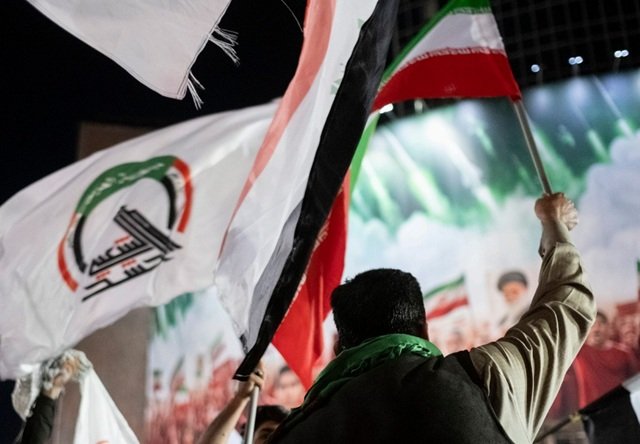
On June 2, 2026, two U.S.-designated foreign terrorist organizations in Iraq, Asaib Ahl al-Haq and Kataib Al-Imam Ali, announced their intention to begin handing over their heavy weapons to the Iraqi state. The move came after a conflict that exposed the scale of Iran-backed militia involvement in regional warfare and marked the most intense military campaign by Iraqi muqawama factions since U.S. combat forces withdrew from Iraq in 2011.
The latest issue of CTC Sentinel examined the role of Iraqi militias during the 2026 war between Iran and the U.S.-Israel coalition, documenting how armed groups linked to Iran expanded their operations, used state-funded Popular Mobilization Forces (PMF) structures, and carried out attacks from Iraqi territory against U.S. positions, neighboring countries, and regional targets.
The study, the ninth in a series of CTC Sentinel reports examining the rise of Iran-backed militias in Iraq since 2019, describes a transformation in the country’s security environment. It traces how armed factions that initially developed as irregular forces evolved into powerful networks operating within Iraq’s formal security structure while maintaining independent military capabilities.
The report places the 2026 conflict within a longer history of militia expansion. During the fight against the Islamic State beginning in 2014, Iran-backed groups played a central role in establishing and expanding the PMF, a state-funded force created to support Iraq’s campaign against the extremist organization. According to the analysis, the PMF grew into a large military structure containing numerous factions with varying degrees of connection to Iran’s Islamic Revolutionary Guard Corps (IRGC).
Among these groups, Badr held a particularly significant historical position. Formed from Iraqi Shiite exiles and prisoners of war during the Iran-Iraq War, Badr originally operated as part of the IRGC’s military structure. After the fall of Saddam Hussein in 2003, many Badr fighters entered Iraq’s political and security institutions, while maintaining long-standing connections with Iran.
The report states that, before 2026, Iraqi militia groups had frequently threatened U.S. and regional targets but often reduced their activities after facing military retaliation. Their campaigns between 2020 and 2025 produced periods of heightened attacks, particularly after the killing of senior Iranian and Iraqi militia leaders, but these operations were generally limited in duration.
The 2026 war represented a major departure from that pattern. According to the analysis, Iraqi militias entered the conflict with greater preparation, broader access to weapons, and deeper coordination with Iranian networks. The first phase began with preparations in early 2026, when groups displayed missile and drone capabilities, moved weapons into hidden locations, and expanded their ability to launch attacks from different areas of Iraq.
When hostilities began on February 28, Iraqi militia groups launched an intense wave of operations. The report states that militia-linked channels claimed an average of 28.2 attacks per day during the opening five days of the war, a level described as far beyond previous militia campaigns.
The first wave focused heavily on Iraq’s Kurdistan Region, where U.S. facilities and other targets were attacked from launch areas in northern Iraq. Erbil International Airport, which hosted a U.S. military presence, became one of the main targets. Other attacks were directed toward Jordan, including Muwaffaq al-Salti Air Base, a major location for U.S. aircraft during the conflict.
The campaign later expanded. Iraqi militias increased attacks around Baghdad, targeting remaining U.S. diplomatic and military locations, while also increasing operations linked to Gulf targets. The report describes a shift from large-scale attack numbers toward more deliberate operations designed to create wider regional pressure.
During the conflict, militia groups reportedly received additional weapons supplies from Iran, including new drone systems and missile capabilities. These resupply efforts allowed operations to continue into the final weeks before the April 8 ceasefire. The study identifies multiple phases of the war, including preparation, an initial surge of attacks, a period of adjustment and resupply, and a final phase in which militias regained operational momentum.
A significant part of the conflict involved information operations. Iraqi militia factions used online channels, particularly Telegram-based networks, to announce attacks, publish footage, and promote their activities. The report states that more than 800 launches were claimed through a range of media fronts known as “façade” groups, which allowed armed factions to claim responsibility while creating uncertainty over direct organizational involvement.
The analysis also highlights the role of the PMF itself. According to the report, 36 PMF units were linked either to attacks, logistical support, or assistance for groups designated by the United States as foreign terrorist organizations. With around 65 to 70 PMF brigades existing, the study states that this represented roughly half of the force.
The report describes the conflict as the first time that major elements of the PMF structure were used on such a scale to support Iran’s war effort. It details the movement of weapons through PMF-controlled networks, the use of militia facilities for storage and logistics, and the reported deployment of PMF personnel into Iran during the final stage of the conflict.
The role of Badr emerged as one of the central findings. The study states that Badr provided logistics, transportation, and support networks for militia operations while also conducting drone attacks during the war. It describes Badr’s involvement as a continuation of its historic relationship with Iranian military structures.
Following the ceasefire, attention turned toward the future of Iraq’s armed groups. The decision by Asaib Ahl al-Haq and Kataib Al-Imam Ali to begin transferring heavy weapons to the Iraqi state came after a conflict that significantly altered perceptions of militia capabilities and their relationship with Iraq’s formal security institutions.
The report concludes that future security efforts will focus on whether disarmament initiatives represent lasting changes or temporary measures shaped by political and international pressure. The outcome will depend on how Iraq addresses the role of armed groups that have operated both inside and alongside the country’s official security system.










