


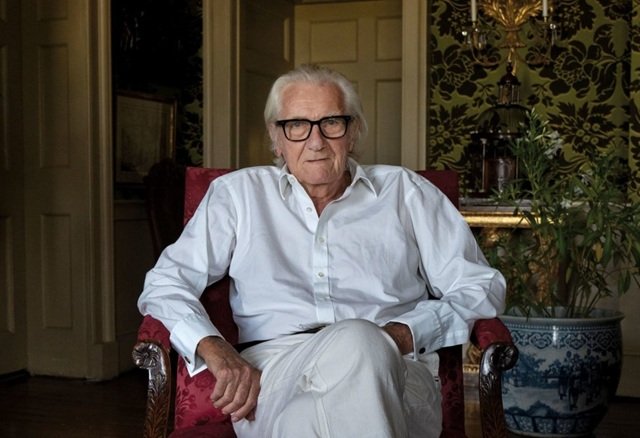
Michael Heseltine spent six decades at the centre of British political life, occupying some of the highest offices of state and becoming one of the Conservative Party’s most recognisable figures. Yet, at 93, the former deputy prime minister believes the achievement that will define him is not a government role, a political battle or a Westminster victory. It is the thousands of trees growing around his Northamptonshire home.
“People say, ‘What will you be remembered for?’” Heseltine told Observer UK during a visit to Thenford House. “And I always say ‘my trees’, because who remembers most politicians?”
The arboretum surrounding the 18th-century country house has become the centre of Heseltine’s daily life. Across 70 acres, the grounds contain more than 3,000 types of trees and shrubs, including 300 species of oak and 1,200 varieties of snowdrop. The collection is carefully recorded through a computer programme and geostationary mapping system that allows the team to identify the location of plants to the nearest square metre.
“This is not a game,” Heseltine said while describing the work required to maintain the grounds.
The former cabinet minister and his wife, Anne, travel around the estate in matching golf carts, one red and one blue, checking flower borders, fallen branches and young trees. The couple monitor the landscape closely as they manage a collection that has grown so extensive there is little room for further additions.
“There’s a constant flow of people saying, ‘Have you got? Would you like?’” Heseltine said. “So now, by and large, we don’t plant more than one of anything because we don’t have that much space.”
The connection between Heseltine and Thenford House began after years of searching for an ideal home. Before entering Parliament, he founded the publishing company Haymarket, giving him the resources to pursue the country property he and Anne wanted. They searched across the countryside, even approaching unfamiliar houses after spotting imposing gates, before eventually finding Thenford.
Their shared fascination with collecting is visible throughout the estate. Two large brass dogs stand near the entrance, bought from a flea market in Paris, while sculptures, plants and architectural features carry stories from decades of travel and discovery.
The arboretum itself was inspired by horticulturalist Harold Hillier, who visited the property in 1978, two years after the Heseltines purchased it. Seeking advice on what could grow in the grounds, Heseltine received a list of plants available from Hillier’s nursery and decided to buy them all. Only later did he realise the collection included a large number of oak varieties, beginning a lifelong passion.
“I was hooked,” he said.
His interest in gardening began much earlier. Sent to boarding school at the age of 10, Heseltine was given a small patch of ground and a packet of Virginia stock seeds by the headmaster. He carefully planted the area and created his first garden within weeks.
Heseltine sees clear links between gardening and politics. “You certainly have to be ruthless or it’ll take you over,” he said. “Pruning is an important part of achieving results and maintaining the appearance.”
That philosophy reflects a political career that included serving as deputy prime minister, defence secretary, environment secretary and president of the board of trade. Known as “Tarzan” because of his combative style, Heseltine became one of the Conservative Party’s “big beasts” and played a central role in the events that led to Margaret Thatcher’s departure from Downing Street after he resigned from her cabinet during a dispute over defence procurement.
Decades later, he rejects the idea that he personally brought down Thatcher. Reflecting on his famous phrase, “he who wields the knife never wears the crown”, he said the events unfolded through cabinet pressure following Geoffrey Howe’s resignation as deputy prime minister. Heseltine had sought the Conservative leadership after Thatcher’s departure but was unsuccessful.
Although his political career shaped modern Britain through roles including the regeneration of London Docklands, Liverpool and Manchester, Heseltine remains engaged with current affairs. He said he believes Prime Minister Keir Starmer is facing significant challenges, citing issues including Ukraine, the Middle East, relations with President Trump and Brexit.
Discussing defence policy, Heseltine argued that governments should focus on military capability rather than simply spending targets linked to gross domestic product. He said technological changes on modern battlefields had transformed the nature of defence planning.
He also criticised the consequences of Brexit, saying Britain’s departure from the European Union had separated the country from its traditional position at the centre of European affairs. A decade after the referendum, he said he would support rejoining immediately.
Despite his concerns about contemporary politics, Heseltine rejects the idea that Britain cannot be governed effectively. “If ministers know what they want, they get it,” he said, adding that the civil service requires both direction and leadership.
As the golf cart moves past lakes, medieval fish ponds, flower borders and sculptures collected over a lifetime, Heseltine continues to look beyond his political past. He recalls witnessing major moments of the 20th century, including Neville Chamberlain’s declaration of war, VE Day celebrations and the night East Germany closed the Berlin Wall.
He acknowledges that becoming prime minister was an ambition he never achieved. “Would I like to have done the job? Yes, I would,” he said. “And I think I would have made a contribution.”
Yet at Thenford, where every tree and sculpture has a history, Heseltine’s focus remains on what continues to grow. He still follows politics closely, reads four newspapers a day and insists he has not retired from public life.
Surrounded by the landscape he has spent decades creating, the former cabinet minister’s most enduring project remains rooted in the soil of Northamptonshire, where his collection of trees continues to expand while his political legacy remains part of Britain’s modern history.









