


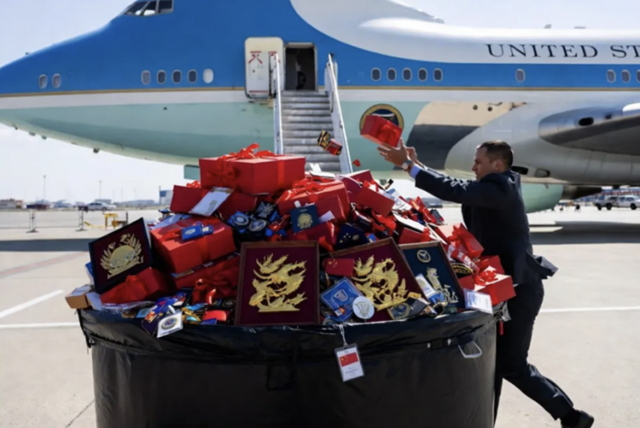
U.S. President Donald Trump and his delegation reportedly discarded all gifts and souvenirs received during a high-level visit to China, including access badges, commemorative items, and temporary communication devices, before boarding the presidential aircraft. The items were placed in disposal bins at the base of the boarding stairs, according to accounts cited by international reporting, in what officials described as part of standard security procedures.
The U.S. government maintains that such actions are routine counterintelligence measures designed to eliminate potential risks of surveillance, data extraction, or embedded electronic tracking devices. In visits to countries considered high-risk for espionage, including China and Russia, delegations are often equipped with temporary “burner” phones, restricted from using personal devices, and required to operate on secured, pre-vetted communication systems. Officials also rely on signal-blocking equipment and limit digital connectivity to reduce exposure to cyber intrusion.
However, the reported disposal has also drawn attention beyond procedural explanations, as it coincided with a diplomatically inconclusive U.S.-China summit in Beijing. The meeting concluded without a joint statement or clear agreements on key issues such as tariffs, Taiwan, and regional security tensions involving Iran. Conflicting accounts emerged from both sides regarding the substance of discussions, further fueling perceptions of unresolved friction between Washington and Beijing.
Analysts and observers have interpreted the incident in multiple ways, with some viewing the disposal of diplomatic items as a symbolic reflection of strained relations following the summit’s lack of tangible outcomes. The contrast has been drawn with previous visits to allied nations, where ceremonial gifts were reportedly treated with greater diplomatic emphasis, highlighting differences in tone across engagements.
The broader context of the visit also included heightened global tensions, with simultaneous reports of rising bond yields, inflationary pressures across major economies, and escalating geopolitical instability linked to ongoing conflicts in the Middle East. Meanwhile, additional reporting indicated that other international developments, including corporate financial announcements and security incidents abroad, continued to shape an already volatile global environment surrounding the summit.









