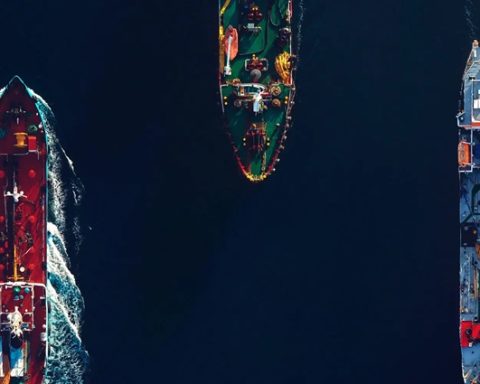
The Trump administration is preparing an executive order to enable the U.S. to stockpile critical minerals sourced from the deep seabed of the Pacific Ocean, in a strategic move to reduce American dependence on China for vital components used in batteries, defense systems, and renewable energy technologies.
According to a report by the Financial Times, the plan involves collecting polymetallic nodules—potato-sized rock formations that lie thousands of meters below the ocean surface and contain high concentrations of nickel, cobalt, copper, and manganese, along with traces of rare earth elements. These nodules form over millions of years and are increasingly seen as a new frontier in the geopolitical race for mineral resources.
The proposed stockpile would be similar in concept to the United States’ strategic reserves of crude oil and other critical commodities, with the nodules serving as a contingency supply in the event of a future conflict with China that could threaten access to global mineral markets.
A person familiar with the matter told the Financial Times that the initiative is part of a broader push to fast-track domestic and international deep-sea mining applications, and to build processing facilities on U.S. soil capable of refining the seabed material for industrial and military use.
The push for deep-sea resource security comes amid rising concerns in Washington over Beijing’s tightening grip on global mineral supply chains. China recently imposed new export restrictions on rare earth elements—an act viewed by many U.S. officials as a form of economic coercion. Analysts say these moves underscore the urgency of diversifying supply.
Alexander Gray, former chief of staff to the U.S. National Security Adviser under Trump and an Asia-Pacific expert, told the FT that “catalyzing U.S. government focus on areas of greatest vulnerability to PRC ambitions is essential,” describing the seabed as a new front in economic and military competition.
Key Republican figures including Secretary of State Marco Rubio and National Security Adviser Mike Waltz have expressed strong support for seabed mining, both during their time in Congress and within the Trump foreign policy orbit. Last year’s annual defense budget bill even directed the Pentagon to explore how polymetallic nodules could be processed for national security purposes.
“This has moved beyond a commercial question,” a House aide told the Financial Times. “This is a Chinese strategic capability built up for decades such that it could be weaponized.”
Despite these ambitions, the U.S. remains an outlier in international seabed governance. It has never ratified the 1982 United Nations Convention on the Law of the Sea, which forms the basis for deep-sea mining rules administered by the International Seabed Authority (ISA). As a result, the U.S. has no formal seat at the table in ISA negotiations, which continue to debate whether to allow industrial-scale mining in international waters.
Environmental concerns further complicate matters. Scientists and advocacy groups warn that disturbing the ocean floor could irreparably harm ecosystems and disrupt poorly understood species such as deep-sea corals and octopuses. Skeptics also question whether the U.S. can feasibly recreate China’s vertically integrated supply chain, or match the low costs of terrestrial mining in places like Indonesia.
Even so, The Metals Company, a Canadian mining firm with a U.S. subsidiary, has launched a permitting process through the U.S. Department of Commerce under a little-known 1980 law, arguing that Washington does not need ISA approval to mine in international waters. “The ISA does not have an exclusive mandate,” CEO Gerard Barron told the FT. But others disagree.
“You can’t give rights to something you have no jurisdiction over, pursuant to a treaty you are not a part of,” said Jose Fernandez, a senior Biden administration official and economic envoy for critical minerals. “Companies will want to be careful proceeding without a permit from the ISA.”
Neither the White House National Security Council nor the Department of Commerce responded to the Financial Times’ request for comment.
As the U.S. ramps up its competition with China across trade, technology, and military domains, deep-sea mining may be the next frontier in a global resource race—with the Trump administration determined not to be left behind.