President Donald Trump has reignited tensions over global trade by reinstating a reduced set of tariffs while launching a fierce attack on the US Supreme Court for striking down his sweeping import duties. Speaking from the White House, Trump described the ruling as “embarrassing” and criticised the very judges he had appointed, calling them “fools,” “unpatriotic” and a “disgrace to our nation.” Despite the rhetoric, his economic strategy has already been disrupted, forcing him to rely on alternative legal authorities to impose a 10 per cent blanket tariff across multiple trading partners, including United Kingdom.
Trump’s aggressive tone underscored his belief that the court’s decision would not weaken, but rather strengthen, his ability to levy trade penalties. “Foreign countries that have been ripping us off for years are ecstatic, they’re so happy, and they’re dancing in the streets. But they won’t be dancing for long,” he said, insisting that “other alternatives” would be used to generate greater revenue and enforce “fair tariffs, or tariffs period.” The president outlined a plan to maintain a 10 per cent tariff while undertaking further investigations over the next five months, with the intention of expanding duties on additional countries and goods.
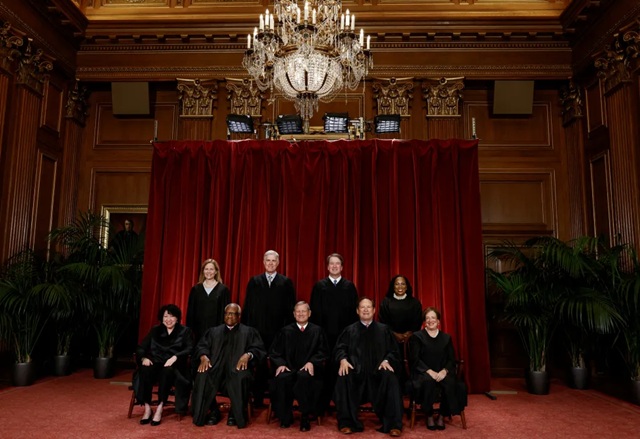
The Supreme Court’s majority ruling, with six justices in favor and three dissenting, held that the 1977 International Emergency Economic Powers Act (IEEPA) did not grant the president the authority to impose the broad reciprocal tariffs he enacted. These measures had applied to a wide range of imports, including the 10 per cent tariff on British exports, as well as additional duties targeting China, Canada, and Mexico under claims related to drugs and illegal migration. Chief Justice John Roberts wrote that the statute had never been historically invoked to impose tariffs of such scale, and the president’s interpretation stretched beyond the legitimate bounds of executive authority.
Trump seized on the dissent by Justice Brett Kavanaugh, arguing it left the door open for continued tariff actions. Kavanaugh suggested that other federal statutes could provide legal cover for presidential tariff powers, a point Trump praised, declaring that Kavanaugh’s “stock has gone so up.” Nevertheless, the ruling has already sparked a wave of potential refund claims by importers, estimated to total $175 billion, who had paid duties under the now-invalidated measures. When asked about reimbursing businesses, Trump said the matter would likely be “litigated for the next three years.”
Markets reacted cautiously to the announcement, with a modest rally as traders weighed the immediate resumption of tariffs against long-term legal uncertainties. Experts note that the president can still apply temporary tariffs of up to 15 per cent under Section 122 of the Trade Act of 1974 parts, remain unaffected by the Supreme Court decision.
International reactions were measured. The British government affirmed that its privileged trading position with the US should continue and pledged support for UK businesses navigating the evolving situation. The British Chambers of Commerce