


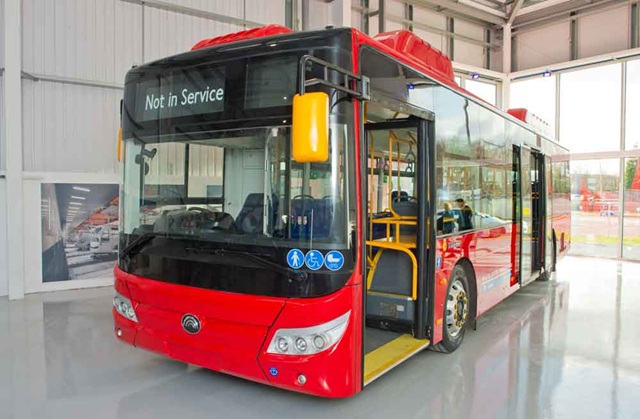
The UK government is investigating a potential security loophole involving Chinese-made electric buses that could allow them to be remotely disabled while in operation. Officials are working with the National Cyber Security Centre to determine whether Yutong, the Zhengzhou-based manufacturer, has remote access to the vehicles’ control systems for software updates and diagnostics. The inquiry follows findings in Norway suggesting that the company possesses a “kill switch” capable of deactivating buses mid-transit. Denmark has also launched an urgent review of Yutong vehicles in response.
Approximately 700 Yutong buses operate across Britain, primarily in Glasgow, Nottingham, and south Wales. Rival Chinese manufacturer BYD has nearly 2,500 buses in the UK, including over 1,000 in London. Yutong has recently unveiled a double-decker electric bus designed to meet Transport for London standards, including a specially painted red version. The Department for Transport said it is taking the issue seriously and is working closely with the intelligence community and the National Cyber Security Centre to understand and mitigate potential risks, including the actions taken by Norwegian and Danish authorities.
Concerns were escalated in the UK after Labour MP Euan Stainbank and TUV MP Jim Allister wrote to local transport minister Simon Lightwood, warning that Chinese manufacturers could potentially exploit the buses’ control systems. The MPs called for urgent investigations by the government, local authorities, and bus operators to assess the numbers, operation, and security of Chinese-made vehicles on British streets.
Yutong has stated that it complies with all applicable laws and regulations in the markets where it operates, insisting that data collected from vehicles is used solely for maintenance, optimisation, and after-sales service. The company added that data is encrypted and access is strictly controlled, with compliance to EU data protection laws. Transport for London confirmed that Yutong buses are not in use in the capital, and any new buses must meet strict technical and safety standards.
Concerns over the buses’ security have drawn political attention. Sir Iain Duncan Smith, former Conservative party leader, argued that Chinese-made buses should not be used on UK roads, claiming they could act as listening devices and are subject to Chinese national security law, which requires companies to cooperate with state authorities in providing data. The investigation highlights growing unease over foreign technology in critical infrastructure and the balance between innovation and national security.









