


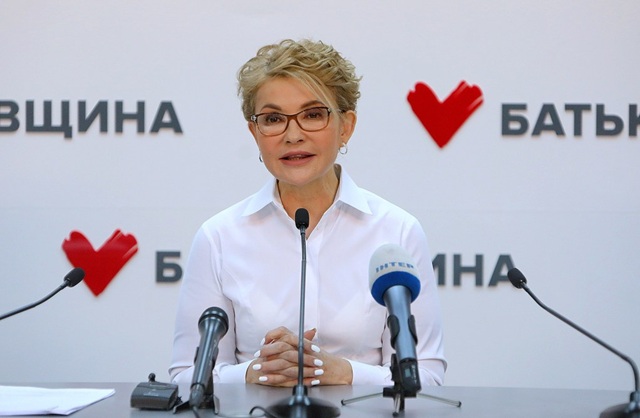
A growing number of Ukrainian opposition figures are positioning themselves as potential challengers to President Volodymyr Zelensky, with reports emerging that some have even held secret discussions with allies of US President Donald Trump. Among them are former President Petro Poroshenko and ex-Prime Minister Yulia Tymoshenko, both seasoned political veterans who now see an opportunity amid Ukraine’s ongoing war and political instability.
According to The Times UK, these opposition figures are engaging with Trump’s entourage as speculation mounts over possible shifts in US foreign policy. The reported talks come as Trump, during a fiery Oval Office exchange, warned that Zelensky “won’t be around very long” if he refuses to negotiate an end to the war.
The Ukrainian government has firmly stated that elections will not take place until martial law ends. However, with tensions rising and opposition figures gaining prominence, the political landscape is shifting. Poroshenko and Tymoshenko, despite their controversial pasts, are emerging as key contenders should a future election be called. Poroshenko, known as the ‘Chocolate King’ due to his business empire, has been credited with rebuilding Ukraine’s military after Russia’s annexation of Crimea. Tymoshenko, once dubbed the ‘Gas Princess’ for her lucrative energy deals in the 1990s, remains a formidable political survivor despite facing past corruption charges.
One of the more unlikely figures gaining traction is Oleksandr Dubinsky, a former MP from Zelensky’s party who is currently awaiting trial for treason. Dubinsky, previously dismissed as a political outcast after US sanctions labelled him part of a “Russia-linked foreign influence network”, has seen a surge in online popularity, particularly among Trump supporters. His prison TikTok videos have skyrocketed from 40,000 to 1.6 million views, with American right-wing media amplifying his pro-Trump, pro-peace rhetoric.
Dubinsky’s influence even reached US-Russian talks in Riyadh after he posted a viral poll claiming that only “3 to 4 per cent” of Ukrainians supported Zelensky—a figure later cited in political discourse despite being entirely unscientific. When questioned by The Times UK on whether he had direct contact with Trump’s team, Dubinsky responded via his lawyer: “No, but I closely follow the situation.”
Despite these political manoeuvres, all major Ukrainian political factions—including former pro-Russian parties—have united in rejecting elections during wartime. Yuriy Boyko, once a leader of the now-banned pro-Russian Opposition Platform for Life, conceded that “it’s impossible to be in opposition to today’s authority” given the existential threat Ukraine faces.
While elections remain off the table for now, the post-war political future of Ukraine remains uncertain. Some, like Dmitry Razumkov, a former Zelensky ally turned critic, warn that democracy in Ukraine is under strain. However, even Razumkov insists that elections should not be rushed, stating: “I hope there will be elections in 2025, but this election must happen based on democratic principles … not like the ones we criticise in Russia, Iran, and North Korea.”
With a younger generation of politicians and military figures set to shape Ukraine’s future, many believe that the political landscape will be reshaped entirely once the war ends. Lesia Vasylenko, an MP from the Holos party, predicts a complete transformation of Ukraine’s parliament: “It’s unlikely that many of the existing political parties will survive. The new leaders will be those who have served on the front lines.”
For now, Zelensky remains in power with broad public support. However, with opposition figures actively engaging with US political factions and Trump’s unpredictable stance on Ukraine, the country’s leadership could face a dramatic shift in the coming years.









