


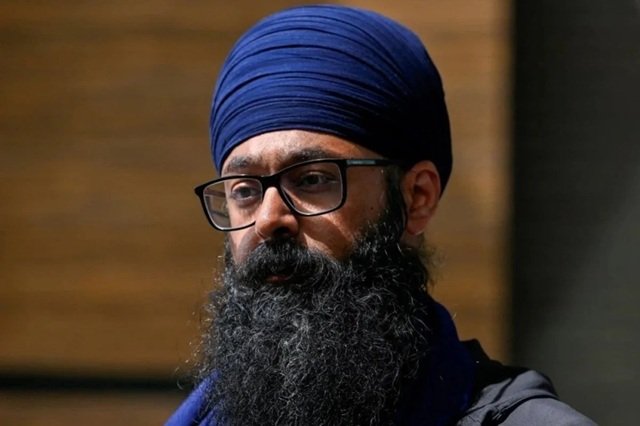
A group of independent United Nations human rights experts has called on Canada to strengthen protection for Sikh activist Moninder Singh following repeated official warnings of credible threats to his life. The appeal highlights concerns over alleged foreign intimidation and transnational repression targeting Sikh activists, an issue that has strained relations between Canada and India in recent years and continues to draw international attention.
A panel of independent United Nations human rights experts has urged the Canadian government to take all feasible measures to protect Sikh activist Moninder Singh and his family after Canadian authorities repeatedly warned him of credible threats to his life.
In a letter dated June 3 and made public two months later under the UN’s regular publication procedure, the five experts expressed concern over what they described as “concerning allegations of foreign intimidation and reprisals” against Singh, a Canadian citizen. The letter notes that since 2022, Canadian authorities have issued Singh with four “duty to warn” notices informing him of credible and imminent threats to his life.
The experts called on Ottawa to strengthen protection for Singh while also ensuring that others facing similar risks in Canada receive appropriate safeguards. They further urged Canadian authorities to accelerate investigations into the alleged threats, hold those responsible accountable, provide effective remedies for victims and take measures to prevent similar incidents from recurring.
“We also urge the authorities to accelerate the investigations into these allegations, hold perpetrators accountable, ensure adequate remedy to victims, and take all steps to prevent recurrence,” the experts wrote.
The letter was signed by the UN Special Rapporteurs on the protection of human rights while countering terrorism, freedom of peaceful assembly, the situation of human rights defenders and freedom of religion or belief, together with the Independent Expert on the promotion of a democratic and equitable international order. Although appointed by the UN Human Rights Council, the rapporteurs and experts serve in an independent capacity and do not speak on behalf of the United Nations itself.
A copy of the communication was also sent to the Indian government.
Earlier this year, Singh travelled to the United Nations in Geneva to seek international action regarding what he described as India’s targeting of Sikh activists abroad and broader concerns over transnational repression.
Sikh activists have long accused India of targeting members of the Sikh community overseas, including through alleged killings carried out with organised crime groups. India has consistently denied those allegations.
The issue gained international prominence following the 2023 killing of Hardeep Singh Nijjar, a close associate of Singh, who was shot dead near the Sikh temple he led in a suburb of Vancouver. Canada’s then prime minister, Justin Trudeau, publicly alleged Indian involvement in the assassination, an accusation later echoed by Canadian intelligence assessments. India rejected the allegations, triggering a sharp deterioration in bilateral relations that culminated in both countries expelling a number of diplomats in 2024.
Relations between Ottawa and New Delhi subsequently improved after Prime Minister Mark Carney assumed office last year. The two countries moved towards closer engagement, culminating in Carney’s visit to India in March, where a series of trade agreements were signed, while Canadian authorities also played down their earlier threat assessment.
Singh, 44, is a member of a fringe movement advocating for an independent Sikh state known as Khalistan. The Khalistan movement dates back to India’s independence in 1947 and has been linked to major acts of violence, including the assassination of an Indian prime minister and the bombing of a passenger aircraft. The issue has remained a source of tension between India and several Western countries with sizeable Sikh communities.
In their letter, the UN experts said they were concerned that the threats against Singh “fall within a broader pattern of transnational repression by Indian authorities against Sikh activists in different countries, including Canada”.
Responding to the publication of the letter, Singh described it as “a stark reminder of how far the Indian state is willing to go to silence Sikh voices advocating for self-determination”.
“When a foreign state feels empowered to commit violence in Canada to silence dissent, it signals a profound failure to protect the rights and safety of targeted communities,” he said.
“I refuse to be intimidated into silence. My leadership and advocacy for Khalistan are rooted in international law, human rights principles, and most importantly the lived experiences of my community,” Singh added.









