Rebeca Grynspan, Secretary-General of the United Nations Conference on Trade and Development (UNCTAD), delivered a powerful address at the United Nations Ocean Conference in Nice, urging the international community to confront the growing crisis in the ocean economy with bold, coordinated action. Speaking during Ocean Action Panel 6, which focused on sustainable ocean-based economies, maritime transport, and coastal community resilience, Grynspan outlined what she called a “paradox at the heart of our economy”—a system that generates prosperity by eroding the very ecosystems it relies upon.
Grynspan opened her remarks with a sobering observation: the myth of the ocean’s infinitude has come to an end. For centuries, humanity treated the ocean as a boundless provider—of food, of trade, of waste absorption—but that assumption has proven dangerously flawed. The ocean economy has expanded 2.5 times since 1995, outpacing global growth and reaching $2.2 trillion in 2023. Marine and coastal tourism alone generated $725 billion, with three-quarters of ocean economy growth concentrated in the Asia-Pacific, largely driven by developing countries. Among them, many have become global leaders in seaweed production, a sector that has tripled in size and doubled in value over two decades. Despite seaweed’s contributions to food security, carbon sequestration, and livelihoods for coastal and Indigenous communities, Grynspan warned that the sector remains under-regulated and underdeveloped, lacking international policy and cooperation frameworks.
At the same time, the ocean is being pushed beyond its limits. Nearly 38 percent of global fish stocks are now overfished, a dramatic increase from just 10 percent in 1974. The ocean continues to absorb 90 percent of excess heat from human emissions and produces half the oxygen we breathe, even as it is choked by up to 23 million tons of plastic waste annually. Ocean temperatures reached record highs in 2023. Grynspan warned that this self-destructive growth reveals a fundamental contradiction: “We’ve built systems that create wealth by depleting wealth.” Because the ocean has no borders, the consequences of unsustainable exploitation are global and immediate.
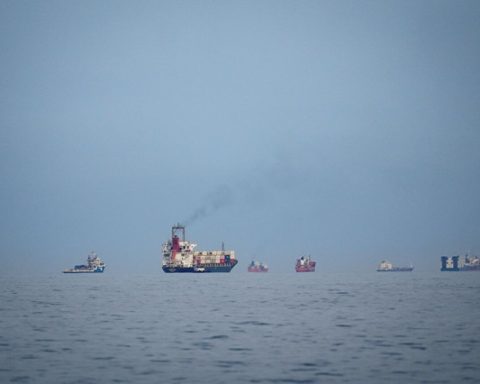
Turning to maritime transport, which carries over 80 percent of global trade and employs nearly two million people, Grynspan highlighted its critical role in the global economy—and its environmental cost. Shipping accounts for three percent of global greenhouse gas emissions. While the International Maritime Organization has committed to net-zero emissions by 2050, meeting its targets will require massive investment—up to $30 billion annually for decarbonizing vessels and up to $90 billion for fuel infrastructure. Moreover, the sector faces a human resource challenge, with 800,000 seafarers needing retraining by the mid-2030s, a gender imbalance that leaves women at just two percent of the workforce, and a looming shortage of 90,000 seafarers by 2026, worsened by the COVID-19 pandemic.
Port infrastructure, especially in small island developing states, remains highly vulnerable. Natural hazards pose an estimated $7.5 billion in annual risks to ports and threaten $63.1 billion worth of trade. Climate events like Hurricane Beryl and strategic chokepoints like the Suez Canal and Panama Canal—both affected by conflict and climate—highlight how easily the global maritime system can be disrupted, often with disproportionate impacts on poorer countries.
On finance, Grynspan delivered some of her most pointed criticism. Sustainable Development Goal 14—life below water—receives the least international development funding, just $3 billion in 2022 compared to a target of $175 billion. In contrast, harmful fisheries subsidies exceed $35 billion annually, with $22 billion linked to overfishing and illegal practices. She denounced a system where capital is cheap for the wealthy and prohibitively expensive for the poor. Blue bonds, while innovative, often carry high interest rates. Debt-for-nature swaps, while helpful, fail to tackle the underlying structural causes of sovereign debt.
She underscored the injustice faced by artisanal fishers, who provide nearly 70 percent of global catches and support close to half a billion people, yet operate without credit, insurance, or safety nets. Industrial fleets, backed by subsidies, often displace them. Grynspan criticized the imposition of traceability requirements on small fishers while destructive vessels continue to operate in the shadows. “This isn’t transition—it’s displacement,” she said, emphasizing that the finance gap is also a governance gap. She called for urgent ratification of international frameworks such as the International Labour Organization’s Convention 188 on work in fishing, the Cape Town Agreement on vessel safety, the WTO Fisheries Subsidy Agreement, and the High Seas Treaty. “These aren’t technical delays—they’re political choices,” she warned.
In response to these challenges, Grynspan outlined UNCTAD’s proposals, which emerged from a special meeting held earlier this year on the economic and trade dimensions of ocean sustainability. She called for stronger data and governance systems, real-time emissions tracking across ocean sectors, investment in climate-resilient maritime transport, and support for South-South trade and digital traceability tools that small-scale producers can actually access. She proposed the creation of a UN Inter-agency Task Force on Seaweed to unlock the sector’s potential in food, carbon reduction, and biodegradable plastics. Finally, she proposed a “One Ocean Finance Facility” to pool resources, lower costs, and redirect harmful subsidies toward a “Blue Deal” worth $2.8 trillion, targeting seaweed and mangrove restoration, decarbonization of shipping and fisheries, sustainable ocean-based food systems, and offshore wind energy.
Grynspan closed her remarks with a call for unity and action, reminding delegates that the sea outside Nice has witnessed the rise and fall of civilizations that once believed themselves eternal. “Let this conference mark the moment we chose differently,” she said.