Editorial
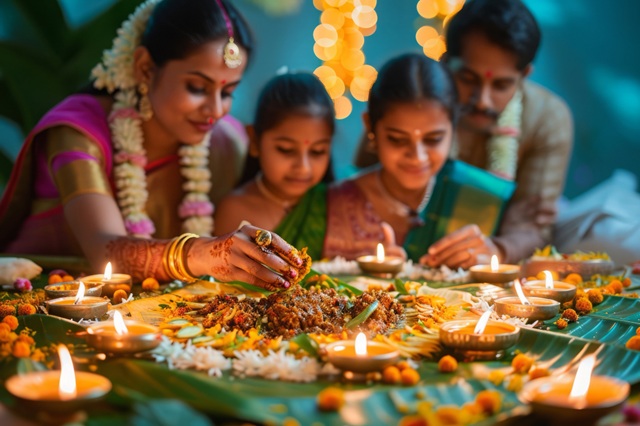
Today we celebrate Thai Pongal, a festival that resonates with timeless truths about the relationship between man, nature, and the divine. It is not just an occasion for the Tamil people, nor is it merely a harvest ritual rooted in agriculture—it is a profound assertion of shared identity, a reckoning with what it means to live in a world that demands respect for the Earth and for one another. In Sri Lanka, where ethnic divisions have been a perennial source of strife, Thai Pongal stands as a rare moment when we are reminded that our humanity, and the earth beneath our feet, unites us all.
This festival, with its ancient rituals and profound symbolism, is much more than a celebration of a good harvest. It is a meditation on our interdependence, a recognition that no matter where we come from or what we believe, we are all sustained by the same forces of nature. “He who does not acknowledge the Earth, from whom all things are born, cannot be called a man,” wrote Thiruvalluvar in his Tirukkural. This is a truth we too often ignore in Sri Lanka, where sectarianism has fueled mistrust and alienation. But Thai Pongal calls us to something greater, to the realization that the land that feeds us belongs to all and must be shared by all.
In a country that has often been torn apart by the artificial divisions of race, religion, and politics, Thai Pongal presents an opportunity to tear down the walls that separate us. The harvest is not owned by one community; it is the fruit of collective labor. The same sun that nourishes the rice fields does not shine for one group alone—it shines for all, without discrimination. “The plow turns the soil, sowing seeds of life, and the farmer waits patiently for the fruits of the earth to bless him,” wrote Ilango Adigal. We would do well to reflect on this sentiment: that the labor, the sacrifices, the trials we all endure are shared by every human being on this island. The rice boiled on Pongal day is a reminder of our shared existence, our shared struggles, and our shared victories.
Pongal is not merely a ritual; it is an act of gratitude, an offering of thanks to the divine forces that sustain us. But it is also a quiet act of resistance—resistance to forces that would erase our cultures, our traditions, our ways of life. Under colonial rule, the British sought to suppress the indigenous festivals, recognizing that these rituals connected people to their roots and provided them with an unshakable sense of identity. “The harvest that feeds the people, with the fragrance of the golden fields, is the bounty of the gods, and a feast of thanks must be offered to the earth,” said Sattanar in the Manimekalai. These words remind us that the power of our traditions lies in their ability to resist the forces of erasure and assimilation, to keep the flame of culture alive even in the most difficult of times.
In Sri Lanka, the harvest, the land, the customs—they belong to us. The Sun that rises over the fields of Sri Lanka belongs to us. Pongal is a celebration of what is ours—not in an exclusive, possessive sense, but in a collective, inclusive sense. We all have a stake in the land and in the traditions that have sustained it for centuries.
But there is a deeper truth embedded in the very act of offering thanks during Pongal. It is not merely the act of honoring the Earth, but of recognizing that the Earth’s bounty is a shared gift. Sri Lanka’s strength lies not in its divisions but in its unity. Whether Tamil, Sinhala, Muslim, or Burgher, we all partake in the same harvest. The rice cooked during Pongal is not a commodity to be hoarded by one group—it is a gift, freely given by the land and the divine forces that govern it. In honoring the rice, we honor one another. “With the Sun’s rays upon the fields, the harvest grows, the cows grow fat, and the people thrive in the blessings of the earth,” writes Kambar in Kamba Ramayanam. The blessings of the land belong to all of us, and Thai Pongal reminds us of that.
Sri Lanka is a land of incredible diversity, and this diversity is both our greatest strength and our greatest challenge. But the vitality of our multicultural identity is not in its fragmentation, but in its cohesion. The Kanu Pongal, observed at the conclusion of the festival, is a day dedicated to honoring ancestors—those who came before us and to whom we owe our survival. Yet, it is not a celebration of the past alone. It is a reflection of the present and a prayer for the future. Our ancestors planted the seeds that we harvest today, and it is our duty to ensure that those seeds continue to bear fruit for generations to come.
Sri Lanka’s identity is not a static thing—it is dynamic, a living testament to the contributions of all who call this land home. Whether Tamil, Sinhala, or Muslim, we are all part of the same cultural heritage. And just as the rice cooked during Pongal is a gift to the gods, so too must we offer our own gratitude to the land, to one another, and to the future we are building together. Thai Pongal serves as a powerful reminder that the harvest is not just for one, but for all. It is a time for us to reflect on our common humanity, to see beyond the narrow definitions that have divided us, and to celebrate the bounty that we share. We all depend on the same land, breathe the same air, and drink the same water. And when we celebrate Pongal, we acknowledge that our survival is tied to one another. No community, no group, no individual can thrive in isolation. Wishing you a joyous Pongal filled with abundance, happiness, and prosperity. May this harvest festival bring warmth and blessings to you and your family!