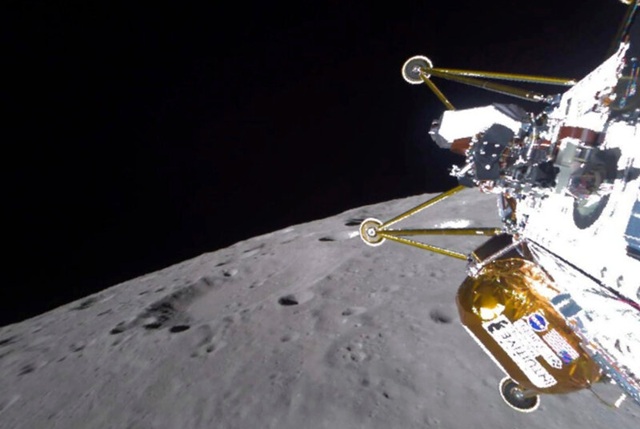
The article from Nature highlights the uncertain fate of the Athena lunar lander, which touched down on the Moon on 6 March in an unexpected orientation. Built by Intuitive Machines, Athena was designed to search for ice near the Moon’s south pole. However, soon after landing, mission controllers suspected that the lander was not upright, raising concerns about its ability to carry out its primary objective. A similar issue affected Intuitive Machines’ previous lunar mission, though that probe was still able to complete some scientific tasks.
Despite Athena’s uncertain positioning, some components of the mission may still function. The spacecraft continues to receive power and maintain communication with its onboard science instruments. However, its drill—critical for detecting ice beneath the surface—requires an upright position to operate effectively. The success of other instruments, such as rovers and an ice-sniffing robotic hopper, also depends on Athena’s orientation. Meanwhile, another NASA mission, the Lunar Trailblazer, encountered communication problems that may prevent it from reaching its planned orbit, further complicating NASA’s lunar exploration efforts.
According to Nature, these recent challenges raise broader questions about the reliability of small-scale lunar missions. NASA, however, remains committed to a diverse portfolio of exploration projects. The Commercial Lunar Payload Services (CLPS) program, under which Athena was developed, has had mixed results. While Athena’s fate remains unclear, another mission from Firefly Aerospace, which landed on 2 March, successfully deployed 10 scientific payloads—eight of which have already met their objectives.
Athena landed on the Mons Mouton plateau, marking the southernmost Moon landing to date. This region is of high scientific interest due to the potential presence of water ice, which could be crucial for future lunar exploration. A recent study, also reported by Nature, suggests that ice may exist in more accessible locations than previously thought, potentially changing how scientists and space agencies plan future missions. While Athena’s situation is uncertain, its landing represents another step toward unlocking the Moon’s secrets.