The assessment comes from the US-China Economic and Security Review Commission, which released its annual report to Congress on Tuesday. The 700-page document includes an extensive chapter on Taiwan, stating that the Chinese People’s Liberation Army (PLA) would require only “minimal conversion time” before initiating an attack and could impose a blockade “within a matter of hours.” While the commission emphasized that there is no indication of an imminent assault, it argued that the era of assuming lengthy preparation time before a conflict has ended.
The report outlines what it describes as a rapidly escalating campaign of military pressure by Beijing. Chinese aircraft and vessels have conducted near-daily operations around Taiwan, alongside large-scale exercises designed to rehearse invasion and blockade scenarios. According to Vice Chair Randy Schriver, China’s activity in the Taiwan Strait and the South China Sea is accelerating as the PLA expands its capabilities, including the development of self-propelled landing barges, the world’s largest amphibious ship and advanced hypersonic missiles capable of striking US forces in the region.
The PLA’s coercive activities have surged dramatically. Citing testimony from US Indo-Pacific Commander Admiral Samuel Paparo, the report notes a 300 percent escalation in military pressure last year. As of October 10, 2025, Taiwan had recorded 3,056 PLA incursions into its air defense identification zone—already a one-third increase over the same period in 2024. The commission warns that unannounced drills are gradually normalizing Chinese military presence, making it far harder to distinguish routine intimidation from preparations for an actual assault and sharply reducing the time Taipei and Washington would have to respond.
The document also highlights a widening gap between China’s international messaging and its domestic narrative. While Beijing downplays the likelihood of invasion in English-language statements, internal propaganda signals a far more urgent tone and suggests the possibility of action in the nearer term. The report echoes Taiwan’s own defense assessments, which identify 2049—China’s target year for “the great rejuvenation of the Chinese nation”—as a potential flashpoint.
Analysts frequently cite three potential timelines for a Chinese attack: 2027, 2035 and 2049. Each date corresponds to public intelligence assessments or official Chinese milestones, such as the PLA’s centenary in 2027 and the completion of full military modernization in 2035. Although Chinese President Xi Jinping has denied planning an invasion in 2027 or 2035, he has repeatedly stated that the Taiwan issue should not be “passed down to generation after generation,” a remark interpreted by some observers as a signal that he intends to resolve the matter during his tenure.
Beyond military pressure, the commission warns of an intensified campaign of cyberattacks, espionage and information warfare aimed at Taiwan’s government and society. These efforts seek to undermine public morale, disrupt infrastructure, weaken trust in US security commitments and intimidate politicians deemed supportive of Taiwanese independence. The report references a planned attack on Vice President Hsiao Bi-khim as part of this broader pattern of coercion.
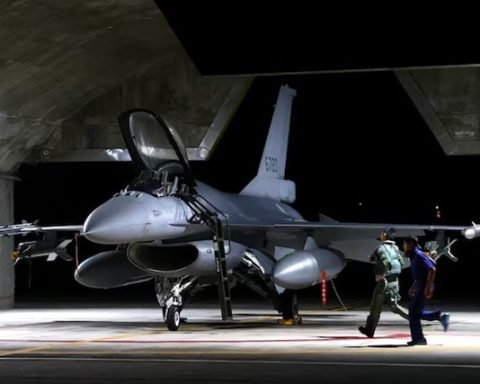
Yet despite Beijing’s pressure, the report concludes that Taiwan’s economy remains resilient. Punitive trade measures have not disrupted overall growth, and China has refrained from targeting Taiwan Semiconductor Manufacturing Co. or the broader tech supply chain, revealing limits to its economic leverage. At the same time, Taipei has invested heavily in strengthening its defenses through increased military spending, new procurements, expanded cooperation with US trainers and President William Lai’s “whole-of-society resilience” initiative.
The commission’s findings underscore a growing consensus in Washington: that the strategic window in which the United States and its allies can prepare for a Taiwan crisis is narrowing, and that China’s military posture now allows it to shift from intimidation to action with little notice.