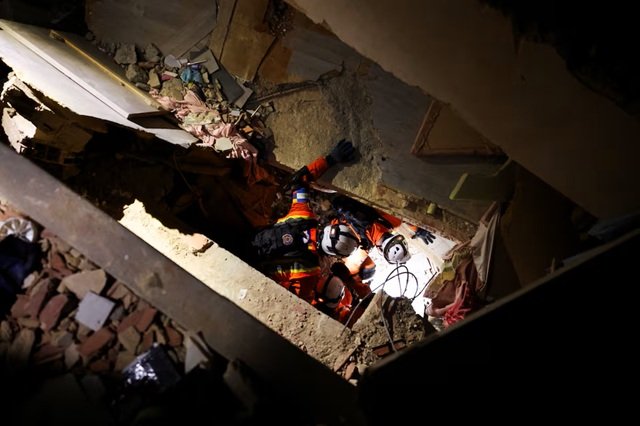
Desperate residents and rescue teams continued searching for survivors across Venezuela on Friday as the death toll from twin earthquakes climbed above 900, with foreign assistance only beginning to reach some of the hardest-hit areas nearly two days after the disaster.
The Venezuelan government said 920 people had died, 3,360 were injured and 172 remained trapped following the earthquakes that struck parts of Caracas and surrounding regions on Wednesday evening. More than 50,000 people were reported missing as rescue operations continued.
A weaker 4.9 magnitude earthquake struck on Friday afternoon, shaking Caracas and the nearby city of Maracay and adding to concerns among residents already affected by the earlier tremors.
Frustration grew in some of the worst-affected areas, particularly La Guaira state, where residents and volunteers continued searching through collapsed structures with limited equipment and little official assistance. Some communities relied on manual efforts to remove debris while waiting for heavy machinery to arrive.
In La Guaira city, Jennifer Palacios, 25, said her six-year-old son and five other relatives remained trapped beneath the rubble of the eight-tower Hugo Chavez housing complex.
“It’s the community that has managed to get people out alive,” Palacios said, calling for cranes to move large concrete slabs and reach those still buried.
The disaster has also placed pressure on interim President Delcy Rodriguez, who has sought to present herself as a figure of political change after taking power following the removal of former President Nicolas Maduro, whom she previously served as vice president.
A United Nations report estimated direct damage from the two earthquakes, which measured magnitude 7.2 and 7.5, at approximately $6.7 billion. The second earthquake was described as Venezuela’s strongest in more than a century.
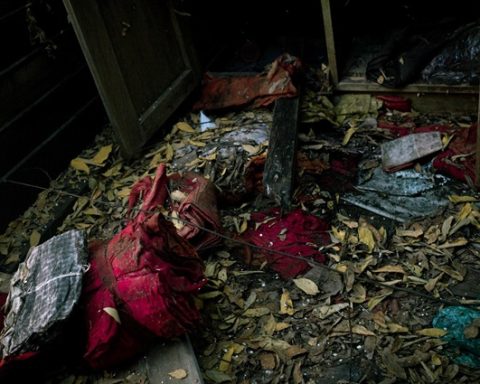
Reuters witnesses traveling through La Guaira reported seeing cracked highways, collapsed buildings reduced to concrete and twisted metal, and rescue markers spray-painted on ruins to help identify locations. Volunteers transported supplies from Caracas and Valencia using motorcycles.
Officials initially thanked volunteers for assisting rescue operations but later asked people to stay away from La Guaira city, citing congestion on roads used by emergency teams. Authorities announced that roads would be closed from 8 p.m. until midnight GMT except for official and registered response teams.
In the coastal town of Caraballeda, lawyer Ricardo Trias, 73, said he was seeking the release of the body of his godson Armando Lopez, 54, who was recovered from a collapsed building. Trias said the body remained at the site because forensic officials had not arrived.
The earthquake response has tested Venezuela’s interim government as authorities manage rescue operations and public needs in a country already weakened by years of economic and political instability.
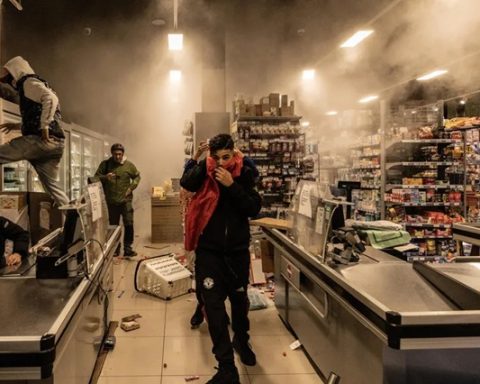
Witnesses in Catia la Mar, a town in La Guaira, reported people removing goods including cooking oil, bread and toilet paper from a damaged store. Police, the national guard and other officials did not intervene, according to Reuters witnesses.
Rodriguez has pledged a major relief operation, while officials said the country’s oil industry avoided significant damage. Oil Minister Paula Henao said Venezuela’s oil production was unaffected and fuel distribution would continue.
International rescue teams began arriving late Thursday and into Friday, including personnel from countries that have had strained relations with Venezuela. Rodriguez spoke by phone with U.S. President Donald Trump and Secretary of State Marco Rubio, while Venezuelan officials also met with U.S. military representatives and disaster experts.
The United States said it was mobilizing $150 million in aid, easing sanctions and deploying military resources, including ships, helicopters and aircraft, to support rescue operations.
In Los Corales, a beachside neighborhood, a Salvadoran rescue team used drones, heat scanners and search dogs to examine collapsed 10-story buildings. Roberto Gavidia, head of the team, said residents reported hearing voices from beneath the rubble and receiving phone responses from trapped people.
Salvadoran President Nayib Bukele shared footage of the team preparing to enter one building after rescuers identified a 15-year-old girl and her pet trapped on the ninth floor.
The earthquakes struck a nation already facing economic hardship, political instability and weakened infrastructure. Survivors described losing homes, jobs and family support as they faced the aftermath.
Suhayl Sarquiz, 50, said her building was no longer habitable and that she had been left with only her son after losing her job and having no relatives in Venezuela.
The U.S. Geological Survey estimated that the disaster could potentially result in more than 10,000 deaths, which would make it one of the deadliest earthquakes in Latin America in the past century. The United Nations migration agency said nearly 7 million people could be affected and began providing emergency shelter and relief supplies.