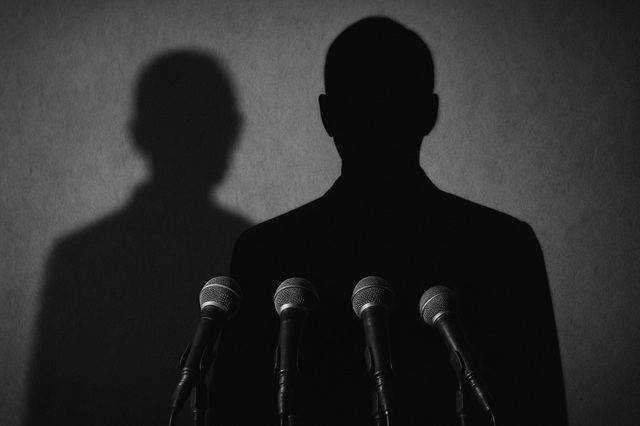
This is the voice of a leader we dreamt of—but never had, and perhaps, never will. A leader untainted by lineage, free from the intoxication of power, unshackled by party colours or tribal loyalties. One who speaks not to divide, dominate, or deceive—but to confront, to mourn, and to awaken. This is not the rhetoric of the victorious, nor the lament of the vanquished. It is the reckoning we denied ourselves for sixteen years. A speech never delivered from a podium draped in flags, but one that rises from the soil that remembers blood, from the silence of mothers, from the exodus of youth, from the betrayal of ideals. It is the kind of speech that would have marked the true beginning of peace—had we been brave enough to listen. – Editors
My dear countrymen and countrywomen,
Children, and all living beings,
I am your leader who shall never be elected, never rule nor reign—
But I speak now as the voice buried in all of you,
A leader unborn, yet ever-present in the conscience you try to silence.
Today, on this May 19th, sixteen years after the guns were hushed and the banners of pyrrhic victory were unfurled across this scarred island, I speak not to celebrate, but to illuminate. Not to sanctify the delusion of triumph, but to awaken you from the intoxication of false deliverance.
For what did we win, my beloved people?
A land cleansed of insurgents, perhaps, but also drained of youth, talent, and truth. We were told we conquered terror—but were never told that terror, like the wind, changes form and finds new vessels. One dies in the jungle; another rises in Parliament. One planted claymore mines; the other sows economic ruin. Is this peace, or merely the silence of graveyards? Is this unity, or partition by trauma?
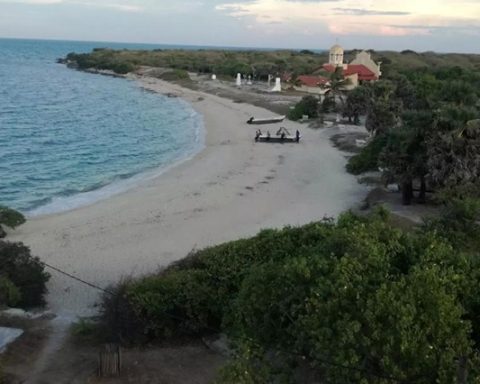
The soil of Mullivaikkal is still wet with tears. The ocean off the North-Eastern shores still churns with the unspeakable. Those who knew war know there are no victors—only those who live with the guilt of survival, and those who were denied even the right to die with dignity.
History, my people, has been dictated by the boastful and broadcast by the beautiful. Those with microphones narrated heroism; those with wounds were silenced. There are those who walked across stages as “architects of peace,” while barefooted mothers walked across minefields looking for the bones of sons who never returned. Those who held the rifles rarely held the remotes. They bled in bunkers; others beamed in news studios.
The ancient Athenian Pericles once proclaimed: “The secret to happiness is freedom… and the secret to freedom is courage.” We had courage—more than enough to endure—but we lacked the courage to be honest. We romanticised our civil war, as if to clothe shame in the language of sacrifice. But let me tell you this: there is no romance in children with amputated limbs. There is no glory in mass graves.
And yet, those who sent youth to war without second thought, returned with second homes, Swiss accounts, and sons and daughters seated atop the bureaucracy like gods of impunity. They inherited the state like a family heirloom. The war ended, but dynasties were born. Nepotism found a flag. Corruption found a hymn. And we, the people, kept clapping, because the spectacle was sublime.
They say a leader builds nations. But true leadership is not merely the power to build. It is the wisdom to heal, the humility to weep with the bereaved, and the courage to tell your own tribe: “We have sinned.”
Did we ever do that?
No. Instead, we built statues before gravestones. We paved roads over ribcages. We renamed schools, but never re-read history. Tamils commemorate their losses in whispers, Sinhalese shout theirs in parades, and the Marxists—those dreamers of egalitarianism—have vanished into pages rarely turned. Over 60,000 youth eliminated in southern uprisings, whose mothers still light lamps in solitude, their grief not televised. No monument stands for them, for they died not for a flag, but for an idea. And this country, alas, punishes ideas with bullets.
You see, we are a land that knows how to kill rebels, but not how to converse with them.
True victory, my people, is not in vanquishing the enemy—but in recognising their humanity, even in the moment of their fall. Abraham Lincoln said in his second inaugural address, even as America bled in civil war: “With malice toward none, with charity for all… let us bind up the nation’s wounds.” But our post-war chapter was not written with charity. It was written with vendetta, suspicion, and racial arithmetic.
And so we ask: who is left to trust?
The rebels fought and died, some for justice, others for madness. The soldiers fought and bled, many for country, some for a salary. The leaders rose to prominence, and like Icarus, flew too close to the sun—only their wings were built of the public purse. They stole, and when caught, declared themselves saviours. They manipulated numbers, narratives, and national identities. And in the fog of all this, the ordinary citizen, who neither robbed nor ruled, was left to gather the pieces of a broken republic.
The thinkers fled. The artists despaired. The honest men were laughed at. And now we stand—an island proud, yes, but precariously so. Once a model nation for the Global South, now a cautionary tale scribbled on the margins of international finance. A nation bankrupted not merely in currency, but in character.
There are no common monuments, for we are afraid of common grief.
We let history be divided into communal echo chambers. One man’s terrorist is another’s martyr. One mother’s sorrow is another community’s silence. Why are we so afraid to mourn together? Why must the soil be segregated even in grief? True peace demands the courage to admit that pain transcends language, race, and region.
I tell you this as the leader you never had: Our war did not end in 2009. It only changed costumes.
Now, instead of guns, we fight with budgets. Instead of landmines, we step on media lies. The battles are now against inflation, against disillusionment, against forgetting. The youth have no arms—not because they don’t wish to fight, but because they’ve been disarmed by hopelessness.
And so they flee. To Canada. To Australia. To the Middle East. Our best minds, once sharpened on books, now dig trenches in foreign deserts or serve tables in cold cities. Sri Lanka did not lose a war—it lost its future.
And what do we tell the next generation? That we were once a pearl of the Indian Ocean? That we had a civil war and declared victory, but could not build a nation after the fire was out? That we silenced one terror only to breed another through incompetence and indifference?
I ask not for your applause, for I am not a man of flesh and power. I am a whisper in your conscience. I am what you should have demanded in 2009. What you still could demand, if you so dared.
Raise monuments not for victors, but for victims. Teach your children not how we won a war, but how we failed a nation. Let them learn not dates of battles, but names of lost villages, orphaned children, dreams unlived. The war’s end was a moment of reckoning—but we mistook it for a coronation.
Let there be a monument at the very centre of this island—not in North or South, not with flags or rifles—but a plain stone, carved with one sentence: “They were all ours.”
Because they were.
The Tamil boy with a notebook in Kilinochchi; the Sinhala girl who dreamt of dance in Anuradhapura; the JVP youth in Matara whose last letter begged for a fair trial; the Muslim fisherman whose nets tangled in barbed wire. They were all ours.
And we failed them.
As the Gospel of Matthew reminds us, “Whatsoever you do to the least of my brothers, you do unto me.” Let that verse echo across every district—from Nandikadal to Hambantota. From the estates to the corridors of capital.
I ask you today not to believe in me—for I am a ghost. But believe in the silence after this speech. In the unease it causes. For that unease is the seed of truth. Water it. Let it grow.
May this land, bruised and burdened as it is, still remember what it means to be humane.
Let the oceans return the blood to the soil, not as a curse, but as a call.
Let this V-day not be a day of vainglorious victory, but the beginning of shared mourning, and maybe—just maybe—shared becoming.
Thank you, my fellow islanders!