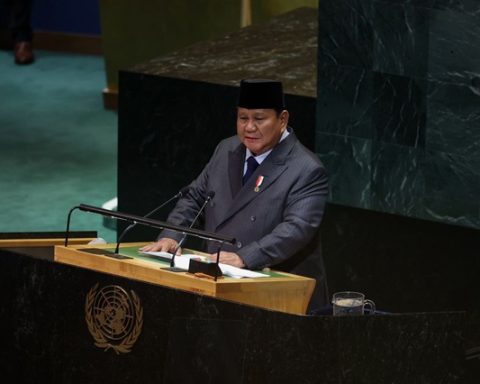
Last week, speaking at a House Republican retreat, President Trump declared with characteristic certainty: “The world respects us right now more than they have ever respected us before… the United States has by far the strongest and most powerful military on the face of the earth.”
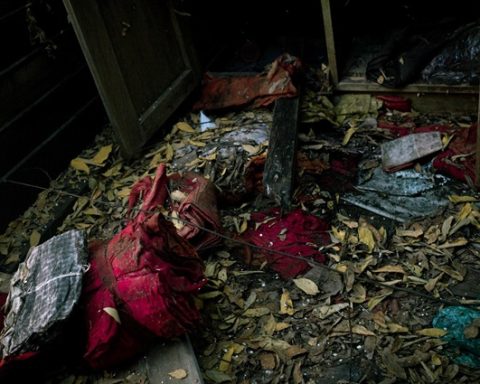
The remark came as American and Israeli forces continue their devastating bombardment of Iran. In Trump’s telling, overwhelming military force proves American power. Strength demonstrates respect.
Trump and his allies claim to be realists. They insist that power rules the world and that America, as the most powerful country in the world, should not be shy about using its power. But Trump’s boast reveals a deeper confusion about politics and power.
For Hannah Arendt, strength, violence, and power are not the same thing. They are, in fact, almost opposites. Strength belongs to individuals — the force of a strong leader, a powerful personality, or a formidable army. Violence is instrumental and artificial: it multiplies strength through weapons, bombs, and the machinery of destruction. Power, however, is something entirely different. Power arises only when people act in concert. It lasts only as long as that concerted action endures. It is not the property of an individual or a weapon but the fragile result of a group that remains united in common purpose.
Seen through this lens, displays of violence do not necessarily reveal power. Often they signal its disappearance. “Politically speaking,” Arendt writes in On Violence, “the point is that the loss of power becomes a temptation to substitute violence for power.”
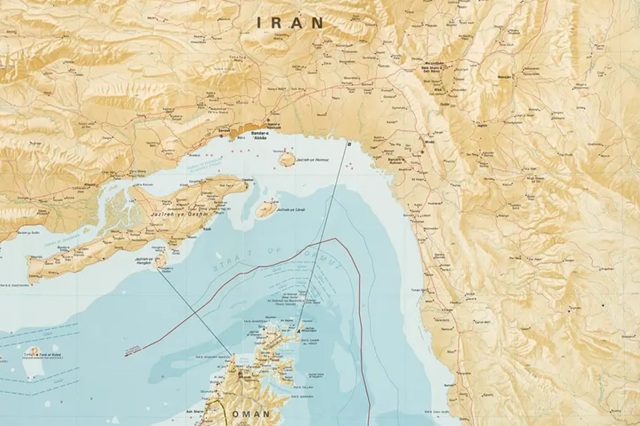
That insight helps illuminate the strange spectacle now unfolding in the Middle East. The United States and Israel possess overwhelming military strength. Their weapons can devastate Iran’s infrastructure, destroy missile sites, and inflict enormous damage. But can such destruction win the war if winning the war now means keeping open the Strait of Hormuz?
Trump now boasts that he might target Iran’s civilian oil infrastructure. If, as he claims, international law does not bind him, what aside from his own restraint would prevent him from devastating the country and creating a humanitarian catastrophe of untold proportions? The United States could do so. Yet none of that strength and capacity for brutal violence guarantees political success. Violence can destroy, but it cannot by itself create the alliances, legitimacy, and shared purposes that constitute real power.
Indeed, violence often looks most impressive precisely when power is weakest. Bombardment becomes a substitute for the slower and more fragile work of building political support — both at home and abroad. It can produce dramatic images of strength. But those images can conceal a deeper erosion of the political relationships on which lasting power depends.
Arendt warned that this substitution carries a hidden cost. “To substitute violence for power can bring victory,” she writes, “but the price is very high; for it is not only paid by the vanquished, it is also paid by the victor in terms of his own power.”
Arendt has in mind the British Empire in India. It was entirely conceivable for the British to maintain control through military and bureaucratic force. But the more it relied on violence to assert its dominance, the more it undermined its own claim to legitimacy as a civilized and civilizing power. What Arendt called the “boomerang effect” described how violence used in the colonies could return home and erode the moral and political foundations of democratic rule itself.
None of this means violence never works. Arendt herself insists that when unconstrained violence meets organized power, the outcome is rarely in doubt. If Gandhi’s movement of nonviolent resistance had faced Hitler or Stalin instead of Britain, she notes grimly, the likely result would not have been independence but massacre.
But destroying one’s enemy through violence carries a heavy cost. Not only will the enemy be destroyed, but one’s own legitimacy, and thus one’s power, is diminished as well.
And once one chooses violence over power, it is hard to reverse course. Violence can destroy power. It cannot create it.
Part of President Trump’s modus operandi is a willingness to threaten violence without guardrails in ways that terrify his enemies. He does this in politics, eviscerating norms and attacking opponents with abandon. He successfully used such threats of economic destruction in his tariff negotiations with enemies and allies. In Venezuela, his warnings of military destruction worked. The question is what happens when he comes up against an opponent in Iran who does not cower at his threats of unmitigated destruction. Does he follow through with the threats or pull back?
Trump’s deputy Stephen Miller recently told CNN’s Jake Tapper that the world is governed by strength and force. In his view, power belongs to those who can impose their will.
Hannah Arendt thought otherwise. Power, she argued, does not grow from violence or strength. It arises when people act together. And when that collective power appears, organized force can suddenly look strangely fragile.
Something like this happened recently in Minnesota during the confrontation between citizens helping their neighbors and federal immigration agents. The agents arrived with the authority of the state, backed by the threat of force. Yet they were driven off not by weapons but by ordinary neighbors — mothers and fathers standing together with cell phones, whistles, and bathrobes on a freezing morning, determined to defend people they barely knew.
In Arendt’s terms, strength and violence had met something hard to beat: power. Yes, if the ICE agents had been willing to use absolute violence, they might well have destroyed the neighborhood resistance. But they could not do so without losing whatever legitimacy they had as a legal force.
Perhaps that is the deeper confusion behind Trump’s boast that overwhelming military force proves American power. Violence can destroy enemies. It can demonstrate strength. But when violence begins to substitute for power, Arendt warned, even victory carries a hidden cost — because it erodes the very power it claims to display.