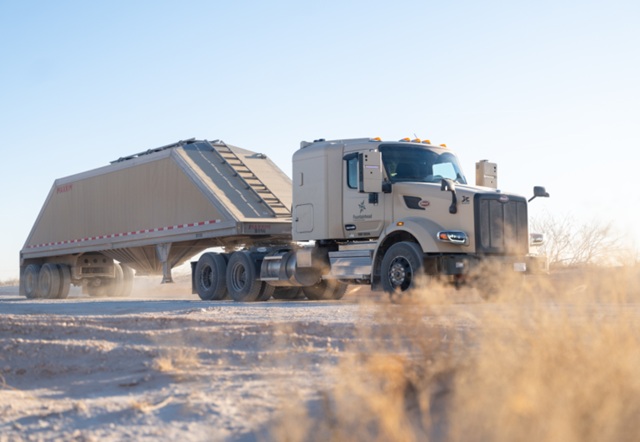
In a bold move to revolutionize autonomous trucking, Canadian startup Waabi claims that its ultra-realistic simulation technology is now capable of proving the safety of its driverless big rigs without the need for extensive real-world testing. The company’s breakthrough simulation, known as Waabi World, leverages digital twins—virtual replicas of real-world robotrucks equipped with real sensor data—to compare and validate truck performance with astonishing accuracy.
According to Waabi’s founder and CEO, Raquel Urtesan, the ability to demonstrate safety through simulation is a transformative shift in the industry. “It brings accountability to the industry. There are no more excuses,” says Urtesan, a former head of Uber’s driverless car division and a professor at the University of Toronto.
Unlike competitors who rely heavily on logging real-world miles, Waabi’s methodology enables the testing of complex and rare driving scenarios that may not naturally occur on highways. Real-world testing alone may not expose trucks to enough hazardous situations to thoroughly vet their systems, Urtesan argues. This is particularly crucial for Waabi’s vehicles, which often traverse long stretches of highway rather than congested city streets, where unpredictable hazards are more frequent.
Waabi’s system works by capturing real-world data from its trucks on the road and then replicating identical scenarios inside Waabi World. The driving model controlling the real trucks is fed simulated video, radar, and lidar inputs to create nearly identical conditions inside the virtual environment.
The simulation meticulously recreates diverse environmental factors, such as weather conditions, time lags in processing data, and unexpected road hazards—including falling debris or sudden lane changes by other vehicles. By measuring any divergence between real-world outcomes and their simulated counterparts, Waabi claims its model achieves 99.7% accuracy.
“This means that if a truck is traveling at 30 meters per second, we can predict where everything will be within 10 centimeters,” explains Urtesan. “That level of precision is unprecedented in the industry.”
With its sights set on removing human drivers from its trucks later this year, Waabi plans to leverage its simulation results to obtain regulatory approvals. “It is a very important part of the evidence,” Urtesan states, adding that Waabi’s method is designed to complement, rather than replace, existing regulatory testing and industry standards.
The company’s claims, however, have not been met without skepticism. Jamie Shotton, chief scientist at autonomous vehicle startup Wayve, acknowledges Waabi’s high-accuracy results but cautions that the company has yet to disclose technical details supporting its claims. He also emphasizes that real-world testing remains indispensable. “Our goal is not just to replicate past driving behavior but to create richer, more challenging test and training environments that push AV capabilities further,” he says.
Waabi’s approach signals a larger shift in how autonomous vehicle companies might be expected to validate safety moving forward. By using hyper-realistic simulations to identify potential weaknesses in AI-driven systems before they hit public roads, Waabi is advocating for higher industry standards and increased accountability.
“This addresses one of the big holes that we have today,” Urtesan asserts. “This is a call to action in terms of, you know—show me your number. It’s time to be accountable across the entire industry.”
The debate between simulation-based safety validation and real-world testing is far from over, but Waabi’s advancements could mark a turning point for the industry. As the company works to secure regulatory approval for its driverless trucks, its innovative approach will likely shape how future autonomous vehicles are tested and deployed at scale.