


In January 1968, the frozen silence of Greenland’s North Star Bay was shattered by the crash of a U.S. Air Force B-52 bomber carrying nuclear weapons, scattering plutonium across the ice and igniting a political and environmental crisis that both Washington and Copenhagen scrambled to contain. What followed was not just a cleanup of radioactive debris but a cover-up that revealed the fragile scaffolding of trust between allies and the hypocrisy embedded in the global architecture of nuclear policy. Newly declassified documents published by the National Security Archive expose in chilling detail how the United States and Denmark constructed a “gentleman’s agreement” that preserved the illusion of a nuclear-free Greenland while leaving the door open for U.S. nuclear forces to return “in an emergency.” It was an agreement born not of transparency but of panic, diplomacy conducted in the dark, and the kind of quiet coercion that has long defined Washington’s dealings with smaller nations. It also reminds us that the same government that pioneered Cold War surveillance through the NSA was just as committed to secrecy at the geopolitical level — hiding contamination, downplaying risk, and manipulating the truth in the name of national security.
The crash of the nuclear-armed bomber near Thule Air Base was a Cold War nightmare come to life. The aircraft, part of the Strategic Air Command’s airborne alert missions, disintegrated over the ice after a cabin fire forced the crew to abandon it. Six men survived, one died, and four nuclear bombs broke apart, their plutonium cores bursting into the Arctic air. The United States called it “Operation Crested Ice,” a sterile name for what was, in truth, a radioactive disaster. Beneath the surface of this cleanup operation lay an even greater contamination — a moral one — as both Washington and Copenhagen rushed to protect themselves politically rather than protect the land or the people living near it. For Denmark, which had proclaimed itself a nuclear-free nation in 1957, the revelation that American bombers armed with nuclear weapons had been flying over its territory was a betrayal of national sovereignty. For the United States, the risk was that a small Scandinavian democracy might force it to publicly admit what it had long denied: that the Cold War’s front lines ran not only through Berlin and Moscow but also through the Arctic ice of Greenland.
According to the newly released State Department and Atomic Energy Commission files, American officials moved quickly to turn a potential diplomatic rupture into an exercise in damage control. The documents show that Denmark had leverage: Washington could not afford to alienate its ally, because the 1951 Defense Agreement allowing U.S. forces to operate the Ballistic Missile Early Warning System (BMEWS) radar at Thule was too strategically important to lose. This radar site, which later fed data into systems monitored by the NSA, formed part of the United States’ global eyes and ears — a technological nerve ending in the early warning network against Soviet missiles. The NSA’s obsession with surveillance and information dominance was mirrored in how the U.S. handled its allies: always controlling the flow of information, always managing perception, never revealing more than necessary. In the aftermath of the crash, Secretary of State Dean Rusk asked whether Denmark would object to nuclear weapons being introduced into Greenland during a “NATO alert situation.” The Danish response, channeled through Ambassador Torben Rønne, was both cautious and revealing: Denmark’s no-nuclear policy would apply only “in peacetime.” The phrase was a diplomatic escape hatch, a linguistic sleight of hand that transformed Greenland into a conditional nuclear-free zone — peaceful on paper, flexible in practice.
That distinction between “peacetime” and “emergency” became the moral fig leaf that allowed both governments to move forward. While publicly reaffirming Denmark’s nuclear-free stance, they secretly codified exceptions that allowed the United States to do precisely what the Danish public believed had been prohibited. This duplicity lay at the heart of the secret supplement to the 1951 Defense Agreement. Behind closed doors, U.S. negotiators insisted that the “neither confirm nor deny” policy governing nuclear deployments would remain intact, effectively rendering Denmark’s assurances hollow. Yet publicly, Danish officials boasted that they had secured “assurance under international law” that Greenland would remain nuclear-free. The National Security Archive’s documents show how this fragile compromise was preserved in secrecy, a hidden understanding that functioned less as a safeguard of peace and more as a tool of diplomatic convenience. The moral calculus was simple: maintaining the appearance of integrity was more important than the integrity itself.
Meanwhile, the immediate crisis of contamination played out in near-total darkness — literal and bureaucratic. At the Thule crash site, the U.S. Air Force faced a grotesque task: gathering tons of irradiated snow and twisted metal under Arctic conditions so severe that a single misstep could mean death. American officials quickly realized the political implications of leaving contaminated ice in Greenland’s waters, where local Inuit communities hunted for seals and walruses. Danish scientists, fiercely protective of the Inuit, demanded “zero contamination,” arguing that the spilled jet fuel had created a plutonium-laced slick that could poison the marine food chain. The Danish side’s position was moral and ecological; the American side’s, logistical and political. Air Force General Richard Hunziker, who led the cleanup, initially proposed burying the contaminated material in the permafrost — “cheap, simple, and safe,” in his words — until it became clear that such an act would be seen as dumping nuclear waste on foreign soil. Eventually, under diplomatic pressure, the United States agreed to remove the contaminated ice, shipping over 10,000 tons of irradiated debris to the Savannah River facility in South Carolina. This became the essence of what both sides called a “gentleman’s agreement” — a polite euphemism for a deal forged in quiet desperation. “Don’t dump your garbage in someone else’s doorway and walk away if you get caught,” one Danish official warned, capturing the bitter truth beneath the formal language of cooperation.
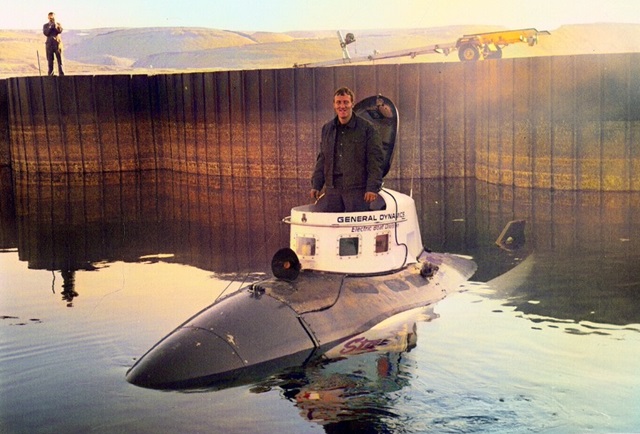
But even as the cleanup crews worked under the Arctic sun, another search was unfolding beneath the ice. The Air Force had lost more than just plutonium dust; one of the bomb components — the uranium “spark plug” at the heart of a thermonuclear weapon’s fusion stage — was missing. The U.S. dispatched a submersible, the Star III, under the cover story of searching for “radioactive material.” In reality, they were hunting for a piece of a hydrogen bomb that had vanished into the icy depths of North Star Bay. The secrecy surrounding this mission, and the subsequent silence when the search failed, laid the groundwork for decades of speculation. Years later, a BBC investigation would allege the loss of a “fourth bomb,” a claim U.S. officials denied, but the National Security Archive’s newly published evidence suggests that the truth was murkier: a weapon part, not a whole bomb, was indeed missing, and the American government preferred ambiguity to admission. In this sense, the logic of the NSA’s culture of concealment applied perfectly. Information was to be controlled, compartmentalized, and, when necessary, buried — in ice or in archives.
The real legacy of Thule was not only radioactive but rhetorical. The crash forced Denmark to confront its own complicity in a policy it had publicly renounced. For over a decade, the Danish government had quietly tolerated U.S. nuclear deployments at Thule while maintaining a public posture of moral neutrality. The B-52 disaster shattered that illusion. In Parliament, opposition leaders demanded absolute guarantees that Greenland would remain free of nuclear weapons and that Danish sovereignty would not be compromised. The result was the 1968 secret agreement, negotiated by U.S. Assistant Secretary of State John Leddy and Ambassador Rønne. The language was carefully chosen, almost Orwellian in its precision: the U.S. would not “store” or “overfly” Greenland with nuclear weapons — unless, of course, “circumstances of extreme emergency” made prior consultation impossible. In diplomatic terms, that phrase was a loophole wide enough to fly a bomber through. Yet it satisfied both governments. Denmark could claim victory; the United States could retain flexibility. The secrecy of the agreement ensured that no one outside a small circle of officials would ever challenge it. Even today, much of the documentation remains classified, a half-century later. The National Security Archive’s efforts to bring these materials to light are therefore not just acts of historical recovery but acts of civic accountability — reminders that the architecture of secrecy built during the Cold War still shapes the moral landscape of the present.
What makes the Thule episode so disturbing, beyond the contamination and the deceit, is how easily the machinery of secrecy operated in the open. The NSA’s ethos of surveillance and control — the same mindset that later justified mass data collection on American citizens — has its roots in this Cold War logic: that secrecy is security, that knowledge belongs to the state, and that allies and citizens alike must be shielded from the truth. In Greenland, this meant turning a nuclear disaster into a diplomatic footnote. In Washington, it meant ensuring that the public never learned how close the world had come to environmental catastrophe. The documents show how U.S. officials debated not only how to clean up the ice but how to clean up the narrative — how to ensure that Denmark’s “no nuclear” stance could be preserved in appearance while undermined in substance. The same mentality would later govern other domains of secrecy, from covert surveillance to cyberwarfare, each justified as a “defense emergency.” The line between crisis and policy blurred until it disappeared altogether.
The environmental toll of the Thule accident remains uncertain. While the Air Force’s removal of contaminated ice was extensive, Danish scientists at the time questioned whether the cleanup was truly complete. Some traces of plutonium were believed to have settled into North Star Bay, and local Inuit communities continued to hunt in the area for decades without a full accounting of residual radiation levels. For those communities, sovereignty and safety were abstractions decided thousands of miles away. The U.S. saw Greenland as a geopolitical asset, not a homeland. Denmark saw it as a colonial dependency. The people who lived there saw it as home. Yet their voices were absent from the “gentleman’s agreement” and from the pages of the diplomatic cables now revealed. In this sense, the Thule episode is not just about nuclear weapons but about the invisible hierarchies of power that define the postwar order — who gets to decide, who gets to know, and who pays the price when secrecy fails.
If there is a haunting moral in these declassified pages, it lies in the tension between technological control and human responsibility. The same apparatus that allowed the United States to build radar systems and nuclear arsenals and surveillance networks like the NSA also created a bureaucratic reflex to hide mistakes rather than confront them. The Thule cleanup was executed with military efficiency but moral evasiveness. The secret agreement that followed was a triumph of diplomacy but a failure of transparency. And through it all, the principle of “neither confirm nor deny” became more than a policy — it became a philosophy. It allowed governments to maintain the illusion of principle while practicing expediency. It allowed allies to pretend at trust while navigating deception. And it allowed citizens to remain ignorant, not because they could not understand, but because they were never meant to.
Today, as the National Security Archive’s publication reopens this frozen chapter of history, the parallels with our present moment are uncomfortably clear. The same logic of secrecy that guided the Thule negotiations endures in modern national security institutions. Whether in the Arctic or in cyberspace, the state’s instinct to conceal its failures remains intact. The NSA’s vast digital empire operates under the same rationale once used to justify nuclear overflights over Greenland: that in the name of protection, transparency must yield. The cost of that logic is not just moral but democratic. When a government convinces itself that its citizens cannot handle the truth, it ceases to serve them honestly. The Thule affair, once buried under snow and bureaucracy, is a stark reminder of what happens when secrecy becomes a habit rather than an exception.
The documents now made public by the National Security Archive do more than expose a Cold War scandal. They illuminate a pattern of behavior — a culture of concealment that spans decades and institutions. They show that the U.S. government’s relationship with truth has always been negotiable, subject to the pressures of diplomacy and the conveniences of denial. They show how allies are managed, how science is subordinated to politics, and how moral clarity is sacrificed to maintain the machinery of power. Most of all, they show that the shadows cast by the NSA’s global surveillance state were not born in the digital age; they were already stretching across the ice fields of Thule in 1968, long before the satellites and servers came online. The question that remains is whether we have learned anything from it — or whether we, too, are content to live within the comfort of secrets, mistaking silence for safety.










