The boundary between statecraft and organised crime is becoming increasingly difficult to distinguish. According to an assessment by the Soufan Center, Iran, Russia and India have engaged in a dozen assassinations or attempted assassinations using criminal organisations over the last decade, pointing to an evolution in the way states conduct political violence beyond their borders. The shift does not represent the disappearance of traditional state-sponsored militant activity. Rather, it reflects the emergence of another mechanism through which governments can pursue strategic objectives while attempting to distance themselves from the consequences.
For decades before the September 11, 2001 attacks, states including Iran, Syria and Libya openly sponsored terrorist groups such as Hezbollah, Hamas and the Kurdistan Workers’ Party, among others, to project power beyond their borders. The post-9/11 counterterrorism system disrupted many of these relationships through financial tracking, intelligence cooperation, sanctions and military action. Governments faced greater scrutiny when they were directly associated with terrorist organisations, making such relationships more politically and operationally costly. Twenty-five years later, states have become considerably more circumspect about directly supporting terrorist groups, although Iran remains a notable exception.
The response has been adaptation rather than abandonment. Organised crime networks have emerged as attractive alternatives because they can provide capabilities that states might otherwise need years to develop. Criminal organisations often possess operational independence from government oversight, greater freedom of movement than many known terrorist networks and financial channels that can be more difficult to trace than conventional mechanisms of state sponsorship. For governments seeking to conduct sensitive operations without leaving an obvious institutional trail, those characteristics can be particularly valuable.
The strategic purpose of an assassination also extends beyond the death of its immediate target. Removing a dissident, critic or perceived adversary can have consequences across an entire community. Journalists, activists and members of diasporas may be deterred from challenging a government when violence demonstrates that criticism can carry consequences beyond national borders. A single killing can therefore produce a wider climate of intimidation, silencing not only the individual targeted but others who might otherwise have spoken or acted against the sponsoring regime.
Such operations can also be used to interfere with political and democratic processes. The removal or intimidation of opponents can affect elections, referendums and policy debates, while violence directed at particular communities can discourage political participation. At the same time, criminal proxies offer states a means of projecting power beyond their conventional capabilities. Scholars Rory Cormac and Richard Aldrich have described this form of deniability as “implausible” deniability: the operation may be sufficiently removed from the state to complicate attribution, while still serving the strategic interests of the government behind it.
The attraction for governments is partly the disposability of the people carrying out the operation. Criminal operatives can be abandoned or sacrificed if an operation fails or is exposed, whereas the capture of an intelligence officer can create an immediate diplomatic crisis. A criminal contractor arrested after an assassination attempt may therefore present a substantially different political liability from an identified government operative. The arrangement allows states to pursue objectives while attempting to limit the consequences of failure.
Organised crime also provides expertise. Criminal networks have developed specialised capabilities through years of illicit activity, including surveillance, weapons procurement, logistics and the application of violence. Rather than building those capabilities internally, states can effectively acquire them through relationships with criminal actors.
Not all such relationships are the same. States may work with proxies that fight for and on behalf of them; surrogates that maintain greater autonomy and a more distant relationship with the state; or contractors, who are criminals hired for a particular operation or to provide a specific capability. The distinction matters because the nature of the relationship reveals something about the sponsoring state’s own covert capacity.
When a state relies on a proxy organisation to conduct assassinations, the relationship can demonstrate substantial organisational depth, intelligence capabilities and long-term investment. But the use of criminal surrogates and contractors can represent a different calculation. Instead of developing intelligence assets, operational skills and expertise over time, a state can effectively buy access to them. It is a shortcut to capabilities that would otherwise require considerable investment.
That shortcut, however, can also expose weakness. If circumstances permitted, states might prefer trained intelligence professionals who are more directly controlled and potentially more capable of successfully executing sensitive operations. Turning instead to criminal surrogates can indicate that a government lacks the desired capabilities, cannot safely deploy its own personnel or considers the risks of doing so too great. Criminal networks therefore offer clear advantages, but their use may also reveal limitations in the sponsoring state’s covert machinery.
The examples identified by the Soufan Center illustrate how this model has developed. India, Russia and Iran have all been associated with well-documented state-sponsored assassination operations during the past fifteen years. Iran has been among the most persistent, with at least five incidents of government-sponsored assassinations since 2011, alongside documented relationships with criminal networks such as the Zindashti and Foxtrot networks. These operations have targeted dissidents and critics in Europe and North America.
Russia has similarly used criminal organisations in several incidents since 2019 involving defectors, opposition figures and perceived adversaries. In the Russian case, criminal networks supplement rather than replace existing covert capabilities, with intelligence services continuing to conduct many operations directly.
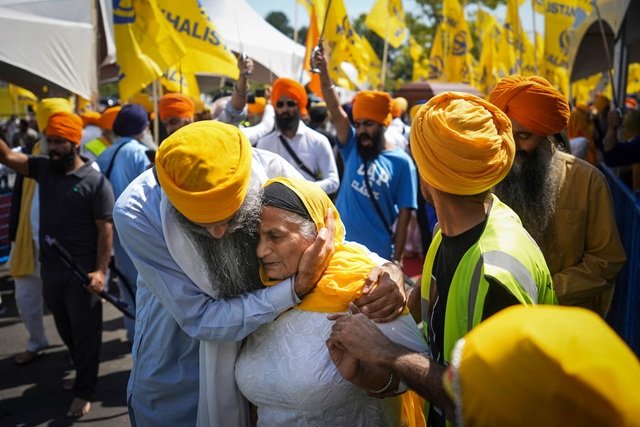
India has been associated with at least four incidents since 2023. The most prominent was the 2024 killing of Sikh activist Hardeep Singh Nijjar in Canada. Canadian authorities publicly attributed the operation to Indian intelligence, with alleged criminal facilitation by the Bishnoi gang. There may be other cases involving criminal organisations that have not yet reached the point of public attribution, making the known incidents potentially only part of a broader pattern.
The relationship between governments and criminal organisations is also more complicated than a simple exchange of money for violence. Financial incentives are an important motivation, particularly because contract killings and covert operations can generate lucrative income. Cryptocurrency and other obfuscated payment systems can make transactions more difficult to trace. But money is only one component of the relationship.
Safe havens can create a deeper form of mutual dependence. Governments may offer protection from prosecution or extradition, enabling criminal organisations to operate with reduced risk of arrest. Coercion provides another mechanism, with states capable of threatening imprisonment, asset seizure or violent retaliation. Political promises can further reinforce the relationship, particularly where criminal organisations seek legitimacy, protection for their activities, favourable regulatory environments or continued access to criminal markets.
The resulting arrangement benefits both sides. States obtain capabilities that are difficult to attribute directly to them, while criminal organisations can gain financial resources, territorial influence and protection from prosecution. Breaking these relationships therefore requires more than arresting individual operatives. The incentives sustaining both sides of the relationship must also be disrupted.
The consequences extend beyond individual assassinations. As more governments observe operations being conducted without meaningful consequences, the incentive to adopt the model may increase. Criminal proxies, surrogates and contractors are attractive precisely because they can allow states to operate below the threshold of conventional conflict. Yet that calculation is inherently unstable. An operation that is successfully concealed during peacetime can become far more dangerous during a geopolitical crisis, when attribution is more consequential and the margin for miscalculation narrows.
The emerging model also exposes weaknesses in existing systems for preventing and disrupting political violence. Counterterrorism mechanisms are generally designed around ideologically motivated non-state actors, while counter-crime institutions focus on profit-driven criminal activity. State-directed criminal operations fall between those categories. They combine criminal methods with geopolitical objectives, creating a problem neither system was designed to address alone.
Responding effectively therefore requires greater integration between intelligence, financial intelligence, sanctions enforcement and criminal investigations. One of the most persistent obstacles is the institutional separation between intelligence agencies and law enforcement. Intelligence services may possess information that cannot easily be transferred to prosecutors because of legal or evidentiary restrictions, while police and prosecutors may lack the broader intelligence picture necessary to anticipate state-directed criminal operations.
The convergence of state power and organised crime is consequently creating a new challenge for governments seeking to prevent political violence. What once appeared to be separate worlds—foreign intelligence operations, political assassination and organised crime—are increasingly capable of intersecting within the same operation. The Soufan Center’s assessment suggests that the critical question is no longer simply whether states use criminals, but how effectively governments can identify, disrupt and deter a system in which criminal capabilities can be purchased, political violence can cross borders, and responsibility can remain deliberately obscured.