


by Luxman
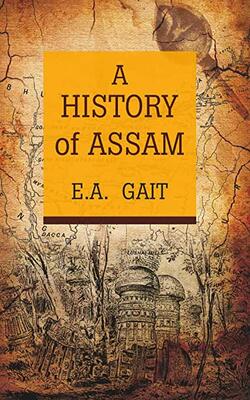
It is an early twentieth-century work by Edward Gait, first published in 1926, shaped by the intellectual and imperial assumptions of its time. A History of Assam is not simply a regional chronicle; it is an act of historical power, a work that simultaneously constructs Assam as a knowable entity and disciplines it into the epistemological order of imperial and post-imperial historiography. Read closely, the book reveals less about Assam as a lived, plural, internally contradictory civilisation than about the anxieties, priorities, and blind spots of the historian who sought to fix it on the page. It is an ambitious narrative that stretches from mythic origins to colonial modernity, but its ambition is inseparable from a controlling impulse: to stabilise a land long perceived as unruly, peripheral, and resistant to incorporation into dominant historical frames.
One of the book’s most frequently cited assertions is that Assam “possesses a history peculiarly its own, sharply differentiated from that of the rest of India.” This line, often invoked to celebrate Assamese distinctiveness, is in fact double-edged. On the surface, it recognises regional specificity; beneath that surface, it isolates Assam as an exception, an anomaly that must be explained rather than understood on its own terms. The narrative repeatedly treats the region as a frontier zone, a space defined by incursions—Aryan, Tibetan, Shan, Mughal, British—rather than by indigenous continuities. This is most evident in the claim that Assam’s historical development was “retarded by its geographical isolation and the dense forests which hemmed it in.” The language is revealing: forests are not habitats or cultural landscapes but obstacles; isolation is not autonomy but delay. History, in this framing, moves on a single track, and Assam is perpetually late to arrive.
The early chapters rely heavily on dynastic lists, inscriptions, and court chronicles, producing a version of the past in which political authority is almost entirely synonymous with kingship. The Ahom state, in particular, is treated with a mixture of admiration and reductionism. The book famously notes that the Ahoms “entered Assam as conquerors but remained as rulers,” a phrase that has been endlessly repeated in Assamese nationalist discourse. Yet the statement conceals as much as it reveals. It implies a linear progression from violence to stability, from outsider to native, without grappling with the mechanisms of coercion, cultural assimilation, and internal stratification that made Ahom rule possible. The voices of non-elite groups—peasants, tribal communities, women—appear only fleetingly, usually as objects of policy or rebellion rather than as historical agents.
What is most striking, and troubling, is the book’s treatment of tribal societies. While it acknowledges that Assam was “inhabited from the earliest times by numerous tribes of varying origin,” these groups are largely frozen in an ethnographic present. They are described as “primitive,” “warlike,” or “backward,” terms that reflect the classificatory language of colonial anthropology rather than historical analysis. Even when the text concedes that many tribal institutions were “well adapted to local conditions,” this praise is patronising, implying functional adequacy rather than intellectual or moral complexity. The absence of indigenous cosmologies, oral traditions, and systems of memory creates a historical vacuum in which tribes exist without pasts of their own, waiting to be acted upon by more “advanced” forces.
The arrival of Islam and later the Mughals is framed almost exclusively through the lens of military confrontation. The book records that “the Muhammadan invasions left little permanent mark upon the civilisation of Assam,” a claim that has had enormous historiographical consequences. By minimising Islamic influence, the narrative reinforces an image of Assam as culturally insulated and religiously homogeneous, an image that sits uneasily with the region’s long history of migration, syncretism, and exchange. The statement is less an empirical conclusion than a political judgement, privileging visible monuments and court culture over subtler forms of social and cultural interaction.
Colonial rule, unsurprisingly, occupies a central place in the book’s structure. The British annexation of Assam is described as bringing “order where there had been anarchy,” a phrase that encapsulates the moral logic of empire. Pre-colonial instability is exaggerated to justify colonial intervention, while the violence and disruption of British policies are often softened by bureaucratic language. Even when the text acknowledges the disastrous consequences of early revenue experiments or forced labour, it frames them as administrative errors rather than as systemic features of colonial extraction. The tea industry, for example, is celebrated as a transformative economic force, with little sustained attention to the brutal conditions of indentured labour that sustained it.
Perhaps the most revealing line in the entire book comes in its assessment of colonial governance: “Under British rule Assam at last found a place in the wider world.” The implication is clear: history becomes meaningful only when it enters a global system defined by imperial connectivity. What this erases is the fact that Assam had long been connected—to Southeast Asia, Tibet, Bengal—on its own terms. The “wider world” invoked here is not the world as such but the world as imagined by empire.
The tone of scholarly detachment masks deep normative assumptions. Progress is equated with centralisation, literacy with scripts recognisable to the historian, religion with textual traditions. Oral cultures are marginalised; ecological knowledge is ignored; gender relations are almost entirely absent. Women appear primarily as queens or symbols, rarely as economic or cultural actors. This silence is not accidental. It reflects a historiographical tradition that equates history with state power and written records, a tradition that systematically excludes those who lived outside its archives.
And yet, for all its limitations, History of Assam remains a foundational text. Its meticulous use of inscriptions, its careful chronological scaffolding, and its insistence that Assam has a coherent historical trajectory have shaped generations of scholarship. The problem is not that it tells a story, but that it tells it with such confidence that alternative stories struggle to be heard. The book does not merely describe Assam; it defines what counts as Assamese history.
In the present moment, when questions of identity, migration, and belonging dominate political discourse in the region, the legacy of this book is deeply ambivalent. Its emphasis on continuity and rootedness has been mobilised to assert cultural pride, but its exclusions have also enabled dangerous simplifications. By treating Assam as a bounded, almost timeless entity, the narrative leaves little room for hybridity, conflict, and change from below.
To read History of Assam today is therefore to engage in an act of critical archaeology. One must excavate not only the past it describes but the intellectual world that produced it. It is a book that demands to be argued with, resisted, and rewritten. Its authority is undeniable, but so too are its silences. In those silences—in the forests dismissed as barriers, in the tribes denied histories, in the women who barely appear—lie the outlines of another Assam, one that still waits for a history equal to its complexity.










