Political engagement is often imagined as something natural to activists and difficult for everyone else. For some people, protests, unions, campaigns and collective action are part of ordinary life. For others, political involvement competes with work, family responsibilities and the desire for personal stability. The hesitation is understandable: engagement consumes time, carries reputational risks and can require defending a position before one knows whether it is correct.
A feature published by Philosophie Magazine approaches the problem through three twentieth-century thinkers—Albert Camus, Václav Havel and Jan Patočka. Their experiences were radically different, but all three confronted the question of what happens when political circumstances make neutrality increasingly difficult.
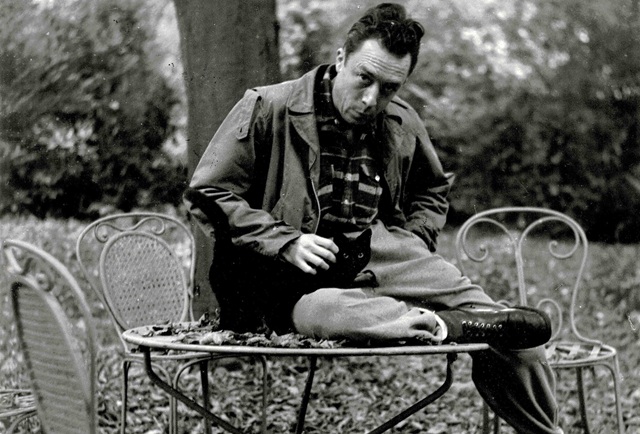
Camus offers the first answer: engagement becomes necessary when circumstances leave no safe distance from politics.
In his diaries, Camus used the striking expression “involuntary engagement”. He developed the idea most clearly in his 1957 lecture “The Artist and His Time”, delivered at Uppsala University shortly after receiving the Nobel Prize.
For Camus, remaining outside politics may be possible during relatively peaceful periods. Individuals can concentrate on their private lives and leave political disputes to others. But that possibility changes when fundamental freedoms are threatened by war, occupation, arbitrary imprisonment or political repression. At that point, refusing to choose can itself become a political act.
The individual, in Camus’s metaphor, finds himself already aboard the ship of his historical moment. Engagement does not necessarily mean that he knows where the ship should go. It means recognising that he is already on board.
Camus’s own political record demonstrates the difficulty of this distinction. During the Algerian War, he argued for a just Algeria in which Arabs and Europeans could live together in equality, while refusing to support terrorism. His famous statement that he would defend his mother before justice revealed the painful conflict between abstract political principles and personal loyalties.
The example exposes a central problem with political activism: engagement does not guarantee truth. A person can take a moral stand and still misunderstand the political circumstances surrounding it.
Havel provides a second answer: engagement begins by refusing to participate in a lie.
In The Power of the Powerless, written in 1978 while Czechoslovakia was under communist rule, Havel imagined a greengrocer displaying the official slogan “Workers of the world, unite!” The shopkeeper does not necessarily believe the words. He displays them because everyone else does and because refusing would carry consequences.
The slogan therefore performs a function beyond its literal meaning. It gives the shopkeeper a respectable explanation for his obedience.
Havel’s insight was that authoritarian systems do not depend solely on people genuinely believing official ideology. They can survive because ordinary people participate in rituals whose meaning they privately reject. The system becomes powerful partly because individuals help reproduce its language.
Authentic engagement consequently begins when someone stops cooperating with that language.
For Havel, “living in truth” does not necessarily require a complete political programme. It can begin with something much smaller: refusing to repeat what one knows to be false. That refusal may appear insignificant, but it disrupts the everyday behaviour through which an authoritarian system maintains its appearance of universal consent.
The third answer comes from Jan Patočka: engagement can emerge from solidarity with people who have been shaken by historical catastrophe.
Patočka, another signatory of Charter 77, was interrogated by the Czechoslovak authorities after his involvement in the dissident movement. He died in March 1977, shortly after those interrogations.
His later philosophical writings examined war not simply as a sequence of military conflicts but as a transformation of political and moral life. For Patočka, the experience of suffering could create a form of solidarity that crossed ordinary political divisions.
He called this the “solidarity of the shaken.”
The idea is significant because it does not begin with ideology. People who have experienced war, repression or catastrophe may discover that their common vulnerability matters more than the political identities separating them.
This connects Patočka with a concern also visible in Camus: the possibility of rebuilding a community when conventional political language has become corrupted by hatred and conflict.
The three thinkers therefore offer three different routes into engagement.
Camus begins with circumstances: history can force people into political responsibility.
Havel begins with truth: individuals can challenge political systems by refusing to reproduce their lies.
Patočka begins with solidarity: shared suffering can create bonds that transcend ideological divisions.
None of these approaches suggests that political action is easy. Nor does any guarantee that those who become engaged will choose correctly. Indeed, uncertainty is part of the problem. Activism can be mistaken, movements can become ideological, and moral certainty can itself become dangerous.
That is why the argument presented by Philosophie Magazine is ultimately less about activism than about responsibility. Political engagement carries costs precisely because it requires something to be surrendered—time, comfort, professional security, social approval or the reassuring belief that politics can be safely left to someone else.
The deeper question is therefore not whether every individual should become an activist. It is what happens when circumstances make withdrawal impossible, when public language becomes detached from reality, or when suffering creates obligations that cannot be answered by private self-interest alone.
Camus, Havel and Patočka provide different answers. But they converge on one unsettling proposition: political passivity is not always neutral. Sometimes refusing to act is itself a decision.