The modern workplace is undergoing a transformation unlike any before, driven by rapid advancements in monitoring technology. Whether you’re an office worker, a warehouse employee, or a gig worker in your car, electronic surveillance is now a pervasive force shaping job security, performance expectations, and even financial stability. Yet, as this surveillance intensifies, legal protections for workers lag dangerously behind.
For Dora Manriquez, a rideshare driver in the San Francisco Bay Area, this reality has had devastating consequences. Every action she takes—or doesn’t take—is logged by Uber and Lyft, feeding into a black-box algorithm that determines the quality of her job offers. Rides that barely cover her expenses, penalties for rejecting low-paying fares, and the constant uncertainty of how her performance is measured have left her struggling to make ends meet. After nearly a decade of driving, she has had to file for bankruptcy.
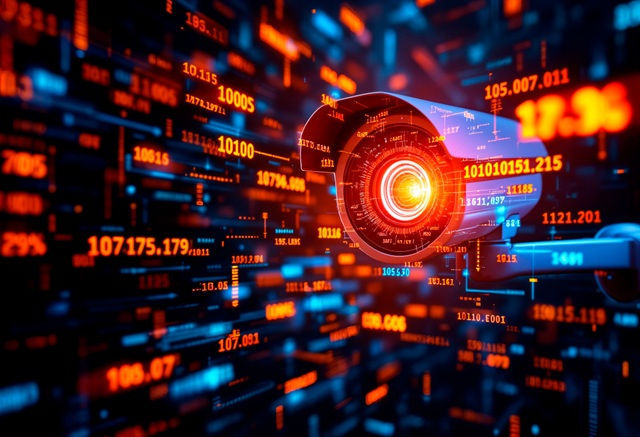
Manriquez’s experience is not unique. A 2021 study found that nearly 80% of companies were actively monitoring remote or hybrid workers, and a New York Times investigation in 2022 revealed that eight of the ten largest private companies in the U.S. track individual worker productivity in real-time. Employers now have access to software that logs everything from keystrokes and emails to location data and even the tone of written communication—often without employees realizing they are being watched.
The Power of Data in the Workplace
The use of data to control workers is not a new concept. As MIT Technology Review has explored, workplace surveillance has deep historical roots. The late 19th and early 20th centuries saw the rise of “scientific management,” a system pioneered by Frederick Winslow Taylor to maximize efficiency through close monitoring of workers. Henry Ford later refined this approach, breaking down tasks into mechanized steps that reduced worker autonomy. Today, the same philosophy underpins modern algorithmic management—but with far more invasive and opaque methods.
Nowhere is this more evident than in Amazon’s warehouses. A 2024 Senate committee report, led by Bernie Sanders, exposed how Amazon’s internal algorithms dictate the pace of work, with devastating effects on workers’ health. The report found that Amazon employees were nearly twice as likely to be injured as workers in other warehouses, with injuries ranging from torn rotator cuffs to long-term back pain. Despite internal recommendations to slow down the pace of work, Amazon dismissed these concerns, instead attributing the high injury rates to workers’ “frailty.”
The Rise of AI Management
Beyond surveillance, companies are increasingly relying on artificial intelligence to manage workers. AI-driven systems now determine hiring, firing, and performance evaluations, often without human oversight. Workers report being disciplined or even terminated based on opaque algorithmic decisions, with no ability to appeal.
Gig workers, in particular, face an unprecedented lack of job security due to automated “deactivations.” A driver with a low rating or too many canceled rides may find themselves suddenly locked out of their account—effectively fired by an algorithm. Even in more traditional workplaces, employees are being evaluated based on data they don’t even know is being collected.
AI-driven labor management is not just affecting low-wage jobs. In white-collar industries, companies are using automated monitoring to track employee engagement and productivity. AI startups now advertise their software as a replacement for human workers, with marketing campaigns boasting that AI “won’t complain about work-life balance” and “won’t come into work hungover.”
The Legal Battle Over Workplace Surveillance
Despite the growing use of surveillance and AI management, legal protections for workers remain weak. Unlike Europe’s General Data Protection Regulation (GDPR), which provides some workplace privacy protections, the U.S. has no federal laws explicitly restricting how employers can monitor and use worker data.
Some states, however, are beginning to take action. In 2023, California expanded its Consumer Privacy Act (CCPA) to include worker protections, granting employees the right to know what data their employers collect and request its deletion. Yet, enforcement remains a challenge, and many workers are unaware of their rights.
The Future of Work: A Call for Protection
As workplace surveillance becomes the norm, labor advocates warn that new policies are needed to prevent widespread worker exploitation. Unions and advocacy groups are fighting for stronger regulations, arguing that unchecked surveillance and algorithmic management erode worker autonomy and dignity.
The fundamental question is not just about privacy but about power. As MIT Technology Review has highlighted, technology itself is not the problem—it’s how companies choose to wield it. Will AI and data-driven management be used to support workers, or will they continue to serve as tools of control?
For now, workers like Dora Manriquez remain trapped in a system where their livelihoods depend on invisible metrics and inscrutable algorithms. Without stronger protections, the balance of power between employers and employees will only continue to tilt further—leaving human workers struggling to compete in a world increasingly governed by machines.