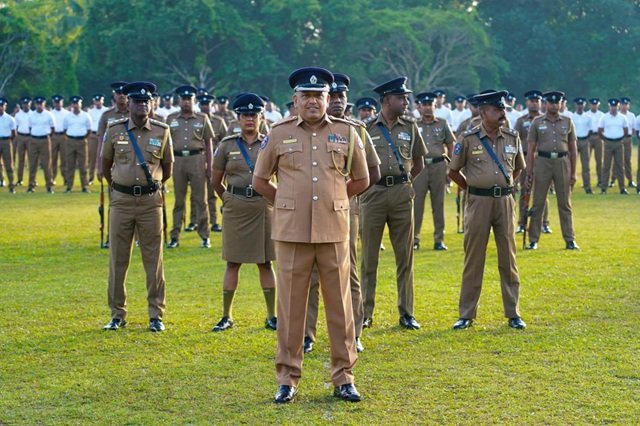
More than 4,300 police officers have left the Sri Lanka Police service over a period of nearly seven years, according to figures released by Police Headquarters, as the department continues efforts to fill a large number of vacancies through accelerated recruitment and promotions.
Police Headquarters said 4,308 officers had left the service for various reasons between 2020 and 24 June 2026. The figure comprises 3,936 male officers and 372 female officers, highlighting a sustained level of departures from the force over the period.
The highest number of departures was recorded in 2025. During that year alone, 887 officers left the service, including 838 officers and 49 female officers. The number of departures has remained significant in 2026, with 758 officers leaving during the first six months of the year. Of those, 699 were officers and 59 were female officers.
According to Police Headquarters, a range of personal circumstances has been a major factor behind the departures. These include officers retiring before completing their full period of service and leaving the country to seek employment overseas, among other personal reasons.
The figures come as the Sri Lanka Police service faces a substantial staffing shortfall. There are currently 30,815 vacancies across the police service, including 28,164 vacancies in the general police service and a further 2,651 in the Special Task Force (STF).
The scale of the vacancies has prompted efforts to accelerate the recruitment of new personnel and the promotion of serving officers. Police authorities said measures were being taken to fill the vacancies as quickly as possible while adhering to the prescribed procedures for recruitment, promotions and transfers.
Alongside efforts to address staffing shortages, the police department has introduced a range of programmes intended to improve officers’ performance and safeguard their mental wellbeing. These initiatives include the introduction of modern technology and digitalisation programmes, as well as improvements to accommodation facilities for police personnel.
Health-related measures have also been introduced as part of the department’s efforts to support its officers. These include medical camps aimed at detecting non-communicable diseases and the provision of quality medicines. The department has also increased financial allocations for surgical procedures, while counselling and psychological programmes have been organised for police personnel.
In addition, officers have been given a direct channel to raise their concerns with the Inspector General of Police through the ‘Police Chief Relief Day’, which provides an opportunity for officers to meet the Inspector General of Police directly and present their problems.
The department has also taken disciplinary action against officers whose conduct breached police orders. Police Headquarters said that over the past five years, 658 officers had been removed from service because of various disciplinary offences committed in violation of police orders.
The figures therefore present a picture of a police service dealing simultaneously with personnel departures, disciplinary issues and a substantial vacancy gap, while attempting to strengthen recruitment, career progression, working conditions, healthcare and psychological support for serving officers.:::