


Editorial
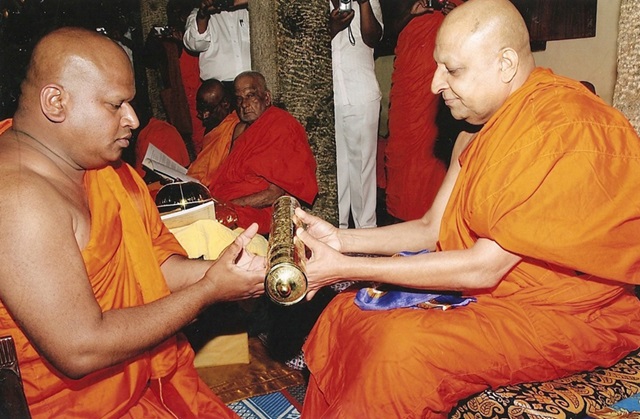
In the crumbling edifice of the country’s democracy, we witness yet another sordid chapter: a rejected politician, Lakshman Kiriella, attempting to slither back into Parliament through the manipulative invocation of religious authority. That this request comes from none other than the revered Malwathu Maha Nayaka Thero of Thibbotuwawe Sumangala is a tragedy of immense proportions—a betrayal not only of democratic principles but of the sacred trust placed in the religious order. What is ironic here is that his daughter was elected this time, and now the father wants to abuse the national list to sneak into Parliament. It is a reflection of a broader societal malaise—a willingness to erode the sacred, bend authority, and distort the will of the people to serve selfish political greed.
Kiriella, knowing full well that the people would reject him if he contested the election, now seeks to exploit a backchannel paved with the moral authority of the Malwathu Maha Nayaka Thero. This is not merely a political manoeuvre; it is an unforgivable betrayal. The late Stanley Jeyaraja Tambiah, in his seminal work Buddhism Betrayed?, warned against the dangers of intertwining Buddhism with politics, stating that “when the sangha participates in political action that is self-serving, it abandons its higher calling and undermines both the institution and the polity.” The intervention of the Nayaka Thero serves as a glaring reminder of this perilous convergence.
Buddhism, as a moral philosophy, demands selflessness, integrity, and accountability—qualities that stand in stark contrast to the naked ambition on display here. The Dhammapada (Verse 308) cautions: “When a person is without integrity, shames not in deceit, and speaks false words,
That one has strayed far from the truth, and the path to awakening.”
The Malwathu Maha Nayaka Thero’s endorsement of Kiriella is a perfect example of this very straying from the truth, where moral authority is wielded not to guide society but to distort democracy. How can this action reconcile with the Buddha’s teachings, which prioritised ethical governance and the collective welfare over the desires of a few?
This act curses the people of Sri Lanka, already burdened by economic despair, systemic corruption, and disillusionment with their leaders. The people rejected Kiriella, and rightly so; his decades in politics yielded little but empty rhetoric and the entrenchment of dynastic privilege. Is the fact that his daughter now occupies a seat in Parliament not sufficient representation for one family? Must the people now endure his political resurrection through the manipulation of a sacred institution?
As political theorist Hannah Arendt observed, power without accountability leads to a loss of public trust, creating a vacuum where both authority and democracy crumble. Sri Lanka now faces this very peril. To allow Kiriella’s return through the national list—an avenue meant for the elevation of unrepresented voices, not the resurrection of rejected politicians—would mock the democratic process. Worse, it would delegitimise the very essence of Buddhism’s role in society as a guardian of ethics, not a broker of power.
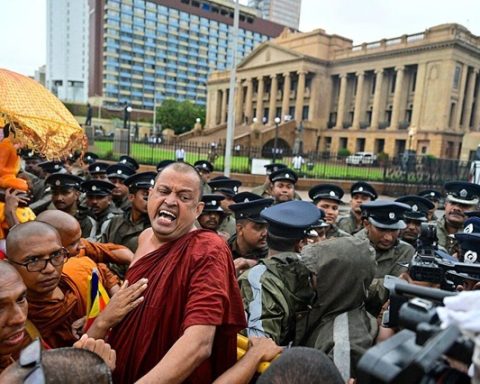
The involvement of the Buddhist monk in this scheme raises serious questions about the role of the sangha in modern politics. Tambiah noted that “when monks become entangled in the politics of the state, they transform into agents of division rather than unity, wielding moral authority as a weapon rather than a guide.” This betrayal diminishes the respect due to the monastic order and cheapens Buddhism’s profound teachings in the eyes of the public. By permitting such interference, the monk risks losing the respect of those who look to the sangha for guidance, not manipulation.
Sri Lanka does not deserve this kind of political manipulation. The people, already reeling from socio-economic hardships, deserve leaders who rise through merit and public trust, not those who use religious institutions as ladders for personal gain. The sacred should remain untarnished by the profane desires of the political class.
In the Sigalovada Sutta, the Buddha laid out the duties of leadership: to serve with humility, act with integrity, and ensure the welfare of all. The public and their representatives must demand these qualities from their leaders. Monks, too, must remember their sacred duty: to guide society toward enlightenment, not entrench political corruption.
This moment must serve as a wake-up call—not just for the politicians but also for the religious institutions that risk losing their moral authority by enabling such manipulation. The Malwathu Maha Nayaka Thero’s actions are not merely controversial; they are a betrayal of the people’s trust and a violation of Buddhist principles. If Sri Lanka is to heal and rebuild, it must reject these backdoor manoeuvres and demand a higher standard from its leaders and its spiritual guides.
Buddhism teaches that power, when divorced from responsibility and virtue, leads only to ruin. The Buddha’s words resonate now more than ever:
“The unwise crave power, forgetting that it brings not peace,
But chains that bind the soul and cast shadows on the world.”
Let the people of Sri Lanka reject the chains of political opportunism and reclaim their right to honest, transparent governance. The electorate has already spoken. It is time for the rejected to accept their fate with dignity, and for the sacred to remain untainted by the profane.

Only elected persons should enter parliament. Perhaps, it is time to consider the necessity of a “national list” at all. No defeated / electorate rejected candidate should ever be allowed to enter parliament BY THIS BACK DOOR. Religious leaders should refrain from recommending such candidates. It is a mockery of the electoral system to persist with a ” stupid” national list.