Editorial
Do you believe justice delayed is justice denied? If so, how do we define what has transpired since the fateful night of December 3, 1984, when a toxic gas leak from the Union Carbide plant in Bhopal unleashed death upon thousands? And more importantly, how do we justify the actions (or inactions) of global and domestic power players, from former U.S. Secretary of State Henry Kissinger to Indian Prime Minister Rajiv Gandhi, who appear to have conspired to shield corporate perpetrators from accountability?
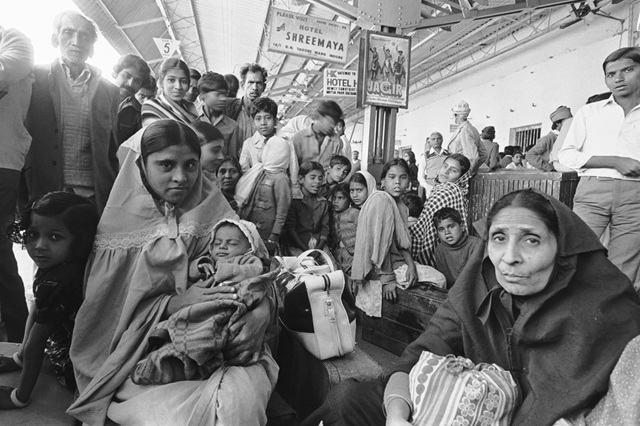
In the aftermath of the tragedy, over 25,000 people have succumbed to the effects of exposure to methyl isocyanate (MIC), with hundreds of thousands left to endure chronic illnesses, disabilities, and generational contamination. The numbers are staggering, but the indignation only deepens when we consider the revelations that powerful political figures may have actively worked to suppress justice. Do you believe the victims were betrayed by their leaders?
In 1988, J.R.D. Tata, a stalwart of Indian industry, wrote a confidential letter to then Prime Minister Rajiv Gandhi, conveying Henry Kissinger’s “concerns” about delays in reaching a settlement with Union Carbide. Kissinger, the man often remembered for his Machiavellian diplomacy during the Cold War, was acting as a corporate adviser, urging India to accept a settlement that many would later decry as laughably inadequate. Do you believe that Kissinger, a man hailed as a diplomatic genius, did not realise the gravity of his actions in this case? Or is it more likely that his primary allegiance was to American corporate interests, not the Indian lives devastated by Union Carbide’s negligence?
Kissinger’s assurances that Union Carbide was offering a “fair and generous” settlement ring hollow against the sheer scale of suffering. The 1989 agreement—a mere $470 million—amounted to less than $1,000 per victim. Compare this with the $20 billion BP paid for the Gulf of Mexico oil spill in 2010. Are Indian lives worth less? Was this corporate malfeasance excused because the victims were poor, brown, and powerless?
Dow Chemical, which later acquired Union Carbide, has consistently claimed that it bears no responsibility. Yet it is notable that in the U.S., Dow settled silicone breast implant lawsuits for $3.2 billion and asbestos claims for significant sums. How can Dow justify its double standards? Is this not the epitome of environmental racism, where the value of human lives is calculated differently depending on geography, race, and wealth?
Critics allege that Rajiv Gandhi’s government played a role in shielding Warren Anderson, the then-chairman of Union Carbide, from prosecution. Anderson was allowed to leave India shortly after the disaster, never to face trial. Why? The Bharatiya Janata Party (BJP) has claimed that Gandhi struck a secret deal with U.S. President Ronald Reagan to pardon Anderson in exchange for strengthening Indo-U.S. ties. If true, does this not reveal a grotesque prioritisation of political expediency over justice?
Rajiv Gandhi’s tenure is often celebrated for modernisation efforts and progressive policies. But do such accomplishments outweigh complicity in subverting justice for the sake of American corporate interests? If Kissinger’s influence was indeed instrumental in shaping the Indian government’s response, how much autonomy did Gandhi truly exercise?
Henry Kissinger’s involvement in Union Carbide’s operations stretches beyond the settlement. Declassified diplomatic cables from WikiLeaks reveal that Kissinger facilitated a $1.3 million loan to help build the Bhopal plant in the 1970s. Did he anticipate the catastrophic consequences of inadequate safety measures, or was this just another instance of prioritising corporate profits over human lives? Kissinger’s long shadow looms over some of the 20th century’s darkest geopolitical manoeuvres—from supporting dictatorships to enabling war crimes. Is it unreasonable to ask whether his role in the Bhopal tragedy fits this pattern?
Dow’s spokespersons continue to assert that they had no connection to the Bhopal disaster, as they acquired Union Carbide long after the tragedy. But does ownership absolve responsibility? Union Carbide’s toxic legacy endures in the contaminated groundwater and poisoned lives surrounding the derelict plant. Would Dow be allowed to evade accountability if such an environmental catastrophe occurred in Michigan, New York, or Texas?
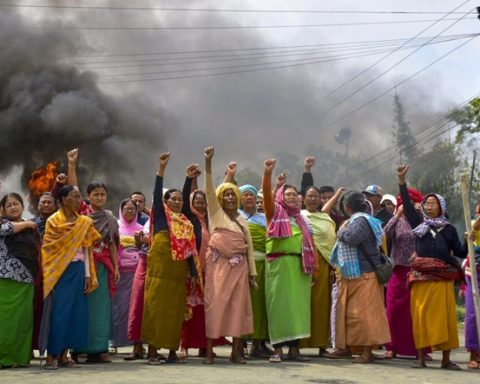
When activists burned effigies of Union Carbide and Dow during the 30th anniversary of the disaster, they were not just expressing outrage but demanding answers. Why has the Indian government been unable to enforce cleanup efforts or secure meaningful reparations from Dow? Why does the U.S. government, which compelled BP to pay billions for the Gulf spill, remain silent on Dow’s liabilities?
Nearly 40 years later, survivors’ groups continue to fight for justice. Activists have appealed to every Indian government since 1984, petitioned international courts, and lobbied U.S. administrations. Yet progress is minimal. Why? Does the Indian judicial system lack the will to stand up to powerful corporations? Do Western governments view the plight of Bhopal’s victims as a distant, irrelevant problem?
Even today, the scars of the disaster are visible in Bhopal. Generations of children are born with severe health issues linked to lingering contamination. The Chingari clinic, which treats these children, struggles to keep up with demand. Why has Dow not contributed a single dollar to mitigate this ongoing suffering?
The Bhopal tragedy raises larger questions about corporate accountability in a globalised world. When multinational corporations operate in countries with weaker regulatory frameworks, should they not be held to the same standards as in their home countries? If companies like Union Carbide and Dow can evade justice in India, what precedent does this set for future industrial disasters?
While the Bhopal disaster is often cited as a turning point in industrial safety awareness, systemic issues remain. Industrial accidents still occur in India with alarming regularity. Labour laws are routinely flouted, environmental regulations are weakly enforced, and corporate lobbying continues to shape policy. Have we learned anything from Bhopal, or are we doomed to repeat history?
The survivors of Bhopal are ageing. Many have already passed away without seeing justice. Is it too late to demand accountability from those who orchestrated this travesty, from Union Carbide executives to government officials who betrayed their own people? Or is there still hope that global solidarity and relentless activism can force institutions to finally act? If we let Bhopal fade into history as an unfortunate accident rather than an orchestrated crime, what message do we send to future victims of industrial disasters?
The answers to these questions will not come easily, nor should they. However, one truth remains indisputable: the victims of Bhopal have been denied the justice they rightfully deserve for far too long. The system has failed them, their suffering has been neglected, and their voices have been silenced. Justice may be postponed, but it must never be discarded. The time to demand accountability and reparation is not tomorrow, but today. We owe it to the victims, their families, and the memory of their pain to ensure that this atrocity is not buried in indifference any longer.