Note from the Sri Lanka Guardian Editorial Team
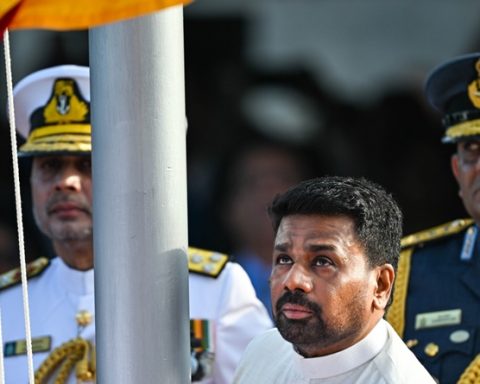
Sri Lanka’s political scene in 2024 was undoubtedly shaped by Anura Kumara Dissanayake’s victory in the presidential elections. A leader of the National People’s Power (NPP) and a self-proclaimed socialist, Dissanayake’s rise to power came as a shock to many who thought that Sri Lanka’s crisis-ridden society would lead to a more conservative or reformist government. His platform, promising to dismantle the political elite that has long been entrenched in power, struck a chord with the public. But as he took office, the nation was left asking: was this really the change the country needed, or was it simply a new face at the top of an old and failing system? Dissanayake’s agenda may have been progressive, but the political machinery backing him remained largely the same, leading some to wonder whether his victory was a genuine revolution or merely a change of hands among the elite.
Shortly after his inauguration, Dissanayake called for snap parliamentary elections. The move was aimed at consolidating his power and securing a mandate for his policies. However, the elections threw up a paradox. While the NPP secured a remarkable majority, many questioned whether this was truly a reflection of public support or a well-executed political maneuver. The results could be seen as a validation of Dissanayake’s promises to challenge the establishment, yet it also reflected how the political system was still largely controlled by the same forces that had led the country into its current economic ruin. The new majority in Parliament seemed to confirm that the public was weary of the old guard, but it also raised concerns about whether this new dominance might tilt Sri Lanka towards a single-party system, effectively stifling the very democracy the country desperately needs.
The economic situation in Sri Lanka remained precarious throughout 2024, despite the government’s optimistic claims of recovery. The central bank projected a modest growth rate of 4.5% for the year, which many economists viewed as overly optimistic. While the nation was certainly showing signs of improvement, with inflation dropping and some sectors of the economy recovering, the real impact on everyday life for Sri Lankans was far less clear. The ordinary citizen, struggling with unemployment and rising living costs, could hardly be expected to feel the effects of a 4.5% growth. For many, the government’s claims seemed like little more than a diversion, an attempt to mask the underlying problems that were still very much present. While some sectors of the economy may have benefitted from international aid and investment, the vast majority of the population continued to suffer, and it became increasingly evident that the government’s economic agenda was more about appeasing global financial institutions than addressing the needs of the people.
Even more controversial was the unexpected drop in Sri Lanka’s inflation rate, which fell to -1.7% in November 2024. The government hailed this as a significant achievement, but the reality was far more complex. Negative inflation, while superficially a positive development, often signals deep economic malaise. For many Sri Lankans, the drop in prices simply reflected the broader economic contraction, with wages stagnant and purchasing power still eroded. The idea that inflation had decreased to such a low point was little more than a shallow victory, masking the real problems facing the economy. It was a sign of a system in decline, rather than one on the verge of a comeback. For ordinary citizens, the drop in inflation did little to alleviate the everyday struggles of affording basic necessities.
One of the most stunning developments in 2024 was the scandal involving the Speaker of Parliament. A man who had long boasted of his academic credentials, claiming them as evidence of his intellectual superiority and suitability for leadership, was forced to resign after it was revealed that his qualifications were fabricated. This was the first such case in Sri Lanka’s history, and it sent shockwaves through the political system. The resignation raised uncomfortable questions about the integrity of the country’s leaders. How could a man entrusted with such a prestigious position have lied about something so fundamental? The scandal was not just an embarrassment for the Speaker but also a reflection of a larger issue within the political elite. It highlighted the extent to which academic and professional credentials in Sri Lanka are often used as a veneer to cover up a lack of real ability or integrity. It was a reminder that power in the country often comes not from competence, but from the ability to manipulate the system to one’s advantage.
The appointment of Harini Amarasuriya as Sri Lanka’s first female prime minister in 24 years was another significant development, one that was hailed by many as a victory for gender equality and progress. However, her appointment raised just as many questions as it answered. Would Amarasuriya be able to navigate the complex political landscape of Sri Lanka, or would she simply be another figurehead, a symbol of progress with no real power? The optics of her appointment were powerful—after all, Sri Lanka had long been criticised for its lack of female leadership—but the reality of governing in such a divided and tumultuous political environment was bound to be more difficult. There were already whispers that her role would be little more than ceremonial, with real power remaining in the hands of a small, male-dominated political elite. Whether Amarasuriya would be able to prove herself as a leader in her own right, or whether she would be subsumed by the political establishment, remained to be seen.
Amid these political upheavals, Sri Lanka’s ongoing struggle with its national debt loomed large. The government’s debt restructuring efforts were touted as crucial for the country’s recovery, but the reality was more troubling. Debt restructuring, in its most basic form, is about renegotiating terms with international creditors, and in Sri Lanka’s case, these creditors were often far more powerful than the nation’s government. While some of the burden was shifted, the restructuring did little to address the core issues: the systemic corruption, mismanagement, and lack of accountability that had led to Sri Lanka’s fiscal crisis in the first place. For ordinary citizens, the restructuring was a bitter pill. It didn’t erase the massive debt burden, nor did it alleviate the austerity measures that were still in place. The debt restructuring was a win for international creditors, but for Sri Lankans, it felt like more of the same—another attempt to balance the scales on the backs of the poor.
The devastating floods and mudslides that hit Sri Lanka in 2024 served as yet another stark reminder of the country’s vulnerability to climate change. Despite repeated warnings from environmentalists, the government continued to push forward with development projects that disregarded the natural landscape. The lack of proper infrastructure and disaster preparedness became painfully evident as the floods displaced thousands and claimed many lives. The government’s response to the disaster was met with criticism, not only for its lack of preparedness but also for its failure to adequately address the root causes of such environmental disasters. It became clear that, despite all the talk of economic recovery and social reform, Sri Lanka remained ill-equipped to handle the environmental challenges that were increasingly shaping the future of the nation.
In the realm of foreign relations, Sri Lanka sought to strengthen its ties with both regional neighbours and international partners. While this was framed as a step towards greater stability, it also raised concerns about the country’s growing dependency on foreign aid and investment. The diplomatic manoeuvring of 2024 seemed, at times, to suggest that Sri Lanka was trying to appease everyone, without any clear strategy or direction. There were fears that this approach might ultimately lead to the country becoming a pawn in the geopolitical power struggles of larger nations, rather than standing firm as an independent player on the world stage. As Sri Lanka navigated this delicate balancing act, its true interests seemed to get lost in the shuffle.
Culturally, 2024 was a year of intense reflection, as Sri Lanka sought to rebuild its identity amidst the chaos. The Galle Concerto and other cultural festivals became key focal points for promoting national unity, but they also served as a reminder of how deeply divided the nation remained. The attempt to unite the people through cultural events, while well-intentioned, felt at times like a distraction from the real political and social problems the country faced. Was this the kind of unity Sri Lanka needed, or was it just an attempt to paper over the cracks in the system? As these festivals and events came and went, it became increasingly clear that the deeper issues of inequality, corruption, and social injustice were still at the heart of Sri Lanka’s struggles.
Tourism was another area that saw considerable effort in 2024, as the government attempted to revitalise the sector in the wake of the pandemic. The Sri Lanka Sports Fiesta and various initiatives aimed at attracting high-end tourists were launched with great fanfare. However, the emphasis on luxury tourism raised eyebrows. While the government touted these efforts as essential for economic recovery, critics argued that they benefited only a small segment of the population, while ordinary Sri Lankans continued to suffer. The question arose: Was this really the type of tourism Sri Lanka should be promoting, or was it just another way of pandering to the global elite?
The infrastructure projects undertaken throughout the year were similarly controversial. While they were presented as a means of modernising the country and improving the lives of its citizens, many viewed them as little more than vanity projects. The focus on large-scale development often ignored the pressing needs of rural communities and smaller towns, where access to basic services like healthcare and education remained woefully inadequate. Despite the promises of progress, it seemed that the government’s priorities were still skewed towards appeasing foreign investors and the wealthy elite, rather than addressing the needs of ordinary Sri Lankans.
As 2024 drew to a close, the government faced a growing challenge in balancing its promises with its actions. The issue of corruption continued to haunt Sri Lanka, as did the lack of meaningful reforms. While Dissanayake’s government was quick to trumpet its achievements, the gap between rhetoric and reality seemed wider than ever. The new government might have been elected with the promise of change, but as 2024 came to a close, it was clear that Sri Lanka’s political future remained uncertain, and the nation’s struggles were far from over. The questions lingered: Was this really the dawn of a new era, or just another cycle of empty promises and unfulfilled potential?