Editorial
As the calendar winds down on yet another tumultuous year, the much-propagated political “renaissance” of Sri Lanka remains as hollow as ever. The structure is barren, littered with the wreckage of false promises, systemic dysfunction, and an ever-deteriorating education system. A few days before the presidential elections in September 2024, former president Chandrika Kumaratunga issued a grim warning: the coming regime, she predicted, would not bring the reforms that the education system so desperately requires. She boldly stated that the JVP/NPP, should they rise to power, would perpetuate the destructive path that has plagued education for decades, prioritising political expediency over the nation’s future. Her words echoed a brutal truth, one largely ignored by a media eager to amplify the propaganda of an administration determined to whitewash its failures.
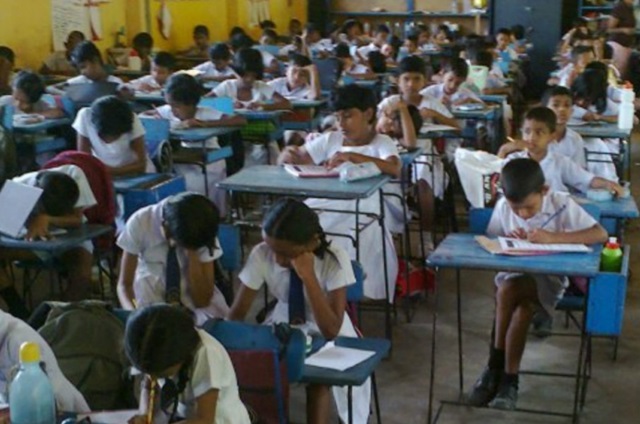
At the heart of this crisis lies a series of emblematic failures that have escalated to a point where the country’s educational integrity is teetering on the brink of collapse. The scandal surrounding the 2024 Grade 5 Scholarship Examination encapsulates the utter degradation of the system. Leaked questions, an unprecedented breach of trust, and subsequent free marks awarded to students have left the very notion of fairness in tatters. The Supreme Court, stepping in as a reluctant guardian of justice, declared that fundamental human rights were violated by the government’s hasty and reckless decision. But this court ruling, though necessary, is merely a band-aid on a gaping wound that has been festering for far too long. The problem runs far deeper, rooted in the political interference and systematic corruption that have marred Sri Lanka’s education system for decades.
In truth, the government’s response to this issue – or lack thereof – is indicative of a broader malaise that stretches beyond mere administrative incompetence. The administration’s knee-jerk reaction to the crisis, offering free marks and shifting blame to the alleged perpetrators, reflects the utter bankruptcy of its educational philosophy. At no point was there any attempt to confront the fundamental flaws in the system, which are far more endemic and ingrained. No significant reforms have been proposed or even contemplated to address the structural issues that allow such breaches to occur with impunity.
This has become the defining characteristic of Sri Lankan governance: a refusal to engage in meaningful structural reforms, particularly in education, where the damage is both insidious and far-reaching. The Ministry of Education’s recent announcement of a drastic reduction in school days for 2025 – from 210 to 181 – is another stark reminder of how the government prioritises short-term fixes over long-term solutions. The economy continues to crumble under the weight of soaring prices for basic necessities, while the education system, its very backbone, is neglected and becoming increasingly irrelevant. Teachers, underpaid and overworked, are compelled to engage in private tuition, not out of passion for the profession, but as a survival mechanism in the face of woeful public sector compensation.
The recent decision to penalise teachers who are forced to engage in tutoring outside their regular duties is a cruel reflection of the government’s inability to address the systemic issues plaguing education and the growing internal rifts. The directive is ill-considered, out of touch with reality, and entirely disconnected from the lived experiences of those who inhabit this broken system. How can teachers be expected to focus on the nation’s future when they themselves are drowning in economic insecurity? The government, preoccupied with its own survival and political gamesmanship, ignores the fundamental needs of its educators. The educational apparatus is crumbling under the weight of this neglect, with students caught in the crossfire of an administration that has long stopped viewing education as a vehicle for national progress.
And yet, this self-proclaimed ‘most educated’ government cannot reform the education system due to its inherent inability. The will to real change, is simply not within its DNA. Structural changes require vision, the courage to challenge entrenched interests, and the political will to make hard choices. The current administration, however, is shackled by a kleptocratic political culture that seeks only to maintain the status quo, rather than dismantle the corrupt practices that are at the root of the problem. As Kumaratunga rightly pointed out, the political forces in power today – whether the ruling party or its opposition – are complicit in the ongoing destruction of the education sector. They lack both the will and the capacity to implement any real change, driven instead by a thirst for power that blinds them to the needs of the next generation.
The education system, once a pillar of promise for Sri Lanka’s future, has been reduced to a hollow echo of its former self, captive to politicians who have sacrificed the nation’s youth for their own political survival. Most of the tuition masters and unionists, staunch supporters of the current government, remain silent—there are no protests, no strikes—while children drown in this miserly and corrupt political structure. What we are witnessing is nothing more than a heavily propagated, yet veiled, falsehood masquerading as a ‘brand-new road to emancipation’. It is a tragedy that will have consequences for years to come, as the very foundation of the country’s future is systematically dismantled by those who should be its stewards. The tragic irony is that, despite the vast public outcry and the widespread recognition of these issues, there is no real hope for reform.
The government has neither the will nor the capacity to bring about the radical transformation needed to save Sri Lankan education. As the year draws to a close, we are left with the sobering realisation that the damage has already been done. The question now is whether there is any path left to recovery or if Sri Lanka’s education system will simply continue to sink deeper into a mire of political neglect and institutional decay.