by Luxman Aravind
One could only chuckle, if it weren’t such an exquisite tragedy, at the state of the Sri Lankan government, which continues to gallivant through a delusional haze, unburdened by the knowledge of basic governance, or even the barest competence in understanding contemporary technology. A nation, once famed for its resplendent natural resources, now finds itself at the mercy of foreign powers and abysmally inadequate infrastructure, a cruel parody of what it once represented.
Take, for instance, the recent spectacle of salt imports—a moment of unprecedented national humiliation. This island, encircled by the bounteous sea, has never before been so impotent as to require salt from foreign shores. The arrival of 1,485 metric tons of salt from India marks the first time in fifteen years that Sri Lanka has been reduced to this pitiful state. A country surrounded by the ocean, where salt should be a mere by-product of nature’s generosity, is now importing it like a beggar at the doorstep of a prosperous neighbour. This, ladies and gentlemen, is the stunning product of decades of mismanagement and incompetence—an embarrassment wrapped in a flag of shame.
Yet this is but one facet of an even darker truth. The very fabric of the nation’s technological infrastructure is unraveling before our eyes, revealing a government utterly clueless in the face of global technological advancements. How laughable it is that the same administration which promises to safeguard our data with the stern assurance that “nothing will happen” is the very same one that has failed to even establish a functioning data centre in the country. No self-respecting nation in this modern age should be so inept, so bereft of the foresight to control its own internet infrastructure. Yet Sri Lanka, under the iron fist of its present leadership, has surrendered all semblance of sovereignty over its digital presence, opting instead to compromise with foreign entities—be it India, Malaysia, or whoever else may hold the reins.
And in the midst of this farce, the President—undoubtedly guided by a warped sense of confidence—makes grandiose declarations of a secure digital National Identity Card (NIC) system. According to him, this newfangled NIC will revolutionise tax payments and simplify transactions with financial institutions. A splendid idea, indeed, if it weren’t for the fact that the very infrastructure required to support such a system is woefully absent. A government so out of touch with the realities of its own technological inadequacies cannot be trusted with something as sensitive as a national digital identity.
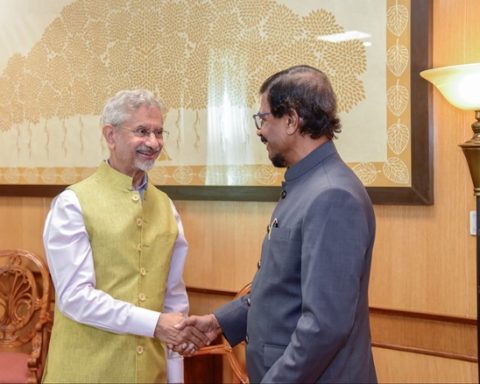
Worse still, the President continues to parrot assurances that “our data is protected,” a laughable claim from a leader presiding over a country so mired in digital servitude to foreign powers. The announcement that the Indian government will provide a staggering Rs. 10 billion for the creation of the digital NIC is, at best, an act of blind desperation. We are being told that an Indian company will be responsible for collecting and processing our data, and yet we are supposed to rest easy, secure in the knowledge that Sri Lanka will “take over” once the data is entered. One shudders to think what might be happening behind the scenes when the public remains so blissfully unaware of the catastrophic implications of this arrangement.
This farcical narrative—the government’s obsession with digitalising without the capacity to manage the basics, its eagerness to embrace foreign control over our data—reveals the tragic futility of an administration that has not only lost its way but is now actively leading the nation into irreversible folly. It is a product of immaturity, a symbol of a leadership so out of depth with the present that it has become the laughingstock of an ever-advancing world.