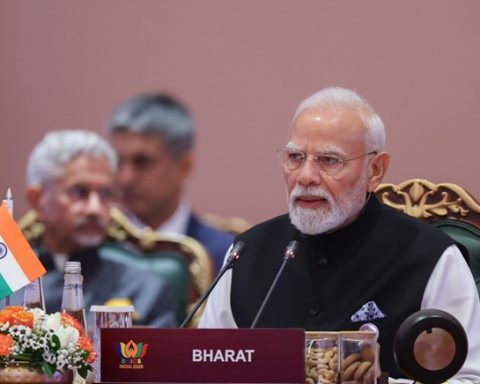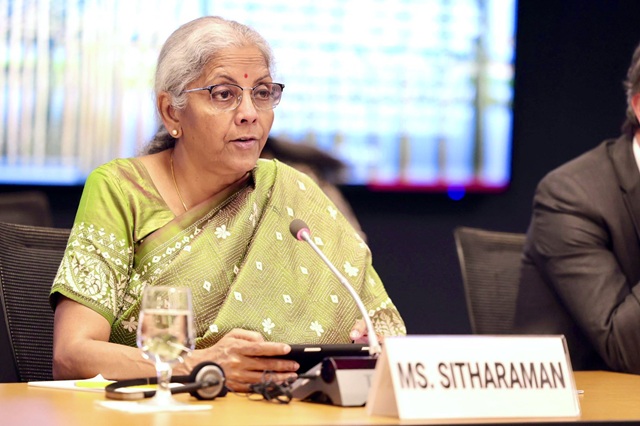
India’s government, led by Prime Minister Narendra Modi, has introduced a series of tax cuts and regulatory measures aimed at revitalizing the country’s economy, which is facing slow growth following a period of economic turbulence. The announcement, made by Finance Minister Nirmala Sitharaman during the presentation of the country’s first full-year budget since Modi’s re-election, is designed to benefit the middle class and small to mid-sized businesses. These moves are seen as a crucial step to stimulate economic activity in a period of subdued consumer demand and private investment.
The new measures, unveiled on Saturday, focus primarily on providing tax relief for India’s middle-income citizens. Sitharaman announced an increase in the personal income tax exemption threshold from Rs700,000 ($8,600) to Rs1.2 million ($13,842), a significant change aimed at reducing the financial burden on ordinary taxpayers. Additionally, the finance minister revealed plans to introduce a new income tax bill next week that would revise the income tax slabs, further decreasing the tax obligations of middle-income groups. This move is expected to leave more money in the hands of taxpayers, potentially boosting household consumption, savings, and investment.
Sitharaman emphasized that the government’s tax relief package would provide a much-needed financial “breather” for middle-class households, which are a key political constituency for Modi’s Bharatiya Janata Party (BJP). Speaking to parliament, she stated that the new policies would “substantially reduce the taxes of the middle class,” echoing a broader strategy to reinvigorate demand among urban consumers, who have been struggling with inflationary pressures.
The Modi administration’s latest budget also included significant steps aimed at improving the ease of doing business in India, which has long been a challenge for entrepreneurs and investors. Sitharaman revealed plans to establish a high-level committee tasked with reviewing the country’s business regulations, licenses, certifications, and permissions. The government also intends to introduce an investment-friendliness index for states later this year. By adopting a “light touch” regulatory framework, based on trust and principles, the government hopes to stimulate productivity, investment, and employment.
These moves are welcomed by business groups in India, who have been urging the government to reduce compliance burdens and reform labor and land market rules. Madhavi Arora, chief economist at Emkay Global Financial Services, commented that the budget’s focus on tax cuts for lower- and middle-income segments would provide a much-needed boost to consumption at a time when these areas have faced significant strain.
While India remains the world’s fastest-growing major economy, the country’s GDP growth rate has shown signs of slowing. In the second fiscal quarter that ended in September, India’s growth rate dipped to 5.4%, marking the slowest pace in nearly two years. Despite government spending on infrastructure, private investment has been sluggish, and job creation has remained weak. Inflation has also been a concern, hovering near the upper limits of the Reserve Bank of India’s mandated 4-6% range, limiting the scope for additional monetary easing.
Despite these challenges, Sitharaman’s budget aims to reassure the public and business community that the government is committed to fostering growth and creating a more favorable business environment. However, as reported by the Financial Times, some market analysts remain cautious about the fiscal implications of these tax cuts. Vijayaraghavan Swaminathan, head of research at Avendus Spark Institutional Equities in Chennai, noted that while the intent behind the tax cuts is clear—offering middle-class households financial relief—the market’s reaction has been mixed, with concerns over how the government will handle the potential shortfall in tax revenues.
India’s annual Economic Survey, published on Friday, provided a sobering view of the country’s economic challenges. The report highlighted India’s reliance on China for supply chains in critical sectors such as solar power, advanced batteries, and electric vehicles, and urged the government to implement deregulation measures to avoid the risk of economic stagnation. The report, authored by Modi’s chief economic adviser V Anantha Nageswaran, emphasized that unless the government took decisive action to remove regulatory barriers, India could face long-term stagnation.