India’s central bank has cut its benchmark interest rate for the first time in nearly five years as policymakers seek to counter slowing economic growth despite persistent inflation. The Reserve Bank of India (RBI) reduced the repo rate by 0.25 percentage points to 6.25 percent, a widely anticipated move aimed at stimulating consumption and investment.
Newly appointed RBI governor Sanjay Malhotra, who took office in December, defended the decision by pointing to easing inflation and the need for a less restrictive monetary policy. Inflation stood at 5.2 percent in December, still above the central bank’s target but trending downward. However, concerns remain over stagnant wages, weak consumer spending, and a sharp slowdown in GDP growth, which fell to 5.4 percent in the quarter ending September—its lowest in nearly two years.
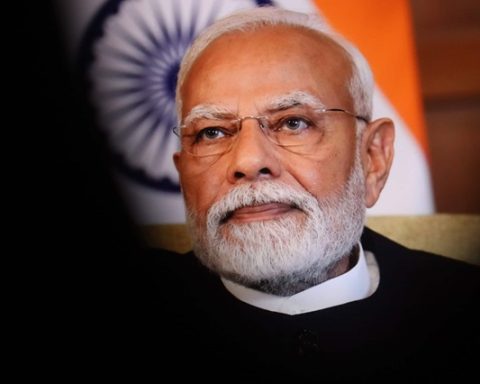
The rate cut comes as India’s government looks to maintain economic momentum ahead of elections. Prime Minister Narendra Modi’s administration has pushed for looser monetary policy, a stance that was reinforced by its decision not to extend the tenure of Malhotra’s predecessor, Shaktikanta Das, who had kept rates elevated at 6.5 percent for two years. Modi’s government has also introduced tax breaks aimed at boosting middle-class household spending, hoping to spur economic activity.
Despite the move, risks remain. The Indian rupee has depreciated by 2 percent against the dollar this year, raising concerns about imported inflation. The RBI has also injected $18 billion into the banking sector in a bid to improve liquidity, a step many economists saw as a prelude to the rate cut. While India continues to post the fastest GDP growth among major economies, the latest figures suggest a slowdown, with the government forecasting 6.4 percent growth for the current fiscal year—its weakest in four years, down from 8.2 percent in 2023-24.
As India navigates these economic challenges, the government and central bank appear aligned in their focus on reviving domestic consumption. Malhotra remains confident that inflation will continue to ease, but analysts warn that further depreciation of the rupee or unexpected price shocks could complicate the RBI’s path forward.