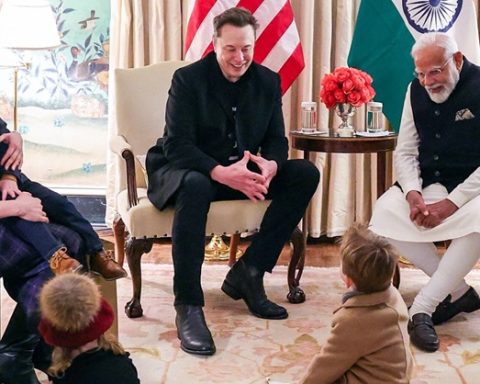
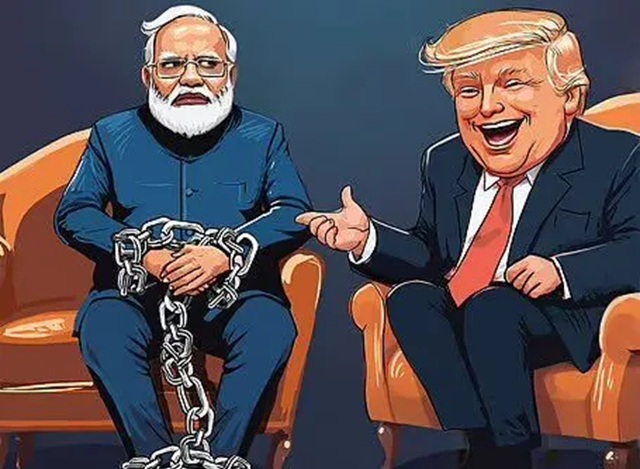
Indian Prime Minister Narendra Modi’s visit to Washington to meet US President Donald Trump sparked global discussions and raised critical questions about India’s economic policies and trade strategy. This high-profile meeting came on the heels of Trump’s repeated threats to impose reciprocal tariffs on India, which he accused of maintaining excessively high duties on American goods. Modi’s response to these threats included several concessions, such as committing to increased purchases of American oil, liquefied natural gas, and defense equipment. While these measures were intended to mitigate the risk of US tariffs on Indian exports, they may not have been the most strategic choice for India’s long-term economic development.
Trump’s tariff threats were based on a fundamental critique of India’s long-standing protectionist trade policies. Since gaining independence in 1947, India has implemented high tariff barriers to protect domestic industries from foreign competition. This policy, initially championed by India’s first Prime Minister, Jawaharlal Nehru, was designed to conserve foreign exchange and promote self-reliance. However, over the decades, this approach led to inefficiencies, lack of innovation, and industries that relied more on government protection than on competitive excellence. Despite economic liberalization in 1991, India still maintains some of the highest tariffs in the world, which makes foreign goods significantly more expensive for Indian consumers.
Trump’s characterization of India as a “tariff king” is not without merit. The Indian government imposes substantial duties on a wide range of imported goods, from luxury items like Harley-Davidson motorcycles to everyday necessities such as medical devices and electronic components. These tariffs have historically been justified on the grounds of protecting local industries and promoting indigenous production. However, they also come with significant downsides, including reduced consumer choice, higher prices, and a lack of competition that stifles innovation among domestic firms. Instead of addressing the root cause of these trade imbalances by rationalizing India’s tariff structure, Modi opted for a short-term fix by agreeing to increased imports of American energy and defense equipment.
A closer look at the economic relationship between India and the US reveals a significant trade imbalance. India exports more than twice what it imports from the US, prompting Washington to push for measures that would reduce this disparity. India’s key exports to the US include pharmaceuticals, diamonds, broadcasting equipment, refined petroleum, jewelry, textiles, and iron structures. If the US were to impose tariffs on these goods, Indian industries would suffer considerably, while American consumers might experience only marginal price increases due to the availability of alternative suppliers.
In the pharmaceutical sector, India is the largest supplier of generic drugs to the US, accounting for over 44% of America’s packaged medicament imports. However, India’s share in the total US pharmaceutical import market is only 12.6%, meaning the US has alternative sources and would not face a major crisis if it restricted Indian imports. Similarly, in broadcasting equipment, nearly 30% of India’s exports go to the US, but these exports represent just 5% of the total US imports in this category. If the US imposed tariffs, Indian exporters would bear the brunt of the impact while the American market could easily source products from other countries.
The situation is somewhat different in sectors like diamonds, jewelry, and textiles, where trade dependencies are more mutual. The US is the largest buyer of Indian diamonds, accounting for 36% of India’s diamond exports, while India supplies 41% of America’s diamond imports. Any tariffs imposed by the US on this sector would raise costs for American consumers while significantly affecting Indian exporters. Similarly, India is the world’s largest jewelry exporter, and the US is its primary market. In textiles, over 62% of India’s house linen exports go to the US, making this sector highly vulnerable to any potential trade restrictions imposed by Washington.
In other sectors like refined petroleum and iron structures, India is highly dependent on the US as an export market, whereas the US is far less reliant on Indian imports. This imbalance makes Indian industries particularly vulnerable to trade pressure from Washington. Given these economic realities, the most logical response from India should have been to reform its tariff structure rather than making large, costly purchases of American goods to appease the Trump administration.
Reducing excessive import duties would not only have addressed Trump’s concerns but also benefited Indian consumers by making foreign goods more affordable. It would have forced Indian businesses to innovate and compete on a global scale rather than continuing to rely on government protection. Instead, Modi chose to increase India’s purchases of American oil, gas, and military equipment, shifting the financial burden onto Indian taxpayers. The decision to buy American fighter jets, which the US has the technological ability to disable remotely, also raises concerns about India’s strategic autonomy in the defense sector.
Although Trump’s demands for tariff parity are not supported by WTO rules, which prohibit country-specific tariffs, India’s high duties apply to all nations, not just the US. This broad protectionist policy discourages innovation, raises costs for Indian manufacturers that rely on imported components, and keeps industries dependent on government intervention. Over the decades, Indian businesses have largely failed to use this protectionist environment to develop globally competitive industries. Even after liberalization in the 1990s, many sectors remained unprepared for true market competition, choosing to rely on state support rather than investing in efficiency and quality improvements.
Instead of addressing these structural problems, Modi’s approach has been to make short-term concessions to Trump by agreeing to higher American imports. While this satisfies US trade demands in the immediate future, it does not solve India’s fundamental economic challenges. A more effective strategy would have been to gradually open up India’s economy, lower tariffs, and create a business environment where Indian companies must compete with the best in the world. This would have helped Indian industries become more competitive while also benefiting consumers through lower prices and better product choices.
India’s excessive dependence on the US as an export market has made it particularly vulnerable to American trade pressure. If India had diversified its trade partnerships earlier and reduced its reliance on the US, it would have been in a much stronger position to resist Trump’s demands. Instead, by choosing to buy American goods rather than reforming its trade policies, Modi has placed an unnecessary financial burden on Indian consumers while failing to address the underlying issue of India’s trade imbalance.
Looking ahead, India must reconsider its protectionist trade policies and adopt a more balanced approach that prioritizes competitiveness and innovation. The global economic landscape is shifting rapidly, and countries that fail to adapt risk being left behind. By reducing import tariffs, investing in infrastructure, and fostering a culture of entrepreneurship, India can position itself as a global economic powerhouse rather than continuing to rely on outdated protectionist policies. Only by embracing reform and opening up its economy can India truly achieve its ambition of becoming a leading player in the international market.