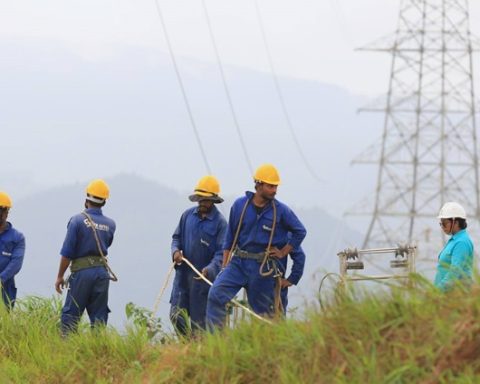
Recently, media reports have surfaced stating that Adani Green Energy has suspended two wind power projects intended for Sri Lanka. However, the Sri Lankan government has yet to comment on this. Adani’s decision to halt the projects comes at a time when the government has only formed a committee to assess the Adani projects. The company claims to have already invested $5 million in these ventures. Yet, it insists that it will continue working diligently on future projects in Sri Lanka.
Meanwhile, power outages have crippled Sri Lanka, with all power plants shut down, and it will take several days to restore supply. The operation of fuel-fired power plants incurs millions of rupees in daily costs to generate electricity. In a country where significant developments have been made in the electricity sector to avoid such blackouts, these outages should be preventable. However, the Minister of Power has blamed a monkey for the power failure. Previously, similar outages were attributed to smoke from burning straw in paddy fields. Is it any wonder then that the country’s power grid could fail at any given moment without a coherent explanation?
By concealing the real reasons—carelessness and negligence within the electricity sector—the government continues to pass on the financial burden to consumers in the form of rising electricity bills. Once the public pays these inflated bills, the Electricity Board reports “profits,” increases salaries, and enjoys various other perks. And what about the rampant fuel theft at power plants like Kerawalapitiya? The consumer, forced to bear all these costs, faces power disconnections if they fail to pay the ever-increasing bills, only to pay yet another fee to reconnect the service. Yet, no action is taken against the politicians at the local or national level who facilitate these hikes. Instead, the public shoulders all the losses.
It is undeniable that Sri Lankan electricity consumers are among the most helpless, suffering at the hands of a Ministry of Energy that seems more interested in exploiting the energy sector for its own profit.
The accusations I make are well-founded. The Ministry continues to push forward policies originally devised under the previous government’s Electricity Act, with no significant changes under the current regime. The new Electricity Act No. 36 of 2024 perpetuates the same status quo.
After the current government took power, a committee was formed to review the Act, and a series of recommendations were made, inviting public comments. However, these comments were solicited via the Ministry’s Sinhala and English websites, which contained significant errors. For instance, the date for submitting comments was not properly specified. Furthermore, instead of inviting feedback on the Act itself, the Ministry strategically sought comments on a committee report that merely serves as a placeholder for the existing Act. This means that the public was invited to comment not on the actual law but on a report designed to rubber-stamp the Act’s continuation. Additionally, presenting the committee’s report only in English significantly limited the participation of the majority of the population. All of this points to the Ministry’s intention to push through a bill aligned with Kanchana Wijesekera’s objectives.
The committee, which included members such as Prof. Udayanga Hemapala, Eng. Pubudu Niroshan Hedigallage, and others, has provided no real explanation or rationale as to how their recommendations will contribute to reducing electricity bills or improving the country’s energy development. In light of countries like India, which are increasingly relying on renewable energy, why is Sri Lanka’s electricity policy so reluctant to incorporate more sustainable energy sources?
One of the reasons for this reluctance is the massive bribes exchanged in favour of fossil fuels. The current government should demonstrate the strength and integrity to resist this temptation. If not, we can expect further expansion of fossil fuel-based power plants, such as coal, at the expense of the environment and the public. However, pushing forward with Act No. 36 of 2024 under the guise of development is not a genuine effort to lower electricity prices. Instead, it represents a grave setback for the country, stripping consumers of their rights in the process. The electricity production sector is fragmented among twelve or more companies, with each one driven by profit rather than efficiency. This means that the existing electricity bill reflects not the actual cost of production but the management costs and profits of all these companies. The Ministry of Energy and the trade unions that prop it up show no interest in offering low-cost electricity to the people or in accelerating the country’s development.
India’s Expectations and Strategic Plans
Unpredictable power cuts, investor exits, public discontent, and, ultimately, the integration of Sri Lanka’s electricity system with India have become vital to addressing the country’s instability in power supply. Adani’s decision to temporarily withdraw from two of its projects may seem like a retreat, but this is a calculated move in response to India’s overriding priority: the integration of its electricity grid with Sri Lanka’s.
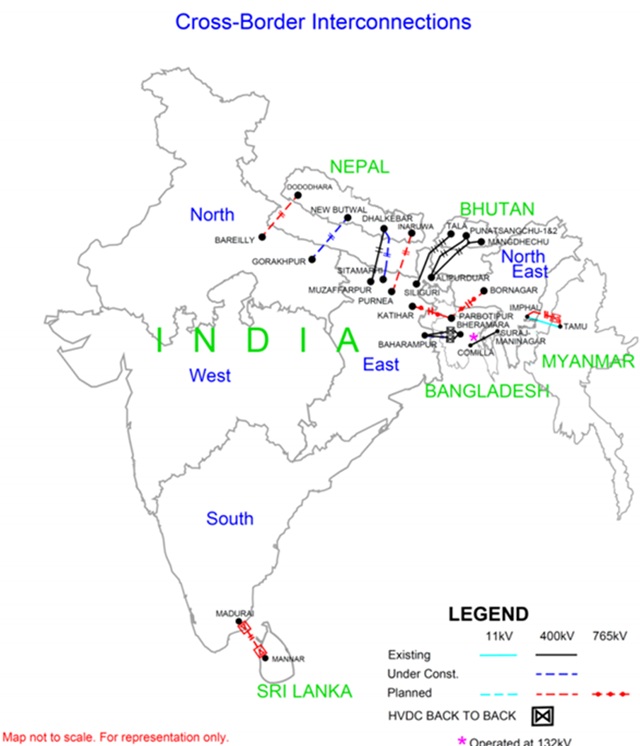
This is not just about Adani. It’s about India’s grand strategic vision. India has already connected its electricity systems with several neighbouring countries. In 2023 alone, India purchased electricity worth $7.96 million and sold it for a staggering $1.5 billion.
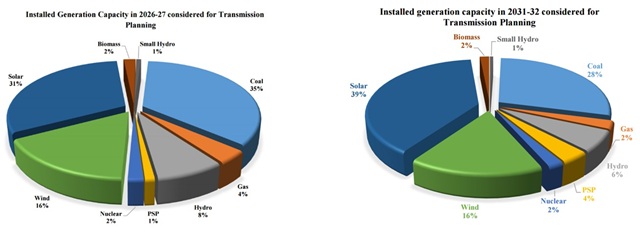
India is swiftly transitioning to renewable energy. By 2031-32, India plans to derive over 65 percent of its electricity from renewable sources, making it the world leader in green energy. The expansion of its electricity exports is central to this goal, with Sri Lanka positioned as a key partner. Integrating Sri Lanka into India’s electricity system would allow India to buy and resell electricity, purchase renewable energy, and export green hydrogen and ammonia. Currently, India is negotiating with the European Union and has agreements with Germany and Japan to export green hydrogen.
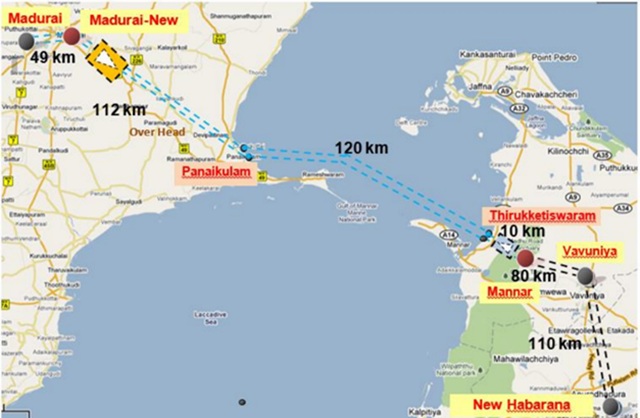
For Sri Lanka, this strategic energy partnership could be its most valuable opportunity. Yet, politicians and officials must act wisely and intelligently to secure Sri Lanka’s economic interests. The plan to connect the two countries’ energy grids is not just about providing cheap electricity; it’s about leveraging India’s renewable energy leadership for Sri Lanka’s benefit, even if that means providing India with the edge in a broader regional market.
Sri Lanka’s own Green Hydrogen Roadmap is being crafted in accordance with India’s needs. This work is being undertaken by the Petroleum Development Authority in collaboration with Greenstat Hydrogen India, a company that will eventually operate under the name Greenstat Hydrogen Sri Lanka. A deal signed by former Energy Minister Udaya Gammanpila has led to this partnership, but the Ministry of Energy remains tight-lipped about the details, refusing to release the agreement under the Right to Information Act. Meanwhile, the Petroleum Development Authority, which is conducting this work, is stepping outside its remit, as the Renewable Energy Authority should be handling hydrogen production.
Is this silence an unfortunate consequence of mismanagement, or is it part of a corrupt deal?
In the future, India will profit immensely from the agreements it makes with leading global players in the trade of green hydrogen and ammonia. Sri Lanka’s hydrogen and ammonia exports will likely pass through Adani’s port, while Sri Lanka’s role will remain largely as a passive player.
How long will we continue to ignore the damage caused by corrupt officials who jeopardise the country’s development? Institutions such as the Bribery Investigation Commission and the Human Rights Commission of Sri Lanka, which have been silent in the face of complaints filed nearly two years ago, are complicit in perpetuating this state of affairs. Is it not these very bodies that protect corruption and turn a blind eye to the violations of basic rights?