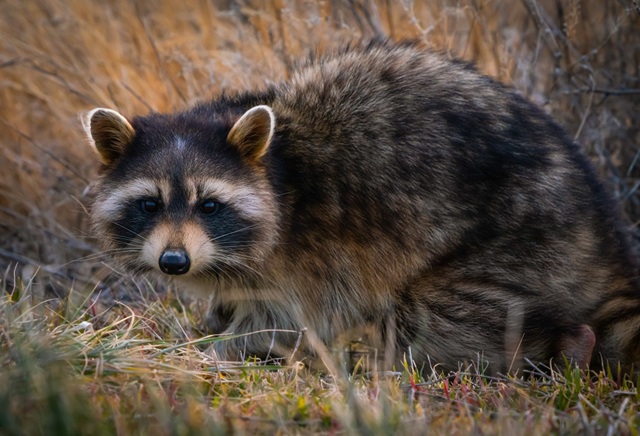
As the world grapples with the long-lasting impacts of the COVID-19 pandemic, mounting evidence now points to raccoon dogs as the most likely source of the virus that ignited the global crisis. Studies published in Nature and other scientific journals suggest that the Huanan Seafood Market in Wuhan, China, where the first known cases emerged, played a critical role in the animal-to-human transmission of the virus.
Five years after the pandemic began, researchers are honing in on the raccoon dog (Nyctereutes procyonoides) as the prime suspect, though other candidates have not been completely ruled out. Kristian Andersen, an evolutionary biologist at Scripps Research in La Jolla, California, highlighted the growing focus on raccoon dogs in the ongoing investigation. “There is a large focus on raccoon dogs,” he said, acknowledging that these animals have long been suspected of transmitting the virus.
Raccoon dogs were first suspected after they were found in close proximity to SARS-CoV-2 during earlier outbreaks, including the 2003 SARS epidemic, where the species was linked to civets as a potential source of transmission. Further research from scientists like Edward Holmes at the University of Sydney has shown that raccoon dogs are capable of carrying coronaviruses, even without suffering severe illness themselves, making them effective transmitters.
Studies conducted on the Huanan market revealed compelling evidence that raccoon dogs were being sold for fur and food, with monthly surveys from 2017 to 2019 confirming their presence in large numbers. In addition, swabs taken at the market in January 2020 revealed mitochondrial DNA from raccoon dogs, which was found alongside traces of the SARS-CoV-2 virus. Although the findings do not definitively prove the animals were infected, the evidence suggests they were likely involved in the virus’s spread, according to Kristian Andersen and his colleagues.
While raccoon dogs are now considered a primary suspect, other animals, such as bamboo rats, Malayan porcupines, and Amur hedgehogs, were also sold at the market and could have potentially contributed to the pandemic’s onset. However, there is uncertainty regarding their susceptibility to SARS-CoV-2, with some species yet to be studied comprehensively.
The origin of COVID-19 continues to be a highly contentious issue, with debates over whether the virus passed directly from bats to humans or whether an intermediate animal, like the raccoon dog, played a pivotal role. Additionally, some scientists still entertain the possibility that the virus might have leaked from a laboratory, a theory that remains unproven but heavily debated.
Despite ongoing research, the exact pathway that led to the pandemic’s beginning remains elusive. Researchers stress the need for more data to fully understand how the virus crossed into humans and sparked the global crisis. As more studies emerge, the raccoon dog theory continues to gain traction, but as Nature points out, the scientific community remains cautious in drawing definitive conclusions without more evidence from early pandemic stages.