Editor’s Note: The following article is based on the author’s regular talk on CNN’s Fareed Zakaria GPS. In this segment, the author offers in-depth analysis and commentary on various socio-economic and political issues, drawing from both historical trends and contemporary events. This piece reflects the author’s perspective, which challenges conventional views on economic policies, particularly the push for a manufacturing renaissance in the United States, and explores the global shift towards a service-dominated economy. It serves as an extension of the critical insights shared during the programme, providing a broader understanding of the dynamics shaping modern economies and societies.
At the heart of the Trump administration’s policies is one overarching goal. In J.D. Vance’s words from a speech this week, it is to stage the great American manufacturing comeback.
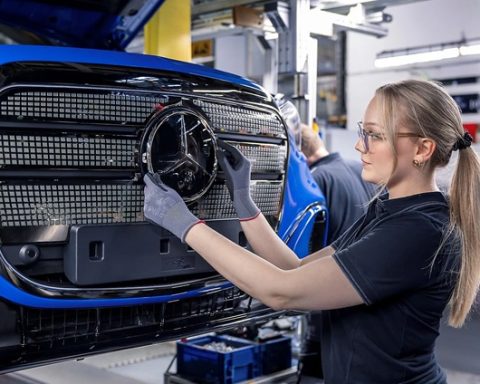
Trump believes that the key to transforming America along the lines he wants—economically, socially, and politically—is to revive the factories and foundries across this country. Unfortunately, not only is this highly unlikely to happen, but the efforts to move in this direction will be costly and damaging for Americans. The idea that America should make more things is a seductive one.
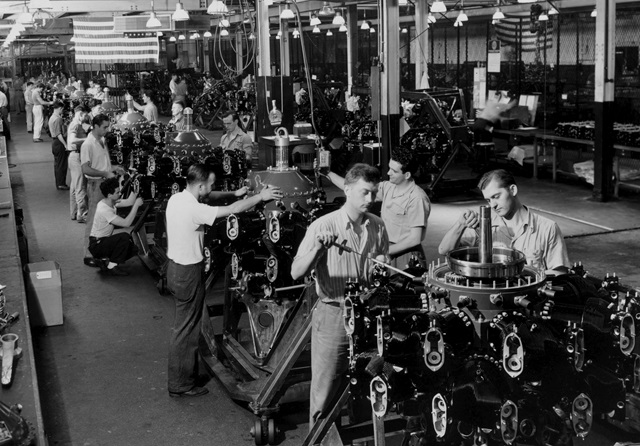
We all think of a rich and powerful country as one with huge factories, belching smoke, churning out stuff, and selling it to the world. It’s deeply imprinted in our minds, but it is an image of the past, not the future. The most advanced economies in the world today are almost all dominated by services.
Services account for the vast majority of jobs in the world’s richest industrialised countries. In America, services account for over 80 percent of all non-farm jobs. Manufacturing is less than 10 percent.
America’s distinctive exports to the world are software and software services, entertainment, financial services, and other such intangible things. And in these, the United States runs not a trade deficit, but a surplus with the rest of the world. Why this transformation? Because as people get richer and better educated, they spend more money on services and not goods.
In 1960, American consumers allotted more than 50 percent of their consumption spending to goods. By 2010, it was only 33 percent. And the money for companies is not in goods, but services.
A sneaker may cost 25 or 30 dollars to make. The value then is in the design, marketing, and sales that allow you to sell it for a hundred dollars. What part of this product would you rather your workers were involved in? Over the last 40 or 50 years, manufacturing as a share of the total economy and manufacturing jobs as a share of total jobs have both steadily declined in almost all advanced industrial countries.
American manufacturing jobs were about 25 percent in 1973. Today, they’re around 8 percent. You see very similar declines in the UK, Canada, and even places that were traditionally manufacturing strongholds like Germany, France, and Japan.
Japan is particularly important as a case study because it did pretty much everything that Donald Trump wishes that America had done over the last 60 years. It shielded its domestic market from foreign goods through high tariffs and other barriers. The government pursued aggressive industrial policy.
Society venerated manufacturing, and the educational system prized technical skills and shop work. And yet, manufacturing declined steadily in Japan. It’s actually not right to say and yet.
One could easily make the case that many Japanese industries declined because of these policies. Government bureaucrats favoured certain sectors like VHS tape recorders and Walkman-style audio players and missed the technological shifts that rendered them obsolete. Huge levels of corruption within the ruling elites ensured that firms were favoured for political reasons.
Most importantly, the tariffs and other barriers kept Japanese companies shielded from competition. Those decisions and others led Japan, far from dominating the world economically as Donald Trump had warned about in the 1980s, to enter into a decades-long stagnation that it has barely now emerged from. Countries like Japan and Germany that tried hard to boost their manufacturing sectors, and countries like France and Italy that protected their workers through tight labour laws all saw their manufacturing decline.
But they also missed out on the growing service sector that now dominates the world. Germany, the world’s third largest economy, has almost no great companies in the digital world, unless you count one over 50-year-old second-tier software firm, SAP. America was more open and thus more innovative.
As the head of the WTO, Ngozi Okonjo-Iweala, has said, America has quietly become the dominant player in the service economy, generating $1 trillion of services that it exports. She points out that professional and business service jobs pay an average of $43.60 per hour in the U.S., compared to just $34.83 for the average manufacturing job. So forget the misty nostalgia about manufacturing.
The hard reality is that services is the fastest-growing sector in the world economy, generating higher profits and good jobs. The effort to revive manufacturing via protectionism is an effort to defy basic economics. In a free market, people and countries are forced to specialise, moving to those things they can do best.
I quoted J.D. Vance earlier from a speech he gave at the American Dynamism Summit. In it, he explained that the Trump administration would use tariffs to protect domestic industries, but he promised them lots of tax breaks and government support to innovate. But the long history of capitalism tells us that countries and companies don’t innovate because of tax credits and depreciation.
They do so because of competition. That is why markets work. They force efficiency.
If you shield American companies and workers from competition, you will get not dynamism, but stagnation.