In the world of birds, mating is more than just reproduction—it is a spectacular display of beauty, endurance, and evolutionary strategy. As detailed in The Nature, science writer Matt Ridley’s book Birds, Sex & Beauty explores the extreme lengths to which male birds go to attract a mate, shedding light on the intricacies of sexual selection.
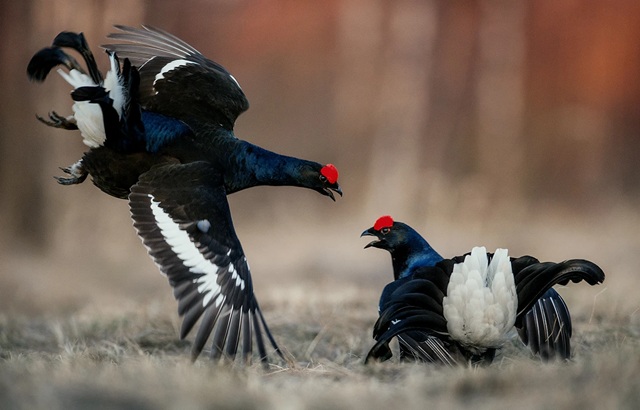
Ridley’s fascination with the black grouse (Lyrurus tetrix) serves as a prime example of this phenomenon. Every year, male black grouse engage in fierce competition on a designated patch of land known as a lek, where they battle for dominance through displays of strength, tail-feather exhibitions, and distinct ‘roo-kooing’ calls. The victors secure prime territory at the center, attracting the attention of females, while the less successful males are relegated to the outskirts. However, holding this central position is taxing—most dominant males only maintain their status for a year or two before exhaustion takes its toll.
This mating strategy aligns with theories of sexual selection first introduced by Charles Darwin. Darwin proposed that while certain traits may be detrimental to survival, they persist because they enhance reproductive success. The peacock’s extravagant tail, for instance, makes it more vulnerable to predators but remains a key attraction for peahens. Evolutionary biologist Ronald Fisher later expanded on this idea with the concept of ‘runaway selection,’ suggesting that female preference for exaggerated male traits drives the continued evolution of those traits.
Other researchers, including Amotz Zahavi, proposed the ‘handicap principle’—the idea that males with costly ornaments, such as the meter-long tail of the ribbon-tailed astrapia (Astrapia mayeri), signal their genetic fitness by demonstrating they can thrive despite such burdens. An alternative theory by Bill Hamilton and Marlene Zuk argues that these traits serve as indicators of disease resistance and overall health, supporting the ‘good genes’ hypothesis.
Ridley’s journey through the Southern Hemisphere further illustrates the diversity of sexual selection. In Papua New Guinea, he marvels at the dazzling Raggiana bird-of-paradise (Paradisaea raggiana), whose fiery plumage and elaborate dance make it a ‘Monet or Matisse of female choice.’ Meanwhile, in the rainforests of Australia, bowerbirds showcase their intelligence and craftsmanship by building intricate, pyramid-like bowers adorned with carefully curated decorations. Interestingly, the species that build the most elaborate structures also have the largest cerebellums, highlighting a potential link between courtship displays and cognitive ability.
In his concluding thoughts, Ridley speculates on whether sexual selection has played a role in shaping human intelligence. While intriguing, this argument is met with skepticism, as human mating patterns differ significantly from those of lekking birds. Nevertheless, Birds, Sex & Beauty offers a captivating exploration of how sexual selection shapes the natural world, blending travel writing with scientific insight.