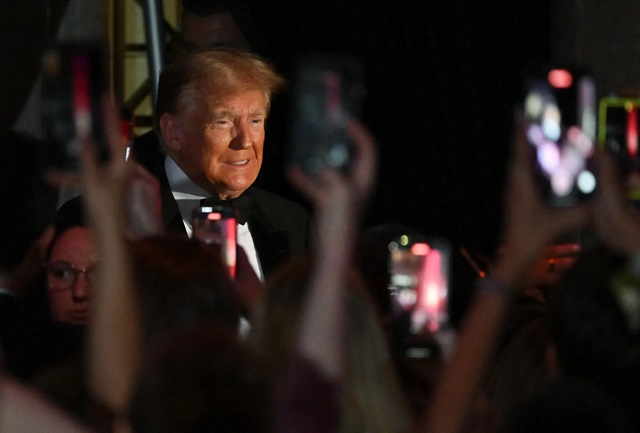
Trump was elected as US President largely due to his campaign slogan “Make America Great Again” (MAGA), which generated immense expectations among the American public. He is now facing a compelling situation in which he must deliver on that promise—particularly in the current scenario, where the United States is grappling with a challenging financial climate, slowing growth, rising household debt, and the potential for a sharp decline in economic activity. Clearly, he needs a swift solution to this economic mess in order to maintain his credibility and popularity.
Trump seems to believe that the imposition of tariffs would provide a quick fix. He has announced a 10% baseline tariff on all countries, effective from 5th April 2025. A country-specific, reciprocal, higher tariff will be imposed on nations with which the US has the largest trade deficits from 9th April 2025. These reciprocal tariffs vary—24% for Malaysia and 49% for Cambodia, for example.
Multilateralism Thrown to the Wind
By announcing the tariffs unilaterally, Trump has shown disregard for the principles of multilateralism and for WTO regulations, which were developed through years of consensus-building among nations.
To this extent, he is justifiably open to criticism for lacking a responsible approach toward the global community.
In any case, Trump has made no attempt to hide his pursuit of national self-interest (that of the USA), even if it adversely affects other countries, including long-term allies.
Trump’s Explanation
While Trump’s announcement did not come as a complete surprise—given earlier hints—the steep tariff levels have shocked the world.
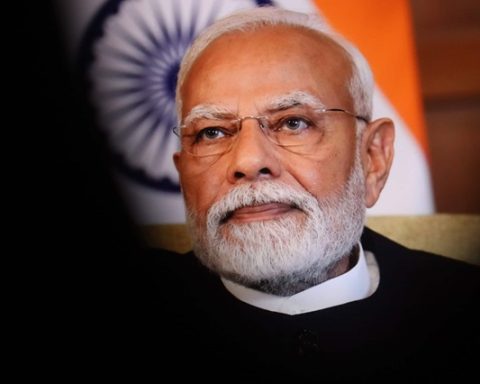
Trump offered what he considered a logical explanation, particularly when discussing the tariffs imposed on India. He said, “India charges 52%,” implying that his 27% tariff on Indian goods is relatively modest, and that it was a difficult decision—especially since the Indian Prime Minister is “a great friend.”
Reactions from Other Countries
Broadly speaking, leaders across various nations have responded to Trump’s tariff assault with dignity, and even with some degree of understanding of his internal compulsions—while simultaneously being forced to evaluate their own strategies for addressing the situation.
It is likely that some countries, such as Canada, will respond with counter-tariffs on US goods.
Trump’s Expectations
The US is a vast consumer market and therefore extremely attractive for every country looking to export goods and services.
Trump appears to believe that by raising tariffs on imported goods, domestic production will rise, as the cost of foreign goods to US consumers will significantly increase.
However, under the current circumstances, it is highly questionable whether domestic production can be scaled up across all sectors either in the short term—or even over the longer term.
Existing Anti-Dumping Duties
Even before the Trump administration, the US had imposed anti-dumping duties on imports from various countries, including China.
These measures were meant to protect domestic industries. In a way, Trump’s new tariffs are an extension of this practice, though on a broader scale. The main difference is that these new tariffs apply universally, whereas anti-dumping duties are targeted.
It is also unclear whether the new tariffs will be applied on top of existing anti-dumping duties.
Imports into the US Will Continue
Many of the products imported into the US are either low-tech, labour-intensive, environmentally problematic, or involve hazardous production processes. The US has historically opted to import such goods, not due to external pressure, but because it was a practical choice.
That need is unlikely to disappear—even in the face of increased import tariffs.
Reciprocal Tariffs on US Products
Once the initial dust settles, Trump may discover that the US continues to import a large volume of goods, albeit at higher prices—costs that will ultimately be borne by American consumers.
While increased tariff revenue may marginally boost US government income, it will come at a cost to the consumer—an outcome unlikely to sit well with the public, or benefit Trump politically.
Challenges for US Exports
Additionally, reciprocal tariffs imposed by other nations—such as the one already announced by Canada—will make it harder for American producers to compete in global markets.
This will be especially challenging in competition with China, which often uses opaque pricing strategies and generous credit terms to undercut rivals in global trade. With such tactics, China may very well outmanoeuvre the US in international markets if counter-tariffs on American goods become widespread.
Likely Scenario
For Trump to achieve his MAGA objective, domestic production in the US would need to increase dramatically—something unlikely to happen in the immediate future.
In many cases, increased production may not be feasible at all, due to the lack of techno-economic viability under current US conditions.
One may rightly wonder whether Trump’s tariff policies are a case of “cutting off the nose to spite the face.”