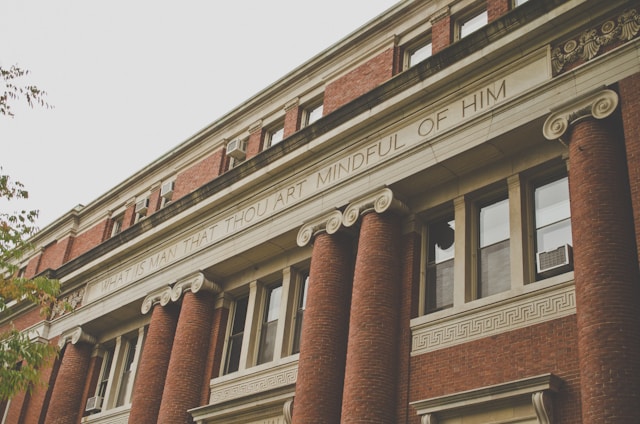
A group of US professors has filed a lawsuit against the Trump administration in response to its threat to withhold $8.7 billion in federal funding from Harvard University. The lawsuit, backed by the American Association of University Presidents (AAUP) and its Harvard affiliate, is part of a growing wave of resistance from faculty, students, and alumni against what they perceive as politically motivated attacks on US higher education.
Nikolas Bowie, a Harvard law professor and supporter of the lawsuit, condemned the administration’s actions, stating: “Eliminating discrimination and protecting all students is important. But Trump is defying the Civil Rights Act, terrifying students, and illegally holding hostage grants for hospitals and scientific research so he can accomplish his real goal of punishing academics for our politics.”
The Trump administration’s financial retaliation against universities has extended to seven elite institutions, including Harvard, Columbia, Princeton, and others. The universities have been targeted for alleged failures to tackle antisemitism on campus or for refusing to scrap diversity, equity, and inclusion (DEI) policies. These actions are part of the administration’s broader efforts to press universities into compliance with its demands.
So far, university leaders have largely refrained from taking legal action or publicly criticizing the cuts, fearing further punitive measures. However, as the situation worsens, there is increasing pressure from university employees, students, and alumni to confront these measures. Joseph Stiglitz, a Nobel Prize-winning economist at Columbia University, said, “Universities have to stand up. We should use our endowment to weather the storm.”
According to the Financial Times, there has been a significant push from grassroots groups like “We Are Higher Ed,” which has gathered thousands of signatures on petitions calling for a defense of academic freedom and opposition to what it deems “unethical and illegal demands” from the Trump administration. One petition signed by Harvard alumni warned, “Unless the presidents of US colleges and universities speak out and stand together for their students and faculty, the Trump administration will feel no limits in going after those institutions.”
Columbia University, which has seen over $400 million in federal funding cuts, is also under pressure. Despite complying with many of the administration’s demands, the institution now faces the possibility of a consent decree, which would place its operations under federal oversight. A lawyer advising higher education leaders noted that Columbia’s “prudent course of action” was aimed at minimizing further damage, even if it meant accepting restrictions.
Max Eden, who previously worked at the right-wing American Enterprise Institute and now holds a position in the White House, reportedly provided the Trump administration with a “hit list” of universities to target, which included Harvard and Columbia. Eden’s tactics have included withdrawing government grants, revoking student visas for those protesting on campuses, and deploying AI to search for DEI projects to shut down.
In addition to Harvard and Columbia, Princeton, Brown, Cornell, and Northwestern have also had funds frozen. The University of Pennsylvania had $175 million in funding withheld after allowing a transgender athlete to compete in a swimming championship, a decision that complied with national regulations at the time.
As part of an ongoing campaign, Eden has suggested imposing a 37% tax on university endowment income and overhauling accreditation systems, which could affect institutions like Stanford and the University of California system.
The growing resistance to these measures highlights the mounting tension between US higher education and the Trump administration’s broader cultural and political agenda. With faculty and student groups intensifying their calls for action, the legal and political battle over academic freedom and government funding is set to escalate.