by A Special Correspondent in Colombo
Former State Minister and Eastern Province Chief Minister Sivanesathurai Chandrakanthan, commonly known as “Pillayan,” has made a startling claim in his recently published book Easter Massacre: Harmony, Understanding, and Coexistence Between Races and Religions. He alleges that Zahran Hashim, the mastermind behind the 2019 Easter Sunday attacks, conducted a special training program in December 2018 in Kattankudy to train women for suicide missions.
According to Pillayan, approximately 15 women participated in the covert training sessions led by Zahran. This revelation, he says, came to light following the arrest of a 24-year-old woman identified as Mohamed Ibrahim Saida from Mawanella. During interrogation, Saida reportedly confessed that she was among 15 women who underwent the training and had pledged an oath to Zahran to carry out suicide bombings.
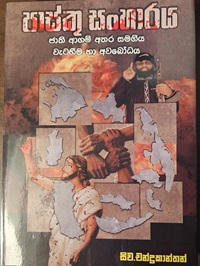
The book cites then Police Media Spokesman Ajith Rohana, who stated that the woman’s testimony about the oath was one of the most significant pieces of intelligence obtained during the investigation.
Further, it reveals that during a follow-up incident in the Saindamarudu area shortly after the Easter attacks, five of the 15 trained women were killed in a blast, while three were taken into custody. The remaining seven are currently being investigated by the Terrorism Investigation Division (TID).
Pillayan also uses the book to distance himself from the attacks, stating, “The Easter attack was an incident that took place during my imprisonment without my involvement. I categorically reject the baseless allegations linking me to such a horrific incident, which I believe were made with political motives.”
In his broader analysis, the author discusses the spread of Wahhabism in Sri Lanka, particularly noting its rise since the 1990s in the Eastern Province, where he alleges Wahhabi-inspired groups have been involved in a series of violent activities.
The Easter Sunday bombings, which took place on April 21, 2019, targeted churches and luxury hotels across Sri Lanka, resulting in the deaths of 269 people and injuring over 500. The coordinated suicide attacks were carried out by members of the National Thowheed Jamaath (NTJ) under the leadership of Zahran Hashim. The attacks shocked the nation and prompted both national and international investigations into radicalization and the spread of extremism within the country.