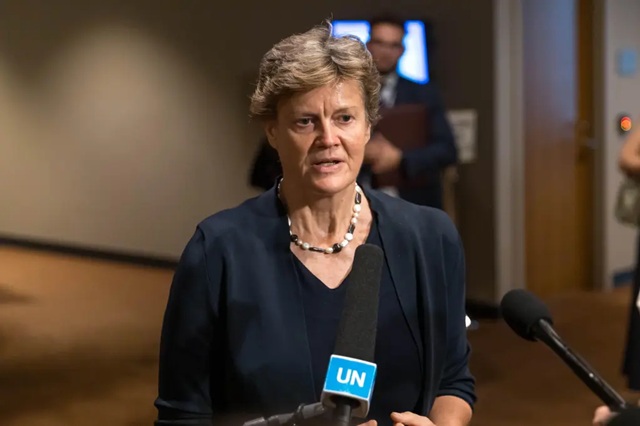
For the first time in its 116-year history, the UK’s Secret Intelligence Service (MI6) is set to be led by a woman — with Dame Barbara Woodward, Britain’s ambassador to the United Nations, emerging as the frontrunner in a decision that has sparked both celebration and controversy.
According to reporting by The Times UK, all three final candidates interviewed last week for the role of Chief of MI6 were women, marking a major milestone for gender representation in British intelligence. The current chief, Sir Richard Moore, is expected to step down in the autumn after five years at the helm.
Woodward, 63, is the most senior female figure in the Foreign Office and served as the UK’s ambassador to China from 2015 to 2020. While some insiders see her experience in Beijing as invaluable, her critics — including senior Conservative figures — have raised serious concerns about her perceived reluctance to confront China’s human rights abuses during her tenure.
Nicknamed “Beijing Barbara” within Whitehall, Woodward has come under fire for allegedly soft-pedaling criticism of the Chinese Communist Party, particularly regarding its repression of the Uighur Muslim population in Xinjiang. Critics argue that she failed to act robustly when Beijing sanctioned five MPs and two peers in retaliation for their condemnation of the regime — a move that occurred during her time in post.
Former Conservative leader Sir Iain Duncan Smith, one of those sanctioned by China, voiced strong reservations: “This appointment is of the greatest importance to our security and any ambivalence towards the enormous threat that China poses will end in disaster for the UK.”
Despite never having served as a spy or within MI6, Woodward’s supporters argue her diplomatic experience and leadership in multilateral settings offer a crucial strategic lens — particularly in a global security environment increasingly shaped by Chinese influence operations. Her background includes posts in Moscow and Beijing, and a senior role at the UK Border Agency.
The other two candidates — both senior intelligence officers — remain unnamed for security reasons. If appointed, either would become the first publicly identified female “C,” the traditional codename for the MI6 chief, a role that dates back to 1909. Their anonymity would end upon appointment, as has been the practice with previous directors.
Sources suggest Woodward was encouraged to apply after no clear internal successor to Moore emerged. Some observers see this as evidence of institutional drift within the agency. A former officer told The Times UK, “MI6 seems to have forgotten that its job is agent handling and human intelligence. They’ve become a discreet version of the Foreign Office.”
The final decision rests with Prime Minister Sir Keir Starmer, based on recommendations from an expert panel that includes Foreign Secretary David Lammy, National Security Adviser Jonathan Powell, and Sir Oliver Robbins, the top civil servant at the Foreign Office. The inclusion of Robbins has raised questions about MI6’s growing alignment with the FCDO.
Meanwhile, UK intelligence services face increasing pressure amid a wave of Chinese espionage allegations — including attempts to infiltrate Parliament, hack businesses, and intimidate Hong Kong dissidents on British soil.
As the debate over Woodward’s suitability intensifies, the appointment is poised to redefine the future direction of Britain’s foreign intelligence arm — and perhaps test the limits of diplomacy in a world where soft power increasingly collides with hard threats.
Downing Street has declined to comment on the selection process.