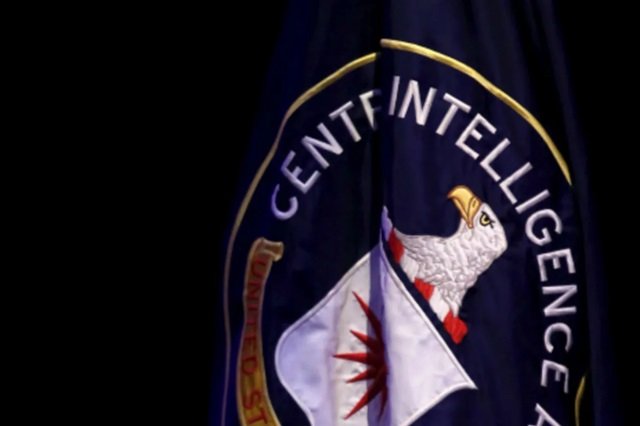
The Central Intelligence Agency coordinated the covert distribution of Western books to readers across the communist bloc for more than three decades, supplying everything from George Orwell’s political fiction to Agatha Christie’s detective novels in an effort to undermine Soviet ideological control. The programme, which extended from Poland, Hungary, Czechoslovakia, Romania and Bulgaria to the Soviet Union, distributed an estimated 10 million volumes, reaching intellectuals, universities, libraries, research institutes, cultural organisations and eventually the wider public.
The operation is examined in “Charlie English, The CIA Book Club”, an article published in the latest issue of the Journal of Cold War Studies in 2026. The programme remained largely unknown outside intelligence circles until 2003, when John P. C. Matthews, a former official of the CIA-founded Free Europe Committee (FEC), disclosed its existence in the International Journal of Intelligence and Counterintelligence. Alfred Reisch, who supervised the Hungarian distribution project until 1974, subsequently produced a detailed scholarly account in his book “Hot Books in the Cold War”.
According to Reisch, the initiative was originally conceived by FEC official Samuel S. Walker as a means of encouraging the “transformation of the communist system by an evolutionary process”. George Minden, a British-Romanian who later developed and managed the operation, concentrated on Eastern European elites, seeking to counter their ideological isolation and “keep [them] oriented toward the West, independent-minded, and friendly to America”.
By 1962, according to English, the programme involved co-ordinating with approximately 500 organisations distributing books on the CIA’s behalf. These included Doubleday, Barnes & Noble, Oxford English Dictionary, Encyclopaedia Britannica, Allen & Unwin, Faber and Faber, Macmillan and Hachette, among hundreds of others. The scale of the operation reflected an approach that extended beyond conventional propaganda, treating access to literature, scholarship and Western cultural traditions as a means of influencing readers who lived under strict censorship.
The strategy evolved from earlier attempts to distribute explicitly political material. Anti-communist tracts had initially been dropped indiscriminately over Soviet-bloc countries using hot-air balloons. That operation was suspended in 1957 at the request of the West German government, which objected to the method of delivery rather than the message. Although other distribution methods continued for a time, the emphasis increasingly shifted towards gradual political change through cultural engagement rather than encouraging uprisings that could provoke instability and repression.
The experiences of Hungary in October-November 1956, Czechoslovakia in August 1968 and Poland in December 1981 informed the risks associated with popular agitation. The book programme instead sought to weaken the ideological barriers separating Eastern Europe from the West. English describes the objective as “breaking down the ideological and cultural Iron Curtain” and “opening wide a window on the culture and achievements of the free Western world”.
The material ranged from direct political commentary to anti-totalitarian literature and ostensibly non-political works. Orwell’s “1984” and “Animal Farm”, Aleksandr Solzhenitsyn’s “The Gulag Archipelago” and “One Day in the Life of Ivan Denisovich” were among the most prominent titles. Boris Pasternak’s “Dr. Zhivago”, less explicitly political, also attracted interest; a member of the Polish parliament even requested a copy.
Periodicals formed another important part of the operation. These included the Polish émigré publication Kultura, published in Paris, the Czech journal Svědectví, and newsweeklies such as News from Czechoslovakia, News from Hungary and News from Poland. Some publications incorporated literary and scientific articles to make them less conspicuous to censors. In one documented instance, selected extracts from Kultura were sent to 500 strategically chosen individuals, with the expectation that they might circulate the material more widely. Other distributions included unexpurgated history books, ethnic literature, protests against Soviet hegemony in Yugoslavia and East Germany, and critiques written by intellectuals who had defected from communist systems.
More than half the books reportedly smuggled across the Iron Curtain belonged to a broader category of fiction and non-fiction, including engineering manuals, medical works, art history, philosophy, architecture, music and guides to film and theatre. Many had no explicit political message. Their purpose was to introduce readers to unfamiliar aspects of Western intellectual and cultural life while avoiding the immediate suspicion that overt propaganda might attract.
The titles included Albert Camus’s “The Rebel”, José Ortega y Gasset’s “Revolt of the Masses”, Alexander Eliot’s “Three Hundred Years of American Painting” and an anthology of English and American poetry by William Rose Benet and Conrad Aiken. Works by Hannah Arendt, William Faulkner, Graham Greene, Aldous Huxley, Franz Kafka, Gunnar Myrdal, Reinhold Niebuhr and Jean-Paul Sartre also circulated, alongside fiction by Philip Roth and Kurt Vonnegut, plays by Václav Havel, John le Carré’s spy thrillers and writing advice by Virginia Woolf.
Poland became the programme’s principal destination, receiving more books than any other country and generating substantial demand among intellectuals and other citizens. Correspondence between recipients and their Western contacts allowed readers to request specific titles and express their appreciation. The operation nevertheless carried serious risks: participants faced constant surveillance, shifting meeting places, changing code words and the possibility of informants. Those caught could receive lengthy prison sentences. In some cases, Polish readers obtained only microscopic reproductions of Solzhenitsyn’s works, concealed in a baby’s nappies.
English argues that literature played a major role in Poland’s political transformation, writing that “when communist rule in Poland collapsed in 1989, this was the first domino to fall, and it was literature that won the war here”. He quotes Polish dissident Adam Michnik: “I am convinced it was books that were victorious in the fight. A book is like a reservoir of freedom, of independent thought, a reservoir of human dignity. A book was like fresh air. They allowed us to survive and not go mad.”
The extent to which the programme contributed to the wider collapse of communism remains difficult to establish. Mark Kramer, director of Cold War Studies at Harvard University, cautions in his introduction to Reisch’s book that assessing its success requires accounting for multiple complex variables. Yet Minden’s explanation of the operation’s rationale was explicit: “All book distribution is politically significant because all books — political and literary — serve the political function of making the ideological isolation of Eastern Europe difficult, thereby frustrating one of the communists’ main political objectives.”
A beneficiary offered a complementary account of what the books meant to readers: “Books gave us the tools to understand this world . . . We read poetry and literature. It showed us that there are likeminded people who . . . we can empathize with, who admire beauty, who admire virtue.”