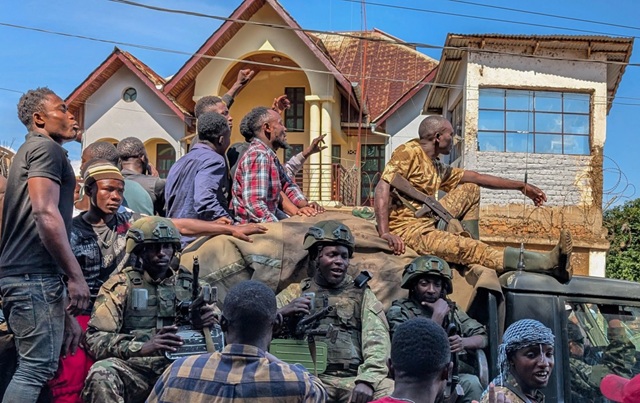
A new report by Amnesty International has accused the Rwandan-backed March 23 Movement (M23) of committing war crimes in eastern Democratic Republic of Congo (DRC), including unlawful killings, torture, enforced disappearances, and taking civilians as hostages.
The report, based on interviews conducted between February and April 2025, exposes the horrific treatment of civilians detained by M23 forces in Goma and Bukavu. Eighteen former male detainees described brutal conditions and abuses at the hands of M23 fighters. Nine of them reported being tortured, while others said they witnessed fellow detainees die from beatings, starvation, and lack of medical attention.
Amnesty International said M23 operates multiple detention sites across Goma and Bukavu, including the Chien Méchant facility, the provincial assembly building, the 34th military region compound, and the area near the state-run RTNC broadcaster. In Bukavu, detainees were reportedly held at the National Intelligence Agency’s main office and a military camp in Bagira.
Conditions in these facilities were described as degrading and life-threatening. Former detainees recounted being held in overcrowded cells, forced to sleep standing up, and given minimal food—often just a daily serving of boiled corn. There was no access to running water or sanitation. One detainee said the heat was so intense and water so scarce that some resorted to drinking each other’s urine. Toilets were frequently clogged, and some detainees were forced to defecate in makeshift containers.
Beatings were routine and often carried out with electric cables, engine belts, and sticks. Victims were struck on their backs, legs, buttocks, and genitals, leaving lasting injuries. Amnesty reviewed photographs consistent with torture claims and confirmed multiple cases of hospitalization due to injuries sustained in detention. One former detainee described a grim ritual in which guards would flog prisoners each morning, calling it their “morning tea.”
In addition to torture, Amnesty documented enforced disappearances and arbitrary arrests. Families often struggled to locate missing relatives, with M23 fighters denying custody or refusing access to detainees. Civilians were frequently accused—without evidence—of collaborating with the Congolese army, possessing weapons, or criticizing M23’s rule. Many detainees said they were never informed of the charges against them.
The report also highlights the use of hostage-taking and ransom demands. Eight former detainees confirmed their families paid amounts ranging from hundreds to over $2,000 to secure their release. In some cases, M23 did not disclose the detainee’s location or condition until the ransom was paid.
“These acts may amount to war crimes,” said Tigere Chagutah, Amnesty’s Regional Director for East and Southern Africa. “Congolese know all too well the cruelty of M23. They continue to live in misery as international actors have become complacent, waiting patiently for a peace deal while M23 keeps brutalizing Congolese.”
Amnesty International has called on M23 to release all arbitrarily detained civilians, disclose the whereabouts of those forcibly disappeared, and allow detainees access to legal counsel and family members. The organization also urged regional and international actors to pressure Rwanda to end its support for M23 and to allow independent bodies to access all detention facilities under M23 control.