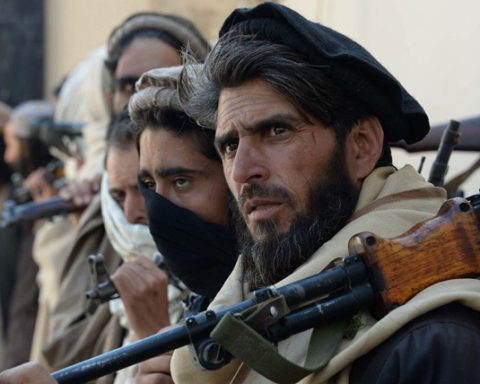
Afghanistan’s women are facing a new, insidious form of repression — not from soldiers or government officials, but from their own sons. According to a disturbing report by The Times UK, Afghan boys as young as ten are being indoctrinated by Taliban propaganda and encouraged to monitor and report the behaviour of female family members, even inside their own homes.
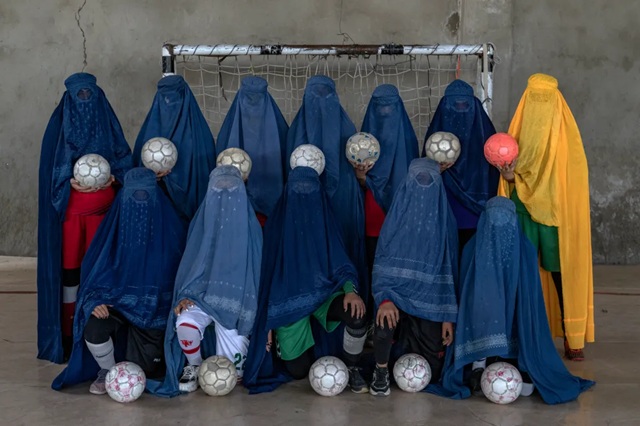
Since the Taliban retook power in 2021, over 100 edicts have targeted women’s freedoms, barring them from public spaces, employment, and even basic healthcare training. Afghanistan remains the only country in the world where girls are banned from school beyond the age of 11.
But as Richard Bennett, the United Nations special rapporteur on human rights in Afghanistan, warns, the effects of Taliban rule are no longer confined to the streets and schools. “Women are telling me they’ve been disempowered not just in society but inside their own homes,” he said. “One woman told me, ‘I am surveilled by my own sons.’ Imagine, a little boy asking, ‘Mum, why aren’t you wearing hijab inside the house?’”
Weaponising Sons, Breaking Families
This growing trend — boys questioning, reporting, and even punishing their mothers and sisters — is a direct result of systemic brainwashing, critics say.
“This isn’t just policy — it’s psychological warfare,” said former Afghan MP and ambassador Shukria Barakzai, now living in exile. “Boys are taught from a young age that control and punishment of their mothers is legitimate.”
Malala Yousafzai, the Nobel laureate shot by the Taliban for standing up for girls’ education, echoed the gravity of the situation: “Taliban don’t see women as human beings. What’s happening in Afghanistan is gender apartheid.”
Afghan boys are now growing up in an education system that teaches Taliban doctrine while banning civic education, English, and even chess. Female teachers have been dismissed from boys’ schools, corporal punishment is routine, and loyalty to Taliban ideology is drilled into the curriculum.
Fear Inside the Home
One Afghan woman described taking her five-year-old nephew to the park, only to remain outside while he entered to play — a moment she feared would shape his future view of women as inferior.
“It shapes not just how they view girls and women, but also limits their emotional growth,” said Dr. Martha Deiros Collado, a clinical psychologist. “When boys regularly see girls and women being treated poorly, they start to see these behaviours as normal.”
Zahra Joya, founder of the women-led Rukhshana Media, who disguised herself as a boy to attend school during the Taliban’s first rule, fears for what’s coming. “In ten years, every house in Afghanistan will have a Taliban,” she said. “It’s very worrying.”
The Legal System: Men as Enforcers
Taliban law also holds men legally responsible for the women in their household. If a woman breaks Taliban rules, her husband or father can be punished in her place.
“One of the nefarious methods Taliban use to co-opt men into their coercive male power structure is by punishing them for the ‘failures’ of women,” said Sahar Halaimzai, director at the Malala Fund. “It’s a system of fear that traps entire families.”
In one case reported to the UN, a father who tried to rescue his daughter from Taliban custody was brutally beaten, accused of raising an “immoral girl.”
Return of Medieval Brutality
The Taliban have reintroduced public floggings and executions with chilling regularity. According to Amu TV, at least 798 people — including 140 women — have been flogged in public over the past three years. Death by stoning, public executions, and even “wall collapse” punishments have resurfaced.
A 24-minute Taliban propaganda film, Retribution, aired on Afghan state TV to justify these barbaric acts.
International Engagement, Silent Complicity
Despite a lack of formal recognition, the Taliban regime is being quietly normalised. Nations including Russia, China, India, and even US allies like Japan have resumed diplomatic engagement with Kabul. The Trump administration recently announced plans to revoke the protected status of Afghan refugees in the US, potentially sending them back into Taliban-controlled territory.
Bennett warns of the growing international complacency: “We are seeing a creeping normalisation. If you want to be on the right side of history, we cannot give up on Afghan women like this — and we must also think about what this messaging is doing to boys.”
As The Times UK concludes, the Taliban are not only dismantling the rights of women — they are constructing an ideology that recruits sons against their mothers, embedding misogyny so deeply it threatens the moral fabric of future generations.
“What will the next generation say?” Bennett asks. If current trends persist, the answer may be chilling.